
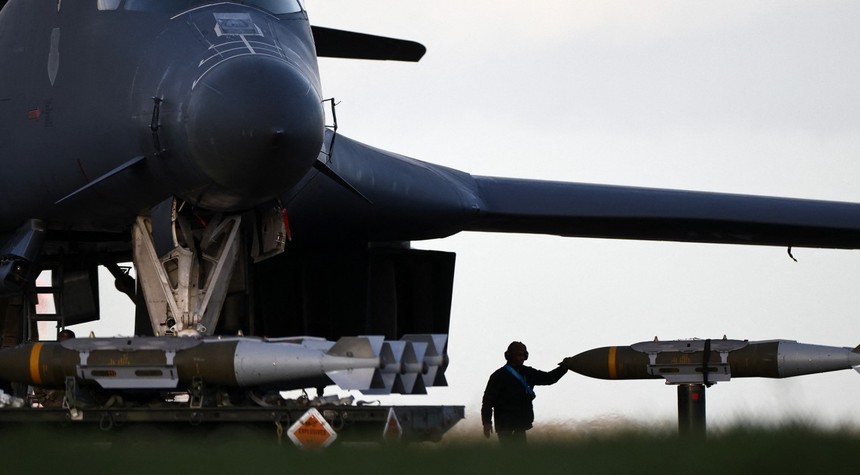
Eleven point three billion dollars. That’s what the Pentagon burned through in just six days of fighting Iran, according to officials who briefed senators behind closed doors this week. Six days. Let that sink in for a moment while you consider that most Americans are clipping coupons and wondering if they can afford to fill up their gas tank twice in one week.
And here’s the kicker. Senator Chris Coons thinks that number is actually low. He told reporters the real figure is “significantly above that” because the current estimate doesn’t capture everything. Just the replacement cost for munitions alone has already sailed past ten billion. We’re not even counting the operational expenses, the logistics, the fuel, the intelligence assets, or any of the other line items that make modern warfare the most expensive endeavor humanity has ever invented.
The Pentagon won’t confirm the numbers officially, naturally. A spokesperson offered the standard deflection about not commenting on closed-door briefings and said they won’t know the real cost until “the mission is complete.” That’s convenient. It’s also troubling because nobody seems to know when this mission will actually be complete.
President Trump gave us a masterclass in mixed messaging on Tuesday. He said the war would end “very soon” but then acknowledged that Defense Secretary Pete Hegseth might also be right when he called this conflict “the beginning.” Trump’s response? “I think you could say both.” That’s not leadership. That’s hedging your bets while American service members are in harm’s way and the national credit card is smoking from overuse.
We’re now eleven days into this war. The human cost is staggering. More than 1,200 people have died in Iran according to their Red Crescent Society. Israeli and American strikes did that damage. Thirteen dead in Israel. Six in the United Arab Emirates. Lebanon has lost 570 people. And seven American service members have made the ultimate sacrifice while 140 more have been wounded. These aren’t statistics. These are sons and daughters, husbands and wives, people with families waiting for them to come home.
The Strait of Hormuz has become a flashpoint that threatens to expand this conflict beyond anyone’s control. At least three ships have been attacked there, prompting Trump to promise escalation. U.S. Central Command announced Wednesday that it had “eliminated” sixteen Iranian minelayers and multiple naval vessels near the strait. That’s military speak for sinking ships and killing crews. The strait handles about a fifth of the world’s oil supply, so every attack there sends ripples through global energy markets and your local pump prices.
Here’s what drives me crazy about all this. We’ve been down this road before. The wars in Iraq and Afghanistan taught us that initial cost estimates are always fantasy. Always. The Pentagon lowballs the numbers, Congress writes the checks, and before you know it we’re two trillion dollars deep with nothing to show for it but chaos and a generation of veterans dealing with wounds both visible and invisible.
Limited government means something, or it’s supposed to. It means we don’t commit to endless military adventures without understanding the price tag and having a clear exit strategy. It means we don’t send Americans to die without exhausting every other option first. It means we respect the taxpayer enough to tell them the truth about what their money is buying.
The Trump administration is now figuring out how much to request in a supplemental funding bill. Translation: they’re about to ask Congress for a blank check to keep this war machine running. The appropriations subcommittee will craft that legislation, and you can bet it’ll pass with bipartisan support because nobody in Washington wants to be accused of not supporting the troops. Never mind that the best way to support the troops is to not waste their lives on poorly planned operations.
Individual liberty and free market capitalism don’t mean much if we’re bankrupting the country on military operations that lack clear objectives. Strong national defense is essential, absolutely. But strength isn’t measured by how much ordnance you can drop in a week. It’s measured by strategic clarity, decisive action, and knowing when to fight and when to pursue other options.
You know what really gets me? We’re spending nearly two billion dollars a day on this conflict while Americans are struggling with inflation, while our infrastructure crumbles, while our border remains a sieve. Those aren’t mutually exclusive concerns. A country that can’t manage its resources wisely isn’t strong. It’s reckless.
The closed-door nature of that Senate briefing tells you everything you need to know about transparency in modern warfare. They don’t want the American people to see the real numbers because the real numbers are horrifying. They’d rather drip out information through carefully managed leaks to The New York Times than level with us directly.
We deserve better than conflicting messages about whether this war is ending soon or just beginning. We deserve better than cost estimates that everyone admits are understated. We deserve leadership that understands the difference between projecting strength and throwing money at problems until they either go away or metastasize into something worse.
Eleven billion in six days. At that rate, we’re looking at over sixty billion a month if this drags on. And it will drag on, because it always does. The mission creep is already visible. First it’s strikes, then it’s naval operations, then it’s protecting shipping lanes, then it’s nation building or regime change or some other objective that wasn’t part of the original plan.
This isn’t about being anti-military or weak on defense. This is about demanding competence and accountability from the people spending our money and risking American lives. Conservative principles mean something, or they don’t. Right now, watching this unfold, it’s hard to tell which.
Related: Hochul Warned to End State Program That Excludes Students Based on Race or Face Federal Lawsuit