
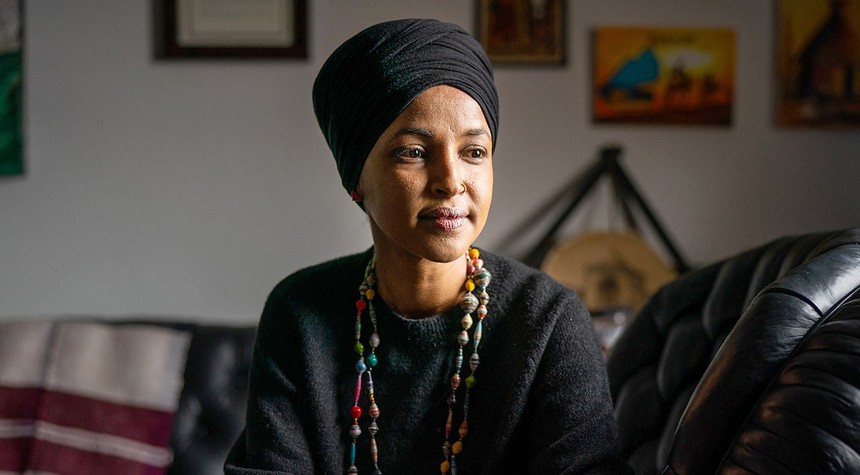
So let me get this straight. Ilhan Omar files paperwork claiming she’s worth somewhere between six and thirty million dollars, and when people start asking questions, suddenly it’s all just a big accounting mistake. The revised number? Maybe ninety-five thousand dollars. You know what that is? That’s not a rounding error. That’s not even in the same universe.
The congresswoman’s office wants us to believe this was simply a clerical mix-up, as if someone accidentally added a few zeros while distracted by their morning coffee. Her spokesperson told The Wall Street Journal that Omar “is not a millionaire” and never was, acting as though Republicans and the Office of Congressional Conduct were making mountains out of molehills. But here’s the thing about financial disclosures: they matter. They exist precisely because we’re supposed to know whether our elected officials are enriching themselves off public service.
This isn’t about partisan witch hunts or political theater. It’s about basic accountability. When you represent people in Congress, you file these disclosures under penalty of law. The forms aren’t suggestions. They’re requirements, and they come with instructions that a high schooler could follow. Yet somehow Omar’s accountants managed to inflate her net worth by potentially twenty-nine million dollars. That’s not a typo. That’s either spectacular incompetence or something worse.
The timing here deserves scrutiny too. The amended filing only materialized after the Office of Congressional Conduct started asking questions earlier this year. It wasn’t Omar’s team catching their own mistake during routine review. It was external pressure forcing a correction. That’s not transparency. That’s damage control.
What bothers Americans about stories like this goes deeper than the numbers themselves. It’s the pattern we’ve watched play out over and over in Washington. Politicians accumulate wealth that seems impossible on their government salaries, then act shocked when anyone dares to question it. They lecture us about paying our fair share while their own financial house looks like it was organized by a tornado. The rules that apply to regular Americans somehow become flexible guidelines for the political class.
Consider what would happen if you or I made this kind of error on our taxes. The IRS wouldn’t accept “oops, my bad” as an adequate explanation. There would be audits, penalties, and possibly criminal referrals depending on the severity. But in Congress, you just file an amended form and have your spokesperson tell reporters everything’s fine now.
Omar has built her political brand on being a progressive champion who fights for the little guy against corrupt systems. That message rings hollow when you can’t even keep your own financial records straight. How can voters trust someone to steward taxpayer dollars when they apparently can’t track their own assets within a twenty-nine million dollar margin?
The free market works because it demands honesty. Businesses that cook their books face consequences. Executives who mislead shareholders go to prison. Government should operate under even stricter standards because it’s our money, our trust, and our country at stake. Instead we get excuses and spin.
This story won’t shock most Americans because we’ve become numb to this kind of thing. Another politician, another scandal, another explanation that insults our intelligence. But maybe we shouldn’t accept that as normal. Maybe we should expect better from people who swore an oath to serve with integrity. That’s not asking too much. That’s asking the bare minimum.
Related: Boston’s Mayor Wu Caught in Migrant Wellness Program Mess That Nobody Asked For