President Trump signed an executive order Tuesday night that does something Democrats have spent years insisting was unnecessary. The measure requires verification that mail-in ballots actually go to eligible voters and come back from those same people. Shocking concept, right?
Standing in the Oval Office with White House staff secretary Will Scharf and Commerce Secretary Howard Lutnick, Trump put his signature on what amounts to a direct challenge to the mail-in ballot free-for-all we’ve witnessed in recent elections. The order isn’t asking for much. It’s demanding what should’ve been standard practice all along.
Scharf laid out the mechanics before Trump signed. The federal government will compile data and hand it over to state election officials so they can see who’s actually eligible to vote in their jurisdictions. Secretary of Homeland Security Markwayne Mullin gets the job of working with the Social Security Administration to create “State Citizenship Lists” for every state. These lists will include U.S. citizens living in each state who’ll be at least 18 by the next federal election. Simple stuff. The kind of verification you need for a library card.
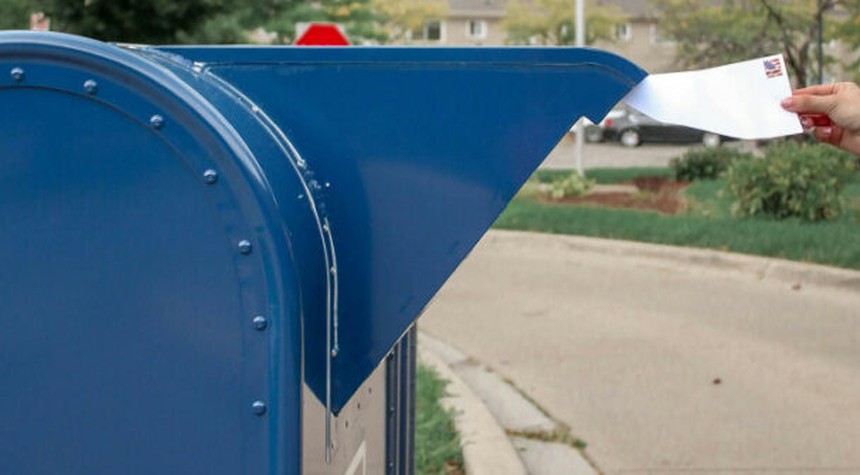
Here’s where it gets interesting. The order directs the postmaster general and the U.S. Postal Service to verify that ballots go to eligible voters and that returned ballots come from those same people. You know what’s wild? That this is considered controversial. We verify identities for everything from buying cold medicine to boarding airplanes, but suggesting we verify mail-in ballots gets treated like you’re proposing to dismantle democracy itself.
Scharf didn’t mince words about why this matters. The order cracks down on what he called election “abuses” from the past. Combined, these measures will help secure future elections and prevent the many abuses we’ve seen from happening again. That’s the goal anyway.
Lutnick explained one practical measure: barcodes on mail-in ballots. States run their own elections, but if they want to use the U.S. Postal Service, they’ll get a barcode from that service and put it on the envelope. One envelope per vote. The government can then verify the number of barcodes matches the ballots received. It’s tracking technology we use for Amazon packages applied to something infinitely more important.
Trump didn’t dance around his reasoning. He said Democrats like mail-in ballots because they use them for cheating since their policy is so bad. Blunt? Sure. But consider the resistance we’ve seen to basic election security measures. Consider how any attempt to verify voter eligibility gets labeled as suppression. The reaction tells you something.
The truth is that mail-in voting exploded during COVID and never went back to normal levels. What started as an emergency measure became the new standard in many places, often without the security infrastructure to support it. Ballot harvesting operations. Unsecured drop boxes. Ballots mailed to old addresses where people no longer live. We’ve seen the stories, the videos, the sworn affidavits.
This order doesn’t eliminate mail-in voting. It doesn’t even restrict it. What it does is apply common sense verification to a system that’s been running on the honor code. If your policies can’t survive election integrity measures, maybe the problem isn’t the measures.
The Daily Caller’s Reagan Reese first reported Trump would sign this order, and the reaction from the usual suspects was predictable. Cries of voter suppression before the ink was dry. But requiring that ballots go to real, eligible voters and come back from those same people isn’t suppression. It’s the bare minimum standard for a functioning democracy.
States still control their elections. This order just gives them better tools and federal data to verify eligibility. It establishes standards for using federal postal services to handle ballots. These aren’t radical propositions. They’re overdue corrections to a system that got sloppy fast.
Election integrity isn’t a partisan issue, or at least it shouldn’t be. Everyone should want accurate counts where only eligible voters participate once. The fact that one side fights basic verification measures while the other side demands them tells you everything about who benefits from chaos versus clarity.
Related: Trump Says Iran Mission Wraps in Two Weeks After Nuclear Goal Achieved