
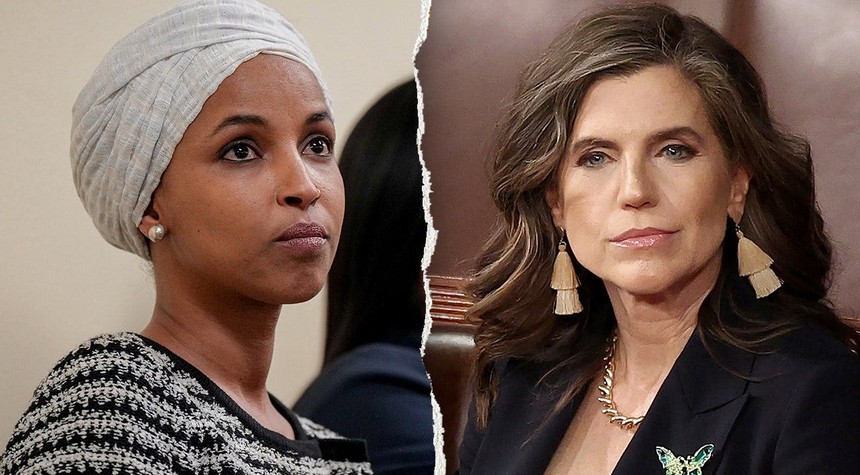
Ilhan Omar has never been one to lose sleep over what her critics think, and her response to Nancy Mace’s latest legislative gambit proves that pattern isn’t changing anytime soon. When asked about the South Carolina Republican’s proposal to bar foreign-born individuals from serving in Congress, Omar offered three words dripping with dismissiveness: “Good luck to her.”
That’s it. No outrage. No lengthy rebuttal. Just a verbal shrug that speaks volumes about how seriously she takes the effort.
Mace announced Wednesday that she’s pushing a constitutional amendment requiring all members of Congress, federal judges, and Senate-confirmed officers to be natural-born citizens. It’s the same standard we already apply to presidents and vice presidents, she argues, so why not extend it across the board? The proposal is bold, no question. It’s also dead on arrival, and everyone with even a passing understanding of how constitutional amendments work knows it.
Here’s the thing about amending the Constitution. It requires a two-thirds vote in both chambers of Congress, then ratification by three-fourths of state legislatures. That’s 38 states. In our current political climate, getting 38 states to agree on what day of the week it is would be a minor miracle, let alone a fundamental change to who can serve in federal office.
But let’s be honest about what’s really happening here. This isn’t about passing legislation. It’s about making a statement, drawing a line, and forcing a conversation about loyalty, assimilation, and what it means to represent American citizens when you weren’t born on American soil. Those are legitimate questions, even if the vehicle for raising them is more theatrical than practical.
Omar came to the United States as a refugee from Somalia. She became a citizen. She got elected. She took an oath. And she’s been a lightning rod for controversy ever since, not because of where she was born, but because of what she says and how she votes. The criticism she receives isn’t rooted in xenophobia for most conservatives. It’s rooted in her policy positions, her rhetoric about Israel, her apparent disdain for American exceptionalism, and her willingness to align with the furthest left fringes of her party.
You know what’s fascinating about this whole exchange? Omar’s confidence. She isn’t worried because she doesn’t have to be. The amendment won’t pass. She knows it. Mace knows it. We all know it. So why propose it at all?
Because sometimes political theater serves a purpose. It puts people on record. It forces uncomfortable conversations into the open. It reminds voters that there are fundamental disagreements about who should wield power in this country and under what conditions. Mace isn’t naive. She’s making a point, and Omar’s casual dismissal only reinforces the very dynamic that makes voters uneasy in the first place.
The natural-born citizen requirement for the presidency exists for a reason. The Founders wanted to prevent foreign influence at the highest level of executive power. Whether that same logic should apply to Congress is worth debating, even if this particular amendment is going nowhere fast. Should someone who spent their formative years under a different flag be making laws for Americans? Reasonable people can disagree.
What’s not debatable is that Omar represents a district that elected her knowing full well where she came from. That’s democracy. That’s the system working exactly as designed. Whether you like the outcome or not, the voters spoke. Mace’s proposal, however symbolic, asks whether there should be limits on who those voters can choose. It’s a question that cuts deeper than partisan politics, touching on national identity, sovereignty, and trust.
Omar’s three-word response tells you everything about how this will play out. She’ll keep her seat. Mace will keep pushing. And the rest of us will keep arguing about what it all means.
Related: Sara Carter Remembers the Moment She Realized the FBI Was Spying on Trump