
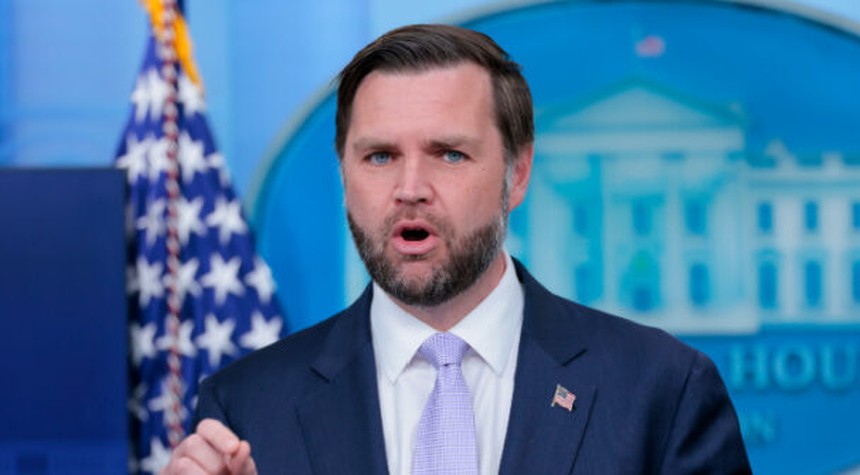
There’s a moment in Tuesday’s White House press briefing that perfectly captures everything wrong with political journalism today. Vice President JD Vance had to spend valuable time explaining to a grown adult how to ask a question. Not a complicated question, mind you. Just a question, period.
Andrew Feinberg from the Independent stood up and delivered what can only be described as a prosecutorial closing argument disguised as journalism. One hundred seventy-five words. Nearly ninety seconds of accusations, insinuations, and theatrical hand-wringing about President Trump allegedly talking up stocks he owns, selling them, and enriching himself. Vance called it “a hell of a question” mid-ramble, and you could hear the sarcasm dripping.
Here’s what gets me. We’ve reached a point where reporters think their job is to perform. To grandstand. To turn every press conference into their personal audition for cable news commentary. You know what your job actually is? Ask the question, get the answer, report the facts. It’s not that complicated. Our kindergarteners understand this concept during show and tell.
Vance didn’t just answer the question, though that would’ve been enough. He took the opportunity to teach a master class in media literacy. “You can just ask a question, try to get your answer, or you could do like a speech where you say, ‘You know Mr. Vice President, you know you’re a terrible human being and so is the president and so is the entire cabinet,’ and then I’m like ‘What’s your question,’ and then your question is ‘How dare you.'” Brutal. Accurate. Necessary.
The actual answer demolished Feinberg’s theatrical premise entirely. President Trump isn’t sitting in the Oval Office with a Robinhood account playing day trader. He has independent wealth advisers managing his money, like virtually every wealthy person in America. The entire premise of the question assumed Trump personally executes trades based on his own public statements, which is absurd on its face. But Feinberg’s speech, sorry, his question, was designed to plant that seed in viewers’ minds regardless of the answer.
This matters more than you might think. The erosion of objective journalism didn’t happen overnight. It happened through a thousand little moments like this one, where reporters decided their feelings mattered more than facts. Where the performance became more important than the information. Where every interaction became an opportunity to signal virtue to their colleagues rather than serve their audience.
And here’s the thing that really sticks in my craw. Vance went on to explain that both he and Trump support banning members of Congress from trading stocks. They want to make it illegal to use proprietary information gained from public service for personal enrichment. That’s the actual story here. That’s the headline. But how many outlets do you think led with that detail versus the theatrical confrontation?
The free market of ideas only works when journalists act as honest brokers of information. When they abandon that role to become activists with press passes, they poison the entire system. They make it impossible for regular Americans to trust anything they read or hear. And then these same journalists wonder why trust in media sits somewhere between used car salesmen and Congress.
Vance’s willingness to call this out directly, to waste no time on diplomatic niceties, reflects something refreshing in Republican leadership. For too long, conservatives treated hostile media with kid gloves, afraid of being called mean or unpresidential. Meanwhile, reporters like Feinberg felt emboldened to turn every briefing into performance art. That era is over.
The vice president took his first question from Breitbart News, occupying the new media seat. There’s symbolism there worth noting. Legacy media had their chance. They chose advocacy over journalism. Now they’re learning that choices have consequences, that credibility once lost takes generations to rebuild. If it can be rebuilt at all.
Traditional journalism principles aren’t conservative or liberal. They’re professional standards that served this country well for decades. The who, what, when, where, why, and how. Facts separated from opinion. Questions that seek information rather than confirm biases. These aren’t radical concepts. They’re the bare minimum we should expect from people given privileged access to our elected leaders.
What Vance did Tuesday wasn’t unprecedented or even particularly harsh. He simply refused to play a rigged game. He called out the charade for what it was, answered the substance buried beneath the performance, and moved on. That’s leadership. That’s what accountability looks like when you’re not terrified of the media’s reaction.
Every parent knows you have to correct bad behavior when you see it, not ignore it and hope it goes away. Feinberg’s question was bad behavior. Vance corrected it. The briefing continued. And maybe, just maybe, a few other reporters in that room thought twice before turning their next question into a soliloquy.
Related: USDA Scraps Discriminatory Farming Policies That Excluded White Male Farmers