
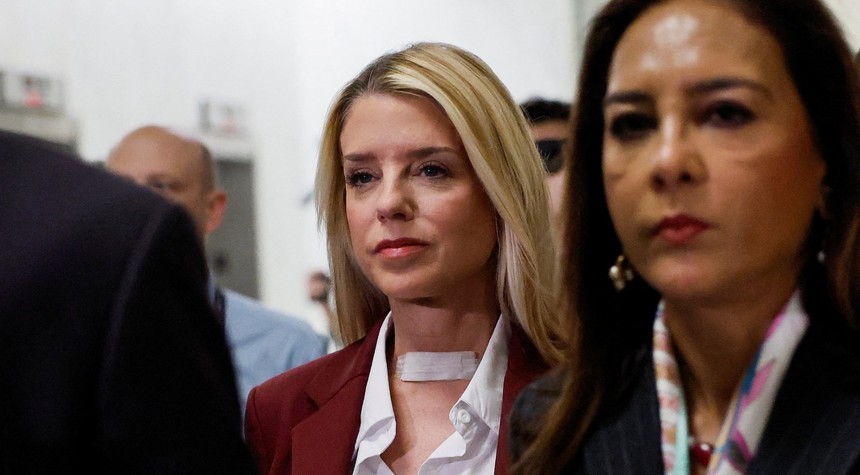
Pam Bondi sat before the House Oversight Committee for roughly four hours and said almost nothing that mattered. The former Attorney General invoked privilege when asked about President Trump’s involvement in releasing Justice Department files on Jeffrey Epstein. She wouldn’t confirm whether Trump directed her or anyone else at DOJ to take specific actions. She refused to address reports that she personally told Trump his name appeared multiple times in those files back in May, months before Congress mandated their release last November.
“I won’t discuss any conversations that I had or did not have with the president of the United States,” Bondi stated flatly, according to the transcript released Thursday. That’s the kind of answer that drives oversight committees crazy because it’s technically proper but functionally useless.
Here’s what we know. Bondi acknowledged Trump ordered an investigation into prominent Democrats. That part she didn’t hide behind privilege to avoid discussing. But when it came to her own conversations with the president about documents that named him? Suddenly everything became privileged communication.
Assistant Attorney General Harmeet Dhillon accompanied Bondi to the interview and made the strategy crystal clear. “You’re not going to get answers on those issues,” Dhillon said. She claimed she was there to “represent the interests of the DOJ,” which is a polite way of saying she was there to make sure nothing damaging slipped out.
The whole performance raises obvious questions. If the release of these files was routine transparency, why all the secrecy about who made what decisions? Bondi praised the department’s “record and commitment to transparency” while simultaneously refusing to be transparent about the very matter under discussion. You can appreciate the irony even if you find it frustrating.
What Bondi did reveal tells its own story. She said Todd Blanche, who was deputy Attorney General at the time, “was leading the Epstein matter and the release of everything from the beginning.” That’s an interesting detail because Blanche is now Trump’s pick for permanent Attorney General after Bondi got pushed out. He’s currently serving as acting head of DOJ.
So the timeline goes like this. Bondi allegedly tells Trump his name is in the Epstein files. Blanche handles the release of those files. Congress later passes a law requiring their release anyway. Bondi leaves. Blanche gets promoted. And now nobody will say what Trump knew, when he knew it, or what he told anyone to do about it.
The privilege claims might be legally defensible. Executive privilege exists for real reasons. Presidents need to be able to have frank conversations with their attorneys general without worrying that every word will end up in a congressional hearing. But privilege can also become a convenient shield when the answers would be politically uncomfortable.
Bondi tried to have it both ways during her testimony. She distanced herself from the “day-to-day management” of releasing the files while simultaneously defending how DOJ handled everything. That’s the classic move of someone who wants credit if things went well but deniability if they didn’t.
The House Oversight Committee clearly thinks something smells off here. They wouldn’t have released this transcript if they felt satisfied with the answers. Congressional Democrats will undoubtedly paint this as a cover-up. Republicans will call it proper respect for executive privilege. And the truth probably sits somewhere in that uncomfortable middle ground where legal propriety and political convenience happen to align perfectly.
What’s missing from all this legal maneuvering is any sense that the people involved see a larger obligation. The Epstein case isn’t about protecting political figures. It’s about a convicted sex offender with connections that reached into the highest levels of power across multiple administrations. The public deserves to know how decisions about those files got made and who influenced them.
Instead we get four hours of carefully parsed non-answers and privilege claims. That might satisfy the lawyers, but it sure doesn’t satisfy anyone looking for actual accountability.
Related: Massachusetts Released Him After He Nearly Killed a Cop