
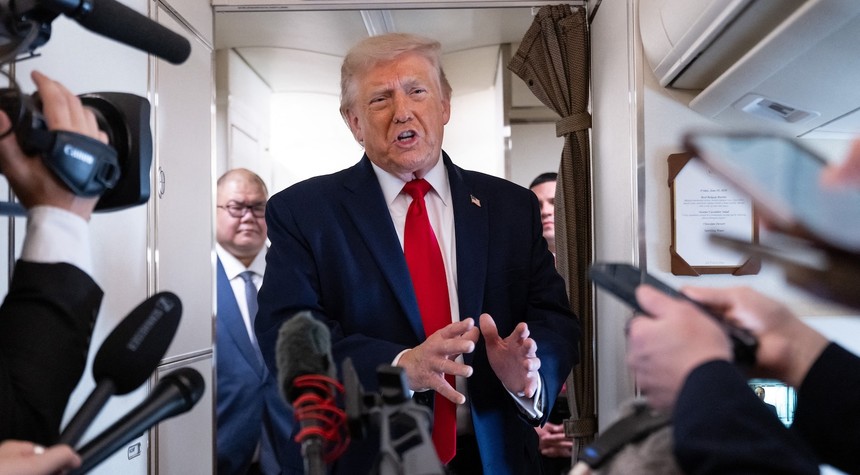
Let’s talk about what happens when justice gets tangled up with politics, because that’s exactly where we are right now. President Trump isn’t shutting the door on the idea of compensating people who stormed the Capitol on January 6th, and that includes folks who admitted to assaulting police officers. He said as much in a Sunday interview with NBC’s Kristen Welker, and honestly, it’s the kind of statement that cuts right through the noise of what this administration believes about that day.
The so-called Anti-Weaponization Fund was supposed to be the vehicle for these payments. Trump’s still pushing for it, calling it a great idea that many Republicans support. “If they get it approved, that’s great. If they don’t get it approved, I’d be disappointed,” he told Welker during a Wisconsin farmers’ roundtable event. The man’s not backing down from this position, even as his own Justice Department officially killed the fund on Friday.
Here’s where things get interesting. Acting Attorney General Todd Blanche had already told a House Appropriations subcommittee that the fund wouldn’t move forward, but he danced around making any permanent commitment. Then a DOJ attorney put it in writing. The fund’s dead. But Trump’s still championing the concept, which tells you everything about the disconnect between what some in this administration want and what’s actually feasible under our system of government.
You know what strikes me most about this whole situation? We’re talking about more than 1,580 people charged in federal court over January 6th. That’s not some small group of patriots who got caught up in the moment. Over 1,000 of them pleaded guilty. They looked at the evidence, consulted with lawyers, and said yes, I did this. At least 221 were found guilty at trial. Another 40 convicted on top of that. These aren’t numbers you can just wave away.
The president’s position rests on the idea that the Biden administration weaponized the Justice Department against conservatives. There’s merit to examining whether any prosecutorial overreach occurred. We should always scrutinize government power, especially when it comes to criminal prosecution. That’s conservative principle 101. Limited government means holding prosecutors accountable when they abuse their authority.
But here’s the blunt truth. Compensating people who pleaded guilty to assaulting law enforcement officers? That’s not about defending liberty or fighting government overreach. That’s something else entirely. We’re supposed to be the party of law and order. We’re supposed to back the blue. You can’t square that circle by cutting checks to people who admitted they attacked cops.
The farmers at that Wisconsin roundtable probably weren’t thinking much about January 6th payments when they showed up. They’re worried about commodity prices, trade deals, and whether they can pass their land down to their kids without the government taking half of it. That’s the stuff that matters to everyday Americans trying to build something lasting.
This weaponization fund debate reveals a deeper tension in conservative politics right now. How do we balance legitimate concerns about government overreach with the basic principle that actions have consequences? How do we defend individual liberty without excusing violence against the very institutions that protect that liberty? These aren’t easy questions, and pretending they are does nobody any favors.
The Justice Department made the right call shutting this fund down. Sometimes the answer to government problems isn’t more government spending, even when it’s framed as compensation for government wrongs. Sometimes you just need accountability, transparency, and a justice system that applies the law equally. That’s what conservatism should stand for.
Related: JD Vance Speaks the Truth Britain’s Leaders Won’t Say About Henry Nowak’s Death