
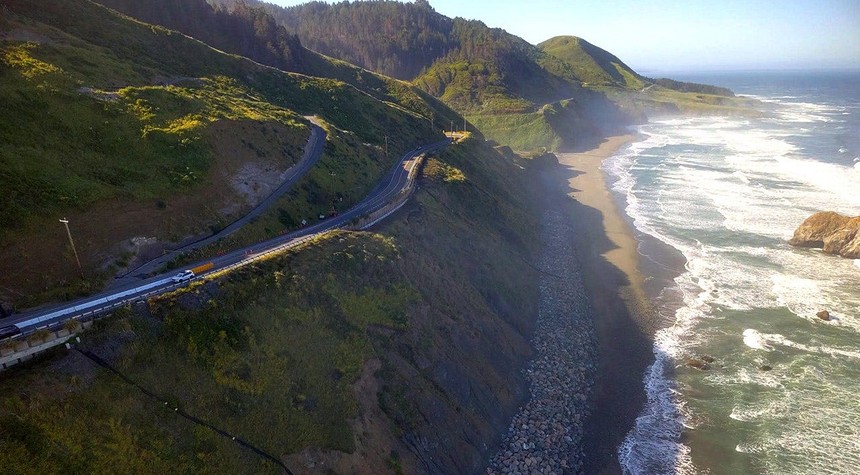
California just gave away 136 acres of coastline, and most people won’t hear about it until it’s done. Gov. Gavin Newsom’s handpicked state commission approved transferring a popular stretch of Mendocino County beach to Kai Poma, a nonprofit founded by three Indigenous tribes. The property includes Blues Beach, a windswept piece of shoreline just south of Westport that Californians have enjoyed for years.
Caltrans signed off on the deal June 26. The agency called it historic, and they’re not wrong. It’s the first time California has transferred state-managed land from Caltrans to a tribal organization. Once the paperwork clears, Kai Poma will own and maintain the entire site, protecting what officials describe as sensitive natural resources and Native American cultural assets.
Here’s what bothers me about this whole thing. Nobody’s asking the basic questions. What happens to public access? Will families still be able to visit Blues Beach, or are we handing over taxpayer-owned property with zero guarantees about what comes next? The announcement from Caltrans District 1 talks about protecting resources and honoring ancestral ties, but it’s awfully quiet about whether Californians can still use the beach they’ve been visiting for decades.
Look, I’m not against recognizing legitimate historical claims. The Sherwood Valley Band of Pomo Indians, Round Valley Indian Tribes, and Coyote Valley Band of Pomo Indians have ancestral connections to this land. That’s documented history. But there’s a difference between acknowledgment and transfer of ownership. The state acquired this property years ago, presumably with public funds. Now it’s changing hands through a commission process that most Californians didn’t even know was happening.
This is classic Newsom. Big symbolic gestures that sound progressive and compassionate, wrapped in language about justice and healing. Meanwhile, the same governor can’t fix the basics. California’s infrastructure is crumbling, the high-speed rail project now costs $126 billion with no tracks laid, and ordinary people are fleeing the state because they can’t afford to live here anymore. But sure, let’s focus on transferring coastline.
The timing feels deliberate too. Newsom’s got national ambitions, everyone knows it. These kinds of moves play well with certain audiences, especially when you frame them as righting historical wrongs. It’s easy politics. Who wants to be the person arguing against Indigenous rights? But governance isn’t supposed to be easy. It’s supposed to be responsible.
What’s the plan for maintenance? Kai Poma is taking on 136 acres of coastal property, which means erosion management, environmental monitoring, liability insurance, and all the headaches that come with owning land on California’s rugged coastline. Does this nonprofit have the resources for that, or will they come back asking for state funding down the line? You know what happens next. Taxpayers end up paying twice, once when we owned it and again when we’re subsidizing someone else to own it.
I’m not saying this is necessarily a bad outcome. Maybe Kai Poma will be excellent stewards of the land. Maybe public access will remain intact and everyone wins. But we deserve transparency about what this transfer actually means. We deserve to know whether this decision went through proper public comment periods. We deserve details about ongoing access rights and financial obligations.
California has real problems that need solving. Housing costs are crushing families. Crime is rising in major cities. Small businesses are closing because regulations make it impossible to operate. Energy costs keep climbing while the grid stays unreliable. Those are the issues that affect people’s daily lives. Transferring beaches to nonprofits might score political points, but it doesn’t put food on anyone’s table or make California more livable for the millions of residents struggling to stay here.
The state owns this because Caltrans acquired it, probably for transportation purposes originally. Now it’s surplus property, apparently. Fine. But when government decides land is surplus, the conversation should involve the people who paid for it. That’s us. The taxpayers who fund Caltrans and every other state agency. We should have a say in whether public property gets transferred to private entities, even nonprofits with sympathetic backstories.
This whole episode shows how California governance works now. Decisions get made by commissions and agencies, far from public scrutiny. By the time anyone notices, the deal’s already done. That’s not how a republic is supposed to function. It’s not conservative or liberal, it’s just basic accountability. The people should know what their government is doing with their property.
Related: Late Night Comic Joins HBO’s Trump Mockery While America Moves On