
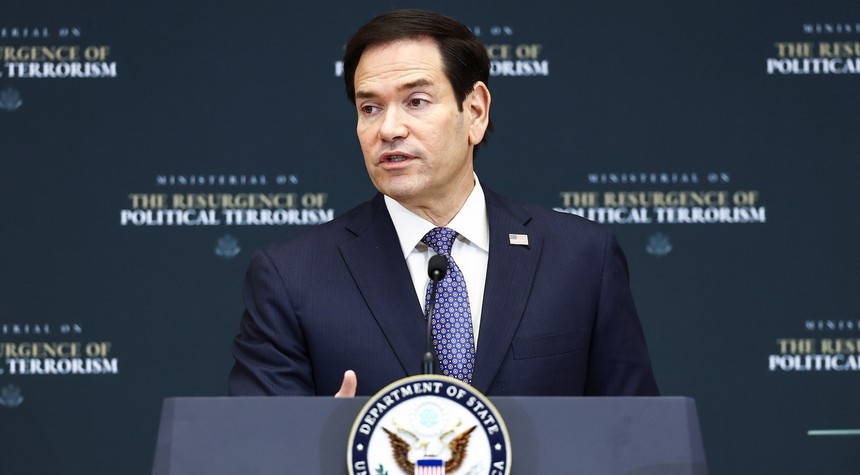
Marco Rubio just did something rare in modern politics. He named the problem everyone pretends doesn’t exist.
Standing before representatives from 66 nations at the State Department, the Secretary of State didn’t mince words about far-left political terrorism. Not the kind that makes for convenient talking points, but the real thing. The violence. The coordination. The willful blindness that’s become standard operating procedure in Western capitals. “It can no longer be denied, and it can no longer be ignored,” Rubio said, and honestly, it’s about time someone in his position said it out loud.
Here’s what drives me crazy about this whole conversation. We’ve spent years watching cities burn, federal buildings attacked, and political intimidation become normalized, all while the national security apparatus acted like the only extremism worth worrying about comes from one direction. That’s not analysis. That’s ideology masquerading as expertise.
Rubio called it an “extraordinary ideological prejudice” that leads authorities to dismiss violence when it serves left-wing causes. He’s right. Think about how we talk about these things. When violence happens from the right, every news outlet runs wall-to-wall coverage, and rightly so. But when Antifa-aligned groups assault journalists or radical environmentalists sabotage infrastructure, suddenly we’re told it’s complicated. Suddenly context matters. Suddenly we need to understand their grievances.
The double standard isn’t just annoying. It’s dangerous.
The secretary pointed out something even more troubling. These groups aren’t just operating in isolation anymore. They’re coordinating with hostile foreign states like Cuba and Iran. That’s not activism. That’s something else entirely, something that crosses the line from domestic nuisance to genuine national security threat. When American extremists start taking marching orders or support from Tehran, we’ve moved well beyond the realm of protected political expression.
You know what the response will be, right? Rubio himself predicted it. “The very idea that far-left terrorism could be a serious threat is treated as a right-wing fever dream, or worse, as a dangerous fascist conspiracy,” he said. Watch how the coverage plays out over the next few days. Watch how many outlets frame this as Trump administration paranoia rather than legitimate security concerns. It’s predictable because the pattern’s been established for years.
The Trump administration has made combating political violence central to its second term agenda. Critics say they’re too focused on the far-left while ignoring other threats. Fair enough, we should monitor all forms of extremism. But that criticism conveniently ignores the fact that for the past decade, federal law enforcement has been obsessed with right-wing threats while treating left-wing violence like a weather phenomenon, something that just happens without human agency or ideological motivation.
Stephen Miller, Scott Bessent, Kash Patel, and Linda McMahon all participated in the ministerial. More than 80 countries got invitations. The fact that 66 showed up tells you something. Other nations see what’s happening. They recognize the threat even if half of Washington still pretends it’s imaginary.
This isn’t about suppressing legitimate protest or criminalizing political disagreement. Nobody’s talking about arresting people for their opinions or their votes. We’re talking about actual terrorism, actual violence, actual coordination with foreign adversaries who want to see America weakened and divided. There’s a difference between passionate activism and throwing Molotov cocktails, between civil disobedience and organized political violence.
The blind spot Rubio identified isn’t accidental. It’s cultivated. It’s maintained by media outlets that share ideological sympathies with the causes these extremists claim to represent. It’s protected by academics who view revolutionary violence through rose-colored theoretical lenses. It’s enabled by prosecutors who refuse to charge offenders and judges who treat convictions like parking tickets.
Traditional conservative principles demand we take threats seriously regardless of their political packaging. Individual liberty means nothing if citizens can’t speak freely without fear of violent reprisal. Limited government requires the government we do have to perform its core function, protecting citizens from those who would harm them. Free markets can’t operate when businesses get torched for insufficient ideological enthusiasm.
The question isn’t whether far-left terrorism exists. The question is whether we’ll finally admit it does and respond accordingly. Rubio’s throwing down the gauntlet. Now we’ll see who has the courage to pick it up.
Related: The DOJ Spied on Congress and Nobody Seems Shocked Enough