
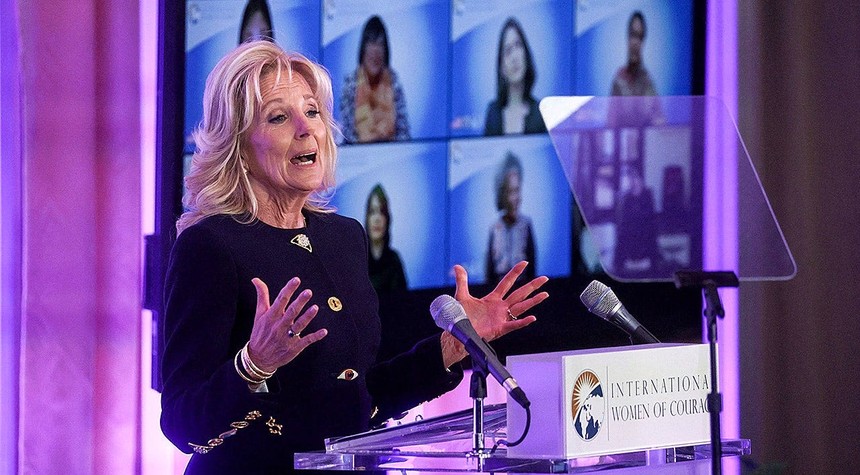
Four years ago, Taif Sami Mohammed stood in a State Department ceremony being celebrated as one of the world’s most courageous women. Today she’s on a terror watchlist, banned from entering the United States, and presumably hiding somewhere outside Iraq.
Let that sink in for a moment. The same woman Secretary of State Antony Blinken called Iraq’s “Iron Woman” in 2022 is now considered enough of a security threat that the Trump administration revoked her visa this week. Either the Biden team got it catastrophically wrong, or something changed dramatically in the years between that glittering awards ceremony and now. Neither option inspires much confidence.
The reversal is stunning in its completeness. Mohammed received the International Women of Courage Award, one of the State Department’s highest-profile honors for women worldwide. Jill Biden was there. Blinken heaped praise on her efforts fighting corruption in Iraq’s budget department, crediting her with stopping bribes and uncovering schemes that enriched corrupt officials. She was doing the hard work, the dangerous work, in a country where taking on entrenched power can get you killed.
Fast forward to 2025 and Republican lawmakers are calling her a “key enabler of terrorist funding in Iraq.” Representatives Joe Wilson and Greg Steube pushed hard for sanctions, alleging she helped facilitate terrorist financing through Iraq’s financial system. The Trump State Department listened and acted.
“While the Biden State Department shamefully celebrated and awarded foreigners who threaten our nation, the Trump State Department revokes their visas and ensures these individuals are removed from our country,” Assistant Secretary of State Dylan Johnson said. The language is pointed, deliberate. This isn’t just policy housekeeping. This is a statement about whose judgment matters and whose gets tossed in the recycling bin.
Here’s what bothers me most about this whole mess. The State Department hasn’t provided details about when Mohammed landed on the terrorist watchlist or what intelligence prompted that classification. We’re left guessing whether this was overlooked information, newly discovered evidence, or a political recalibration. The American people deserve transparency when our government celebrates someone one day and blacklists them the next.
This isn’t some minor bureaucrat we’re talking about. Mohammed rose from deputy finance minister to finance minister in Iraq, overseeing the federal budget and government spending. She had her hands on the financial levers of an entire nation. If she was indeed enabling terrorist financing, the implications are enormous. How much money flowed to bad actors? Which groups benefited? What operations did those funds support?
The Biden administration’s foreign policy legacy is littered with these kinds of judgment failures. You know what this reminds me of? The endless parade of “moderates” and “reformers” we backed in the Middle East who turned out to be anything but. We keep wanting to believe the best about people who tell us what we want to hear, and we keep getting burned.
Individual liberty requires strong national defense, and strong national defense requires knowing who your enemies are. It also requires admitting when you got it wrong, learning from mistakes, and correcting course. The Trump administration’s willingness to reverse this decision, politically awkward as it might be, shows a commitment to security over legacy protection.
The contrast between administrations couldn’t be sharper. One gave awards and photo opportunities to someone now considered a security threat. The other put her on a watchlist and revoked her access to American soil. One prioritized the optics of international women’s empowerment. The other prioritized protecting Americans from potential threats.
This case raises uncomfortable questions about our vetting processes for foreign officials we choose to honor. How many other award recipients might pose similar concerns? What due diligence actually happens before these ceremonies? Or does the desire for good press and diplomatic gestures override basic security screening?
Mohammed’s story is still unfolding. We don’t know where she is now or what comes next. But her journey from State Department honoree to terror watchlist entry should serve as a stark reminder that good intentions and pretty ceremonies don’t substitute for hard-headed realism about who we’re dealing with overseas.
Related: Jim Jordan Has Had Enough of the Virginia Prosecutor Who Considers Deportation Before Justice