
Here’s what you need to understand about Friday’s ruling from U.S. District Judge Jeannette Vargas. A Biden appointee in Manhattan just told the American people that our government lacks the authority to prevent immigrants from countries with high public benefit dependency rates from entering the United States. Read that again. She’s saying we must accept applicants we know are likely to become financial burdens on American taxpayers, even when our own State Department has identified the risk.
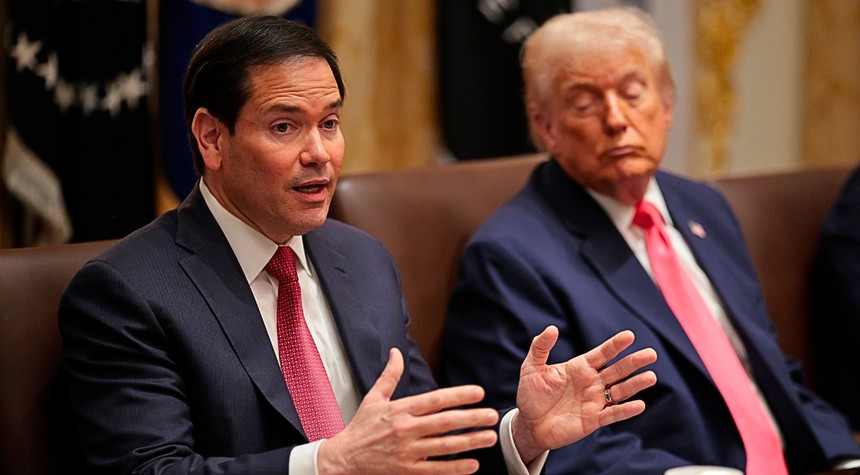
Secretary of State Marco Rubio implemented a policy that any reasonable person would call prudent. The directive covered 75 countries where immigrants historically show high rates of public assistance dependency. Not a travel ban. Not a permanent prohibition. A pause to review individual cases and require additional evidence that applicants wouldn’t immediately jump onto welfare rolls. This isn’t radical. It’s responsible governance.
Judge Vargas called this “Orwellian.” The irony is almost too thick to swallow. What’s truly Orwellian is a federal judge rewriting immigration law from the bench and pretending she’s defending congressional intent. The Immigration and Nationality Act gives the Secretary of State broad authority over visa issuance. Congress knew what it was doing when it wrote those provisions. They wanted executive flexibility because immigration policy requires responsiveness to changing conditions and national interests.
The ruling hinges on this claim that consular officers were being sidelined. Vargas writes that even when applicants passed initial review, they still needed to demonstrate they could overcome public charge concerns if they came from one of the 75 designated countries. She treats this like some constitutional crisis. It’s not. It’s called adding scrutiny where risk factors exist. We do this in every other area of public policy without judges throwing fits about it.
Think about what the State Department was actually doing here. Officers still reviewed each application individually. They still assessed qualifications. They still made determinations about eligibility under existing law. The policy simply said that for nationals from high-risk countries, passing the normal threshold wasn’t enough. You needed to provide additional evidence. This is how risk management works in the real world.
The administration’s position was straightforward. These refusals fell under Section 221(g) of the Immigration and Nationality Act, which governs visa denials. Vargas rejected this reasoning, claiming the government couldn’t identify a law allowing denial of an otherwise eligible applicant. But that’s a deliberate misreading of how executive authority functions. The Secretary of State has discretionary power to set standards. Congress gave him that power precisely because they understood that cookie-cutter approaches to immigration don’t work.
You know what’s really happening here? Another federal judge has decided that Trump administration policies are inherently suspect and must be blocked regardless of legal merit. Vargas spent 61 pages explaining why Rubio exceeded his authority, but the Constitution vests foreign policy powers primarily in the executive branch. Immigration is fundamentally a foreign policy concern. The State Department doesn’t need a specific statutory provision saying “you may require additional evidence from high-risk countries” any more than it needs permission to breathe.
The countries on this list span Africa, Latin America, the Caribbean, Eastern Europe, Southeast Asia, and the Middle East. That’s nearly 40 percent of the world’s nations. Progressive critics will scream about discrimination. But pointing out statistical realities about public benefit usage isn’t discrimination. It’s acknowledging facts. American taxpayers shell out billions annually for public assistance programs. We have every right to ask whether potential immigrants will contribute to our economy or drain resources from it.
This ruling comes the same week the Supreme Court handed Trump two major immigration victories, allowing termination of temporary protected status for over a million migrants and restricting asylum claims at the southern border. The contrast couldn’t be clearer. The Supreme Court understands executive authority over immigration. Lower court judges appointed by Democrats seem constitutionally incapable of accepting that this president has the same powers every other president has enjoyed.
Vargas directed the government to revisit cases denied solely under this policy. That means applicants who were correctly identified as public charge risks will now get another bite at the apple. American communities will absorb the costs when some percentage of these individuals arrive and immediately access welfare programs. But federal judges don’t worry about those consequences. They live in neighborhoods insulated from the real-world effects of their judicial activism.
The State Department will appeal. They should. This decision represents exactly the kind of overreach that makes ordinary Americans lose faith in the judiciary. We elect presidents to make these calls. We expect cabinet secretaries to implement policies that protect American interests. When unelected judges with lifetime appointments decide they know better, something fundamental breaks in our system of government. Limited government means judges stay in their lane. Vargas just drove a truck through the guardrails.
Related: The Rent Abolitionist Who Won’t Pay Rent Just Got Evicted