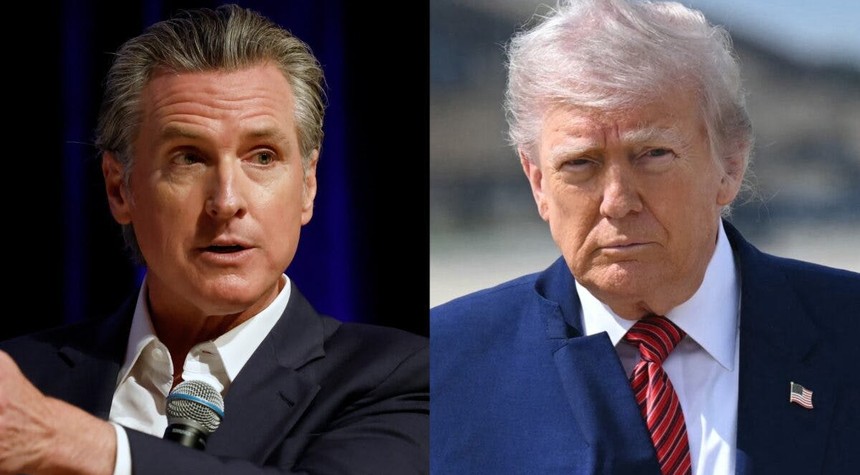
Hell has officially frozen over. Gavin Newsom, the man who’s made opposing Donald Trump a second career, just gave one of the former president’s policies his full-throated endorsement. We’re not talking about a grudging acknowledgment or politically calculated hedging. The California governor stood in San Francisco last week and told families to sign up for Trump Accounts, calling it “one of the best things he’s done.”
Let that sink in for a moment. This is the same Newsom who’s spent years positioning himself as Trump’s chief West Coast antagonist, the guy who treats opposing Republican policies like a competitive sport. And here he is telling ABC7, “I’m pretty aggressive pushing back against Trump, but not on this. This was one of the really outstanding things that this administration has done. And they deserve a lot of credit.”
You know what? Good for him. Because Trump Accounts actually deserve the praise.
Launched on July 4, 2026, the program allows children under 18 with Social Security numbers to open tax-advantaged investment accounts. Kids born between January 1, 2025, and December 31, 2028, get an extra sweetener: a one-time $1,000 contribution from Uncle Sam. Already, seven million children have enrolled, with roughly a million more signing up each month. Those numbers don’t lie.
The math behind these accounts tells a story about genuine opportunity. That thousand-dollar seed money for a child born in 2026 could grow to about $5,800 by age 18 without anyone adding another dime. Let compound interest do its work for another decade and you’re looking at $18,100 by age 28. But here’s where it gets interesting. If parents, relatives, and others max out the annual contribution limit of $5,000 per year, that account could hit $303,800 by age 18 or balloon to $1.09 million by age 28.
This isn’t some pie-in-the-sky government fantasy. These are White House projections based on historical market returns and the power of reinvesting earnings over time. The program, established through Trump’s One Big Beautiful Bill Act, essentially creates a financial foundation for millions of American kids who might otherwise start adulthood with nothing but debt and dim prospects.
Treasury Secretary Scott Bessent called it “the most important benefit for young people since the GI Bill.” That’s not hyperbole when you consider what the GI Bill did for post-war America. It built the middle class. It turned working-class veterans into homeowners, college graduates, and business owners. Trump Accounts could do something similar for this generation.
The administration sweetened the pot for employers too, making contributions up to $2,500 tax-exempt. These employer contributions count toward that $5,000 annual limit, but the tax break gives companies real incentive to invest in their employees’ kids. That’s how you build loyalty and strengthen families without expanding government bureaucracy.
When kids turn 18, the account converts to a traditional IRA, but here’s the genius part: you can withdraw money without penalties for approved expenses like college tuition, buying a home, or starting a business. It’s not locked away in some untouchable vault. The money works for real-world needs that launch young adults into productive lives.
California’s pushing families to combine Trump Accounts with CalKIDS, their state college savings program. They just celebrated one million children claiming CalKIDS accounts, and state officials see the federal program as complementary rather than competitive. That’s pragmatic governance, something we need more of regardless of party affiliation.
The Trump administration even issued guidance in June allowing state and tribal child welfare agencies to open and manage accounts for eligible children in foster care. These are kids who typically age out of the system with almost nothing. Now they’ll have a financial cushion and real options.
This is conservatism at its best. Not handouts, but hand-ups. Not expanding dependence, but creating pathways to self-sufficiency through smart use of markets and tax incentives. It’s the kind of policy that recognizes government’s proper role: establishing frameworks that empower individuals and families to build wealth on their own terms.
When even Newsom can’t find fault with a Republican president’s signature domestic policy, maybe we’re onto something that transcends the usual partisan food fight. Maybe we’ve stumbled into actual governing for once.
Related: Trump’s 50 Percent Tariff Threat Shows Canada Exactly Who Holds the Cards