
The Trump administration just saved taxpayers $400 million in four months by doing something so obvious it’s almost painful to explain. They turned the fraud detection systems back on.
You read that right. The previous administration had apparently decided that checking whether student aid recipients were actually alive, actually citizens, and actually real people was too much of a hassle. So they just stopped doing it.
Deputy Under Secretary James Bergeron laid out the stunning reality in an exclusive interview this week. When Trump’s team walked into the Education Department, they discovered that Biden’s people had shut down data-sharing agreements with the Social Security Administration and the Department of Homeland Security. These weren’t complicated systems or expensive programs. They were basic checks that prevented federal money from flowing to dead people and illegal immigrants.
Think about that for a second. We’re talking about $130 billion a year in federal grants and loans, and someone made the conscious decision to stop verifying that the people receiving this money were legitimate. It’s like leaving your front door wide open in a bad neighborhood and being shocked when someone walks in and takes your television.
The moment these protections got switched back on in February 2025, the government saved $30 million right away. Dead people stopped getting checks. Another $10 million came from catching Pell grant overpayments. Just like that, with the flip of a switch.
But it gets worse. The Biden administration wasn’t requiring schools to verify student identities either. This created a perfect storm for fraud. International crime rings and bot networks flooded the system, stealing federal student aid with almost no resistance. It’s the kind of thing that makes you wonder if anyone was actually paying attention or if they simply didn’t care.
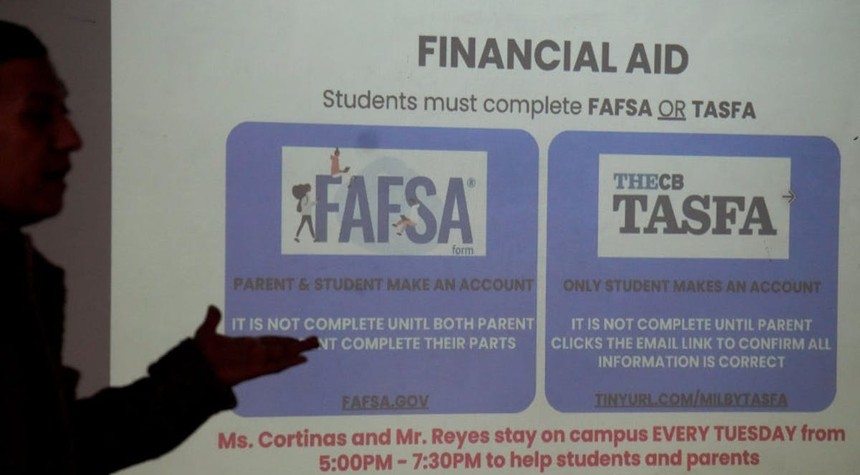
The new FAFSA system launched in April 2026 treats taxpayer money with something resembling respect. Every single student who fills out the form now gets screened in real time. They receive a fraud risk score, and if that score raises red flags, they have to come online and show an actual ID. You know, like you do when you board a plane or buy alcohol or do basically anything else that requires you to prove you’re who you say you are.
Bergeron put it plainly. If you need an ID to drive a car or get on a plane, shouldn’t you need one to access tens of thousands of taxpayer dollars for your education? It’s not exactly a radical concept.
Some applications get rejected outright now. If someone can’t present identification or their application throws up too many warning signs, the answer is no. Simple as that. The government is finally acting like it’s spending other people’s money, which is exactly what it’s doing.
The broader Fraud Task Force that launched in March 2026 has uncovered almost $230 billion in fraud across federal programs. They’ve stopped $56 billion in payments that were headed straight to criminals and enforced over $55 billion through indictments, settlements, and civil penalties. These aren’t small numbers. This is generational theft that was happening right under everyone’s noses.
Here’s what really stings about this whole situation. None of these fixes required new technology or billion-dollar contracts or years of planning. They just needed someone to care enough to turn the existing systems back on. The protections were already built. The agreements were already in place. Someone just had to decide that preventing fraud mattered more than whatever bureaucratic excuse was being used to justify looking the other way.
It raises uncomfortable questions about what else got turned off or ignored or conveniently forgotten during the previous administration. If basic identity verification for student aid was too much trouble, what other safeguards were deemed unnecessary?
The current approach treats fraud prevention as a feature, not a bug. It assumes that people trying to steal from taxpayers will find a way unless you actively stop them. It recognizes that compassion without accountability isn’t compassion at all. It’s just carelessness with a pleasant-sounding name.
Four hundred million dollars in four months. That’s the cost of pretending that fraud protection is somehow incompatible with helping students who genuinely need assistance. The two things aren’t in conflict. They never were. You can run an efficient, fair system that serves real students while keeping out the criminals and fraudsters. You just have to want to.
Related: Washington Post and New York Times Just Got Caught Hiding What ICE Actually Arrested