
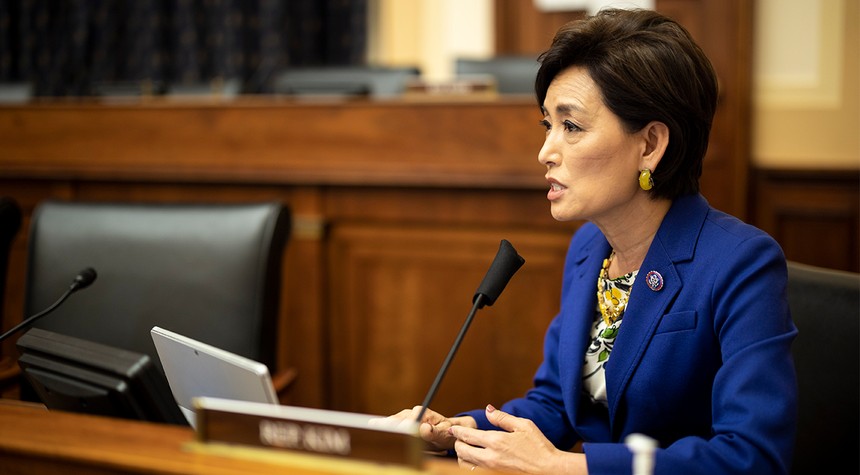
The stock trading ban was a start. Now comes the harder part.
Rep. Young Kim isn’t satisfied with Congress patting itself on the back for finally doing something about lawmakers gaming the market. The California Republican sees another gaping hole in the ethics rulebook, one that’s been letting members of Congress quietly pad their bank accounts while pretending to serve their constituents. She’s talking about earmarks, and she’s not mincing words about what’s been happening.
“The days of members thinking that ‘I can use the community project funding request or bringing the earmarks for my district and get filthy rich off of it’ – those days are numbered,” Kim told reporters. It’s the kind of blunt assessment that should’ve come years ago, frankly.
Here’s how the scheme works, and it’s clever enough to make you wonder how many members have been pulling this off. A lawmaker earmarks federal funds for a nonprofit where their spouse sits on the board. Or they secure funding for a park near an apartment complex owned by their family. Maybe they push through funding for a road leading straight to rural property they happen to own. The property values skyrocket, the family wealth multiplies, and technically nobody broke any rules. Technically.
You know what’s infuriating about this? The American people aren’t stupid. They see their representatives entering Congress with modest means and leaving as millionaires. They watch apps like the “Pelosi Stock Tracker” proliferate because citizens have given up expecting transparency and now just want to copy the trades of people with inside information. That’s where we are as a country. That’s the level of trust we have in our institutions.
Kim’s Stop Congressional Self-Enrichment Resolution would close these loopholes by extending conflict-of-interest rules beyond just the lawmaker and their spouse. It would cover immediate family members and indirect financial interests. The kind of stuff that should’ve been obvious from day one but apparently needed spelling out because some people can’t help themselves.
The stock trading restrictions passed in July were significant. They banned purchases outright and required advance notice for sales. But that addressed only one avenue of enrichment. Kim’s pointing out that when you plug one hole, water finds another path. Politicians are resourceful that way, especially when personal fortune is at stake.
Current House rules already require members requesting earmarks to certify they don’t have a financial interest in the recipient. But those rules are toothless when a member’s adult children own property nearby or when a spouse serves on a board that stands to benefit. The workarounds are endless if you’re creative and shameless enough.
Kim brings up the infamous “Bridge to Nowhere” in Alaska from the early 2000s. That boondoggle became shorthand for everything wrong with earmarks and sparked a decade-long moratorium. When earmarks returned, they came with safeguards. Those safeguards helped, Kim acknowledges, but they clearly didn’t go far enough.
The frustration spans the political spectrum, which is rare these days. Americans across every demographic are tired of watching career politicians line their pockets while preaching about public service. There’s something particularly galling about a member of Congress using taxpayer dollars to enhance their personal wealth, even indirectly. It violates the basic social contract between representative and represented.
Kim insists she’s not targeting specific individuals, and maybe that’s politically necessary. But let’s be honest about what’s happening here. This isn’t about one bad apple. This is about a system that’s been designed (or at least allowed to evolve) in ways that benefit the people writing the rules. When you see members whose net worth mysteriously explodes during their time in office, questions deserve asking.
The principle Kim’s defending matters more than any specific case. Individual liberty means nothing if government officials use their positions for personal enrichment. Limited government becomes a joke when those in power expand their own wealth through the very spending they’re supposed to steward responsibly. Free-market capitalism gets corrupted when political connections become more valuable than actual productivity.
This isn’t about discouraging members from fighting for their districts. Bringing federal funds back home is part of the job. But there’s a bright line between serving constituents and serving yourself. Most Americans can see that line even if some in Congress apparently can’t.
The resolution represents the kind of accountability measure that should enjoy broad bipartisan support. Whether it actually will remains to be seen. Congress has a funny way of dragging its feet when reforms might actually affect members’ wallets.
Related: Hasan Piker’s Racist Jab at Brandon Gill’s Wife Exposes the Left’s True Colors