
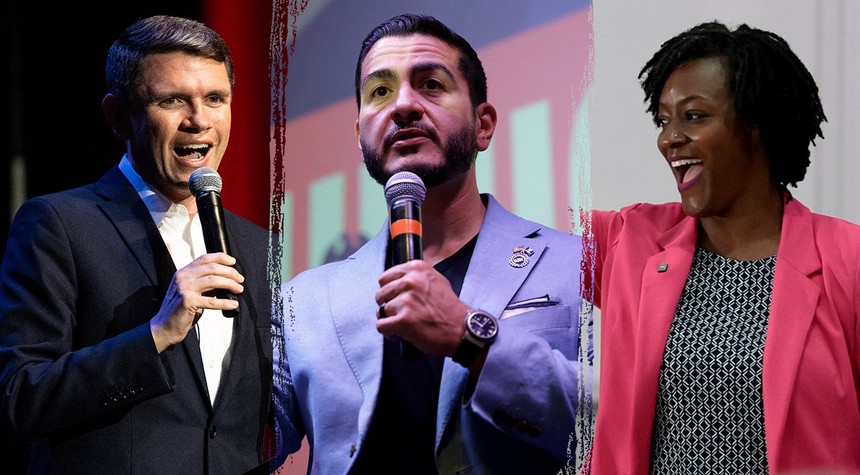
There’s something deeply cynical happening in Democratic politics right now, and Pastor Lorenzo Sewell isn’t having it. The Detroit pastor recently told Fox News Digital that progressive candidates are trying to “virtue-signal, placate, and try to propagate to Christians” because they suddenly realized something important. Christians represent the largest religious voting bloc in America, and ignoring them isn’t working anymore.
You know what’s fascinating? For years, the progressive wing of the Democratic Party treated religious voters like they were clinging to outdated superstitions. Remember the Obama campaign’s infamous “bitter clingers” moment? But now we’re watching a parade of Democratic Senate candidates suddenly discover their inner theologian. It’s about as authentic as a three-dollar bill.
Take James Talarico, the Texas state lawmaker running for Senate. He’s got a seminary degree and he’s not shy about using it. He’s built his entire campaign around asking what Jesus would do about tax systems and healthcare. The implication, of course, is that Jesus would vote Democrat. It’s clever politics wrapped in scripture, and it deserves scrutiny.
Sewell sees through this performance art. “It’s the largest voting bloc in America,” he said, pointing out the obvious calculation behind this sudden religious fervor. “We’re celebrating 250 years, where our forefathers understood that the God of the Bible, the Lord Jesus Christ, would give them the ability to start this great nation.”
Florida’s Angie Nixon went even further during comments at Saint Paul AME Church in Jacksonville. She compared herself directly to Christ, calling them both radicals. That’s not just bold. That’s the kind of statement that makes genuine believers wince. Using Jesus as your political branding consultant doesn’t make you prophetic; it makes you opportunistic.
Then there’s Abdul El-Sayed in Michigan, a Muslim candidate who’s appearing on Christian podcasts to discuss the overlap between Islamic teachings and Christianity. There’s nothing wrong with interfaith dialogue, but when it’s happening in the middle of a heated Senate race, the timing raises questions about motivation.
Here’s the thing that progressives seem to miss. Religious voters aren’t stupid. They can tell when someone’s quoting scripture because they believe it versus when someone’s mining the Bible for applause lines. The difference matters. Faith isn’t a political strategy; it’s a worldview that shapes everything you do.
Sewell also raised concerns about what he sees as preferential treatment for Muslims in Detroit and a two-tiered justice system. These aren’t minor grievances. When a pastor who serves his community daily sees inequality in how religious groups get treated by local officials, that’s worth examining. The left loves to talk about equity, but apparently that principle has geographic and demographic limits.
The broader pattern here reveals something uncomfortable about modern progressive politics. When these candidates invoke Jesus, they’re almost always using Him to justify bigger government, higher taxes, and more federal control. Jesus fed the hungry through personal action and community, not through creating a Department of Hunger Management with a billion-dollar budget.
Christianity has been the backbone of American civic life for two and a half centuries. Sewell’s right about that. We’ve been imperfect, absolutely, but we’ve also been the most benevolent nation in human history. We’ve protected Israel, spread religious freedom, and created prosperity that’s lifted billions worldwide. That legacy deserves respect, not political hijacking.
The Democratic Party faces a real problem with religious voters, particularly Christians. Instead of authentically engaging with faith traditions and their concerns, too many progressive candidates are trying to perform their way into credibility. They’re speaking Christian language while promoting policies that many believers find fundamentally at odds with their values.
Religious voters aren’t looking for politicians who can quote scripture. They’re looking for leaders whose actions reflect genuine conviction. The difference shows up in policy choices, in how you treat religious liberty, in whether you see faith as something to be managed or celebrated.
Pastor Sewell’s calling out this charade because someone needs to. When politicians suddenly get religion right before an election, the faithful notice. And they remember.
Related: Democrats Are Using Your Tax Dollars to Destroy Small Businesses