
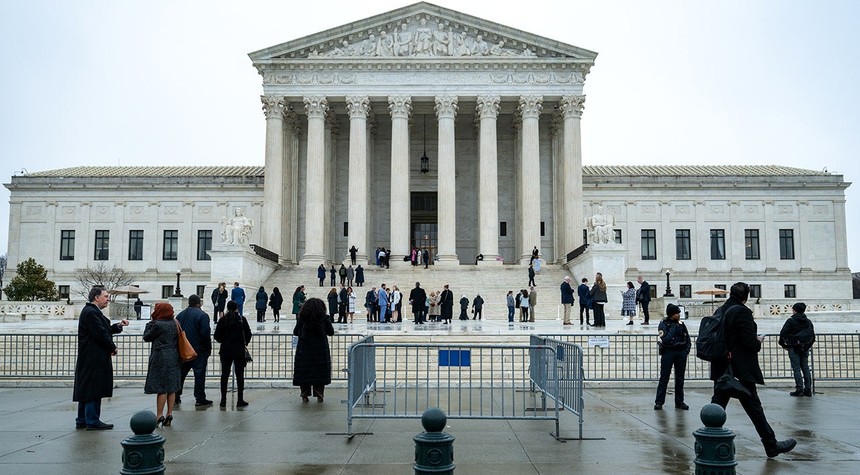
The Supreme Court made the right call Thursday when it blocked a lower court judge from rewriting New Hampshire’s voter ID rules weeks before the midterm elections. This isn’t about making it harder for students to vote. It’s about preventing judicial overreach from creating confusion at the polls when Americans need clarity most.
Here’s what actually happened. New Hampshire passed House Bill 323 back in April, and Governor Kelly Ayotte signed it into law. The legislation removed student IDs from the list of acceptable identification for casting a ballot. Pretty straightforward stuff. The law took effect June 2, giving election officials months to prepare. Secretary of State David Scanlan issued guidance. Training sessions happened. The system adjusted.
Then a lower court judge decided to step in at the eleventh hour and complicate everything. The judge ruled that even though the law explicitly removed student IDs from the approved list, election officials still had to consider them alongside other evidence when voters showed up without proper identification. You know what that creates? Chaos. Different interpretations at different polling places. Arguments with poll workers who’ve been trained one way and now have to improvise another.
The Supreme Court cited something called the Purcell Principle, which basically says courts shouldn’t mess with election procedures too close to voting day because it causes confusion. Makes sense, right? Voters need to know the rules before they walk into that booth, not discover that judges changed them last week.
Justice Ketanji Brown Jackson dissented, arguing that the lower court was just trying to prevent misinformation about voting rules. But that misses the point entirely. The misinformation comes from changing the rules after they’ve been established and communicated. New Hampshire officials spent months training election workers on the new law. Voters had time to figure out what ID they needed. Throwing a wrench into that process weeks before the election doesn’t clarify anything. It muddies the water.
This gets to something bigger about how elections should work in a republic that values order and predictability. States have the constitutional authority to run their elections. When state legislators pass laws through the proper channels, when governors sign them, when election officials implement them with adequate time for public awareness, that’s the system functioning as designed. Federal judges swooping in to second-guess those decisions creates the very confusion they claim to prevent.
New Hampshire Attorney General John Formella, a Republican, put it plainly: the state has a responsibility to protect election integrity and ensure laws are applied as written. That’s not controversial. That’s basic governance. If you don’t like the law, work to change it through the legislature. What you don’t do is ask judges to reinterpret clear statutory language weeks before people vote.
The broader principle here matters beyond New Hampshire. We’ve seen too many instances where courts treat election laws like suggestions instead of binding rules. That breeds cynicism about the whole process. People start wondering whether the rules even matter if judges can just revise them on the fly. The Supreme Court’s decision reinforces something essential: stability in election procedures protects everyone’s confidence in the outcome.
Students who want to vote in New Hampshire still can. They just need to bring acceptable identification like everyone else. That’s not suppression. That’s basic verification that the person casting the ballot is who they claim to be.