Dawn Vogel is a Republican county supervisor in Buchanan County, Iowa, where Trump won by nearly 30 points. She just voted for something that puts her in perfect agreement with Alexandria Ocasio-Cortez and Bernie Sanders. Let that sink in for a moment.
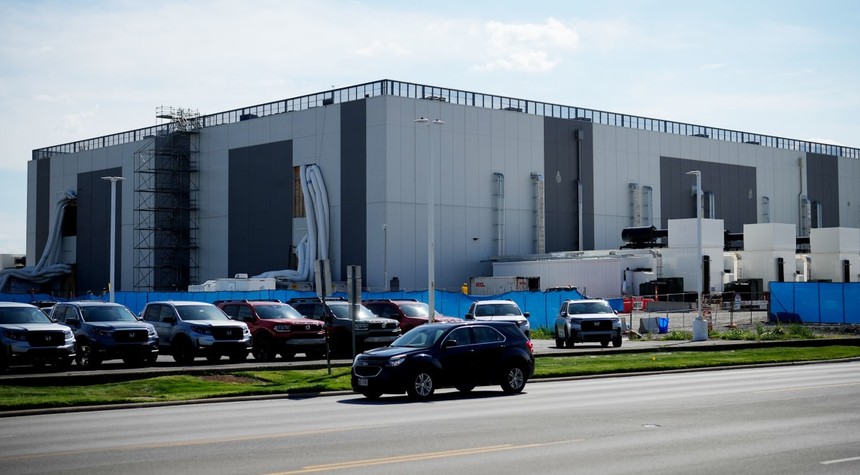
The issue is data centers, and it turns out nobody wants them. Not the rural conservatives. Not the democratic socialists. Not anybody who actually has to live near one.
Vogel pushed through a moratorium blocking data centers from her county earlier this year. She hasn’t found a single constituent who disagreed with her. Meanwhile in Washington, AOC and Sanders are proposing the exact same thing but nationwide. “I don’t think this is a Republican or Democratic issue,” Vogel said, and honestly, when was the last time you heard that phrase and actually believed it?
Here’s what she said next, and it matters. “You can have all the data you want in the world, but if you don’t have water to drink, you don’t have humans to use the data.”
That’s not hysteria. That’s common sense wrapped in blunt truth.
President Trump sees this differently. He posted on Truth Social that communities rejecting data centers “want to end up being backwards and poor.” His argument is simple: data centers mean jobs, lower taxes, and prosperity. “If they want to be successful and rich, with far lower taxes and jobs all over the place, let Data Reign,” he wrote.
But voters aren’t buying it. An NBC News poll found 69% of Americans oppose AI data centers in their area. Nearly half strongly oppose them. That’s not a partisan split. That’s a consensus, which in 2025 America might as well be a unicorn sighting.
The resistance stretches from Nebraska to New Jersey along Interstate 80, cutting through eight swing House districts and two major Senate races. These aren’t fringe activists or professional protesters. These are regular people who see what’s coming and want no part of it.
Tamara Clark, a 49-year-old healthcare worker and Democrat, put it plainly. “All of the data centers that are starting to pop up in areas, I find that troublesome because it drives utility costs for citizens in the area.” She’s watching the rich get richer while everyone else scrambles to pay electric bills. The data centers suck up enormous amounts of power, and guess who ends up subsidizing that consumption?
In Ohio, this has become campaign ammunition. Rep. Marcy Kaptur is hammering her Republican opponent Derek Merrin over a 2017 vote that extended tax breaks to data center companies. Senator Jon Husted, who championed data centers as lieutenant governor, suddenly introduced legislation requiring utility companies to charge data centers their full freight. Funny how an election year clarifies priorities.
This isn’t about being anti-technology or anti-progress. It’s about who benefits and who pays. The promise is always the same: jobs, growth, prosperity. The reality tends to be different. A few construction jobs that disappear once the facility is built. Minimal permanent employment because these places run on automation. Strained power grids. Higher utility costs. Depleted water resources.
And for what? So AI companies can train their models faster? So tech giants can store more cat videos and surveillance data?
The populist coalition fighting data centers doesn’t fit into our usual political categories, which is exactly why it’s so potent. You’ve got county supervisors in deep-red Iowa standing shoulder to shoulder with the Squad. You’ve got healthcare workers and farmers and small business owners all saying the same thing: not here, not now, not like this.
Trump’s instinct isn’t wrong about economic development. Communities do need growth and investment. But growth that depletes resources and raises costs for locals while enriching distant corporations isn’t growth. It’s extraction with better PR.
The powerful have been taking advantage of the powerless for so long that people can smell it coming now. They see the playbook. Big promises, tax incentives, minimal oversight, and then years of dealing with the consequences while the profits flow elsewhere.
What we’re witnessing is something rare and valuable: actual democratic pushback before the damage is done. Voters are using ballots, yard signs, courts, and every level of government to say no. They’re fighting not because they hate progress but because they’ve learned to recognize a bad deal.
This November’s midterms will test whether that resistance has teeth. Whether politicians listen to their constituents or to the tech lobby. Whether local control means anything anymore.
Trump says communities without data centers will be backwards and poor. Voters are responding that communities with them might have electricity bills they can’t afford and aquifers they can’t refill. That’s not backwards thinking. That’s people who’ve watched this movie before and didn’t like the ending.
When Republicans and socialists agree on policy, you should probably pay attention. The data center fight isn’t about left or right. It’s about whether ordinary Americans still get a say in what happens to their land, their water, and their communities. Turns out they do. And they’re saying no thanks.
Related: Trump Finally Opens His War Chest and Ken Paxton Gets the First Ten Million