
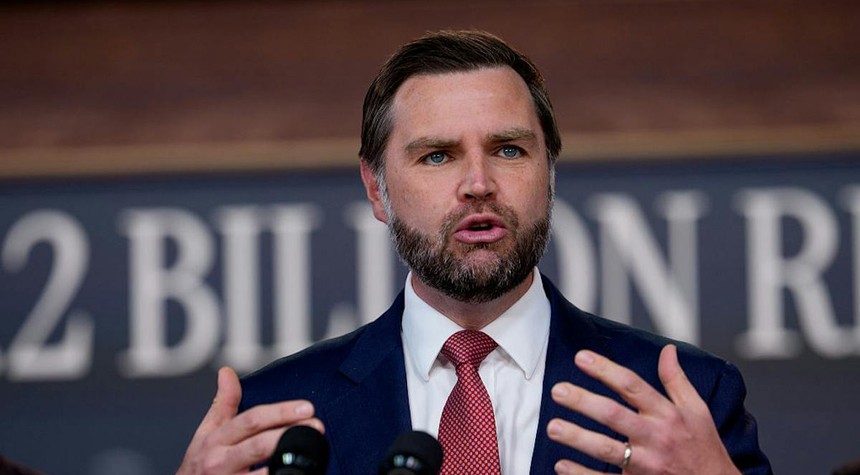
The Trump administration got caught with its hand in the cookie jar, and Vice President JD Vance just admitted it. Sort of.
In an interview released Tuesday, Vance responded to The Daily Wire’s explosive report about a directive that told Immigration and Customs Enforcement agents to stop arresting illegal immigrants without criminal records. The order has since been rescinded, but only after the story broke and the political damage started spreading like wildfire. Vance didn’t deny the directive existed. He just reframed it as a resource allocation issue, which is either honest pragmatism or sophisticated spin depending on how charitable you’re feeling.
Here’s what happened. Over the weekend, ICE sources nationwide told The Daily Wire they’d received verbal orders to limit arrests to illegal immigrants with criminal charges or convictions. This represented a seismic shift in what was supposed to be a comprehensive mass deportation campaign. The Department of Homeland Security rushed out a statement calling the report “false” and insisting “no one is off the table” for arrest. But funny thing about damage control: it rarely works when you’re scrambling. Within hours of the story going public, ICE quietly gave officers permission to resume arresting non-criminal illegal immigrants.
Vance’s explanation leans on the reality of limited resources. He’s not wrong about that part. If you’ve got one agent and one arrest slot that day, you’re going to prioritize the violent felon over the visa overstay. That’s common sense, not policy revolution. But that’s also not what the directive said, and Vance knows it.
“Unfortunately, sometimes you have people who are leaking to reporters some internal policy documents,” Vance told interviewer Vince Coglianese. You can almost hear the frustration in that word “unfortunately.” Translation: someone inside the administration decided the American people deserved to know what their government was actually doing versus what it was saying it was doing. Whistleblowers have this annoying habit of exposing gaps between rhetoric and reality.
The vice president emphasized that anyone in the country illegally remains “subject to deportation” and insisted the directive was merely about prioritizing fundamentally limited resources. That phrase keeps appearing. Fundamentally limited resources. It’s the kind of bureaucratic language that sounds reasonable until you remember the Trump administration just hired roughly 12,000 new ICE officers and agents, more than doubling the agency’s workforce. They also secured nearly $75 billion in additional funding through the One Big Beautiful Bill. Those don’t sound like fundamentally limited resources to me.
Vance wants credit for the administration’s accomplishments, and honestly, some credit is due. Getting 3 million people out in 18 months is no small feat. Doubling ICE’s workforce shows serious commitment. But here’s the tension: you can’t run on promises of mass deportation, secure massive funding increases, dramatically expand enforcement capacity, and then pivot to a criminals-only approach without people noticing. That’s not prioritization. That’s policy change dressed up as tactics.
The bigger question nobody seems willing to ask is what changed. Did someone inside DHS get squeamish about optics? Did lawyers raise concerns about legal challenges? Did political advisors worry about swing-state voters seeing sympathetic families separated on the evening news? Because something shifted between the campaign promises and that verbal directive, and Vance’s explanation about resource limits doesn’t quite add up when you’ve just doubled your enforcement army.
What frustrates me most is the lack of straight talk. If the administration decided that prioritizing criminals makes strategic and humanitarian sense, fine. Make that case to the American people. Explain why going after gang members and predators first maximizes public safety and builds political capital for broader enforcement later. That’s a defensible position. But don’t pretend a significant policy shift is just routine resource management, especially when your own workforce is leaking to reporters because they’re confused about mixed signals from leadership.
Stephen Miller, who runs immigration policy from inside the White House according to Vance, built his reputation on uncompromising enforcement. Yet here we are with directives limiting arrests followed by hasty reversals. Either Miller’s losing control of his own policy apparatus or different factions inside the administration are fighting over direction. Neither scenario inspires confidence.
The administration’s defenders will say this proves the system works. A questionable directive got exposed, public pressure mounted, and leadership corrected course. That’s responsive government in action. Maybe. But it also reveals how quickly campaign promises can soften when confronted with operational realities and political headwinds. And it raises uncomfortable questions about what other directives might exist that haven’t leaked yet.
Vance is right that recruiting and training immigration officers takes time. He’s right that prioritizing violent criminals makes tactical sense. But he’s wrong if he thinks Americans won’t notice the difference between what was promised and what’s being delivered. We voted for comprehensive immigration enforcement, not just criminal removal with a side of bureaucratic excuses. Limited resources is what politicians say when they’re doing less than they promised but don’t want to admit it.
Related: Democratic Senate Hopefuls Embrace Fundraiser Host Who Trashed America as a Shithole