
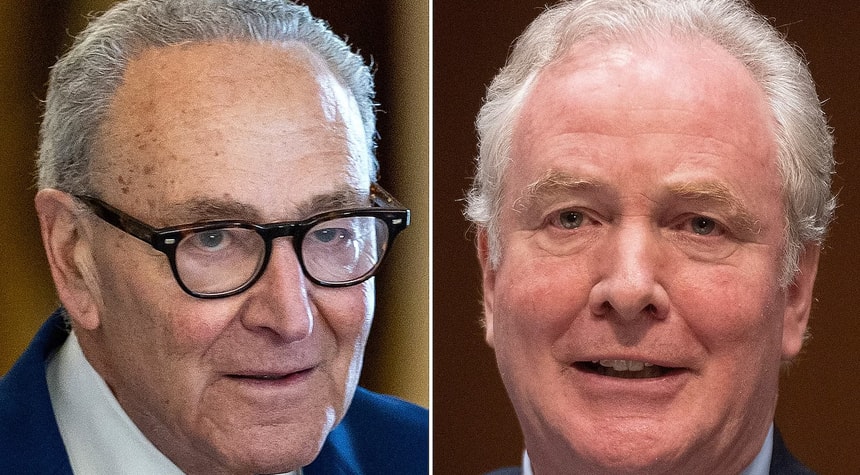
The facts are these: Chuck Schumer has led Senate Democrats for nearly a decade, presided over a massive eight-seat pickup in the recent midterm elections, and claims he already has the votes locked up to continue as leader. Chris Van Hollen of Maryland has decided to challenge him anyway, branding himself an "underdog" while simultaneously claiming support from at least ten senators.
Let us be clear about what is actually happening here. This is not some grassroots uprising against entrenched leadership. This is a progressive faction within the Democratic caucus deciding that winning is not enough. They want ideological purity, and they want it now.
Van Hollen positioned his challenge around the idea that Democratic institutions are not delivering for the American people. This raises an obvious question: if Democrats just flipped eight Senate seats and secured what will be at minimum a 55-45 majority, possibly 56-44 depending on Alaska results, what exactly constitutes "delivering" in Van Hollen’s estimation? The answer appears to be moving further left, faster.
The endorsements tell the story. Bernie Sanders, the socialist senator from Vermont, jumped on board immediately, declaring that the election was about change and that Democrats must take on "the oligarchs." Michigan Senator-elect Abdul El-Sayed claimed voters "rejected Trumpism" and endorsed Van Hollen for his "courage." Minnesota Senator-elect Peggy Flanagan echoed similar sentiments about demanding change.
Here is the reality check: Democrats won these seats largely in purple and swing states where moderate candidates outperformed the national Democratic brand. The idea that this election represented a mandate for Sanders-style progressivism does not align with the electoral map. But facts have never stopped the progressive wing from attempting to steer the party toward their preferred destination.
Schumer, for his part, appears unconcerned. Within seconds of Van Hollen’s announcement, Schumer posted that he had already secured the necessary votes to win reelection as leader for a sixth two-year term. His supporters immediately rallied, with Senator Angus King of Maine asking the obvious question: "Why would you fire the manager when you just won the World Series?"
Nevada Senators Jacky Rosen and Catherine Cortez Masto both highlighted Schumer’s role in delivering the Democratic majority. This represents the pragmatic wing of the party recognizing that electoral success matters more than ideological positioning.
The leadership election will be held by secret ballot in early December. To win, a candidate needs a simple majority of the Democratic conference, either 28 or 29 votes depending on Alaska’s final results. Van Hollen claims ten supporters, which means he would need to flip at least 18 more senators who are currently backing Schumer or undecided.
Those are steep odds for any challenger, particularly one going against a leader who just delivered historic gains.
What this leadership challenge really represents is the ongoing tension within the Democratic Party between those who believe winning elections requires moderation and coalition-building, and those who believe the party should move aggressively leftward regardless of electoral consequences. Schumer represents the former approach. Van Hollen, backed by Sanders and incoming progressives, represents the latter.
Senate Republicans, meanwhile, completed their own leadership transition earlier this week, with John Thune remaining as the top Republican to lead the minority. While Democrats engage in internal warfare after a winning cycle, Republicans appear focused on regrouping and preparing for the next electoral battle.
The Democratic leadership vote will occur in early December. Newly elected senators will participate, but outgoing members will not cast ballots. Based on current public statements and Schumer’s confidence, Van Hollen faces a significant uphill climb. But in politics, stranger things have happened.
Related: New Texas Congressman Wants Immigration Freeze and Won’t Apologize for It