
You want to know what’s keeping American doctors up at night? It’s not medical malpractice suits or healthcare reform. It’s the doctor standing next to them in the operating room who doesn’t know which medication they’re ordering.
Several Tennessee physician residents are blowing the whistle on a dangerous trend sweeping American hospitals, and they’re doing it anonymously because speaking truth can cost you your career these days. These doctors say they’re working alongside foreign-trained physicians who lack fundamental medical knowledge, credentials that don’t hold up under scrutiny, and sometimes can’t even navigate a computer system that any American high schooler could manage. One resident put it starkly: he’s spending every shift keeping a colleague from accidentally killing Tennesseans.
Let that sink in for a moment. We’re not talking about minor errors or learning curves. We’re talking about near misses, wrong medications, and senior physicians having to intervene repeatedly to prevent potentially fatal mistakes.
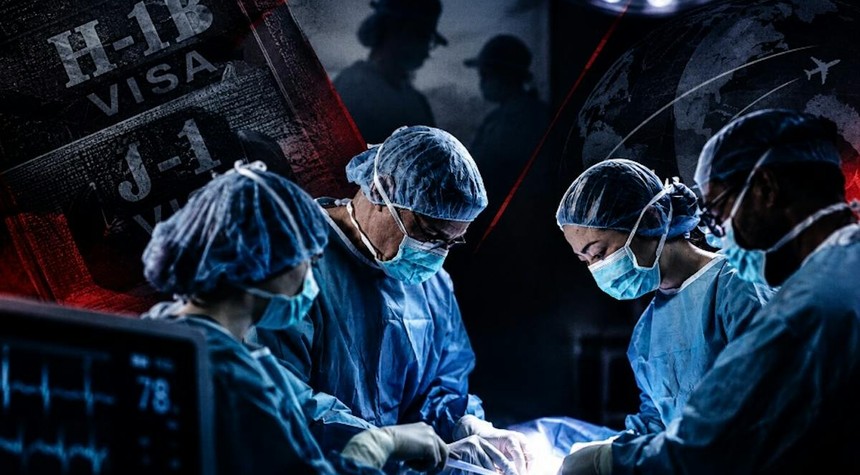
Here’s where the visa pipeline comes into play. Hospitals are flooding their residency programs with international medical graduates through H-1B and J-1 visa programs, and the motivation isn’t exactly noble. It’s cheaper labor dressed up as diversity. One New York hospital made headlines by filling 98% of its internal medicine residency program with international graduates, leaving just two spots for American-trained doctors. That’s not a pipeline anymore. That’s a complete displacement.
The credentialing issues run deeper than anyone wants to admit. Nepal saw roughly 40% of its medical licensing exam results invalidated between 2021 and 2023 due to suspected cheating or irregularities. And that’s just what got caught. The residents interviewed by The Daily Wire warn that some foreign medical schools still use paper exams that could be a decade old. Think about that. An honest student could walk into an American hospital with medical knowledge from 1995, completely unprepared for modern practice.
The electronic medical records problem illustrates how far behind some of these graduates really are. They trained in systems that never digitized, never modernized, never caught up with where American medicine has been for years. Basic computer literacy becomes a patient safety issue when you can’t navigate the technology that stands between a doctor’s order and a patient’s treatment.
Communication barriers compound every other problem. You can’t explain a treatment plan if you can’t speak clearly. You can’t coordinate with nurses if they can’t understand your instructions. Patients already feel vulnerable in hospitals. Now imagine trying to ask questions about your care when your doctor struggles with English. It’s not xenophobic to point this out. It’s honest concern for patient outcomes.
The Trump administration started asking questions about whether these visa programs displace American workers, which is the right question but maybe not the most urgent one. The Tennessee residents aren’t worried primarily about job competition. They’re worried about patients dying from preventable errors.
Free market capitalism works when quality matters and competition drives excellence. But hospitals gaming the system to secure cheaper labor isn’t free market dynamics. It’s cost-cutting at the expense of standards, and patients are the ones who pay the price. Limited government doesn’t mean no oversight when lives hang in the balance.
American medical schools produce thousands of qualified graduates every year. They understand American systems, speak the language fluently, and trained in environments that reflect modern medical practice. Yet they’re being passed over for residents who might not know basic pharmacology or how to operate a computer.
This isn’t about closing borders or rejecting international cooperation in medicine. It’s about maintaining standards that protect patients. Some international medical graduates are exceptional physicians who bring valuable perspectives and skills. But when hospitals prioritize cost savings over competency, when cheating scandals invalidate thousands of exam results, when residents are practicing decade-old medicine in cutting-edge facilities, we’ve got a systemic problem that demands attention.
The doctors speaking out are risking their careers to sound this alarm. That should tell you how serious the situation has become. When physicians would rather stay anonymous than watch more near misses turn into tragedies, we’ve moved past policy debates into genuine crisis territory. These aren’t abstract concerns about immigration policy. These are frontline warnings from people watching dangerous situations unfold in real time.
Patients deserve doctors who are fully qualified, properly vetted, and capable of practicing modern medicine safely. That’s not too much to ask. That’s the baseline.
Related: A Federal Judge Just Caught the Trump Administration Playing Games With 430 Trees