
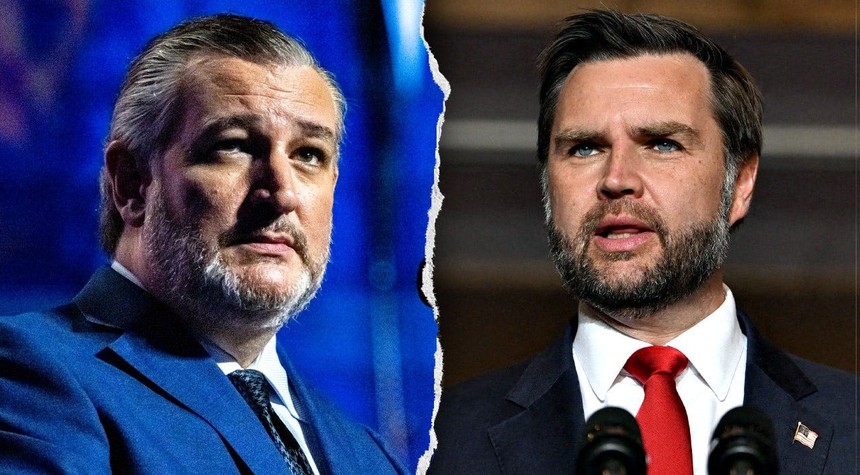
The Republican Party’s internal dynamics are shifting as Vice President JD Vance and Senator Ted Cruz engage in an increasingly public dispute over presidential ambitions and party priorities ahead of the 2026 midterm elections.
Cruz responded forcefully to Vance’s recent accusations, telling reporters that the Vice President’s comments reveal personal insecurity rather than genuine concern for the party’s electoral prospects. The Texas Senator suggested that politicians typically resort to public attacks when they feel threatened about their own standing.
The facts here are straightforward. Vance claimed during a recent interview that Cruz is already positioning himself for a 2028 presidential run instead of focusing on the upcoming midterms. Cruz, for his part, maintains that his travel schedule and campaign appearances demonstrate his commitment to securing Republican victories in November.
Let us examine the evidence. Cruz has indeed campaigned across multiple states including Georgia, Iowa, Nebraska, South Carolina, and Ohio, with planned visits to Alaska, Florida, and North Carolina. The Senator pointed to his extensive record of supporting Republican candidates at every level over the past decade. These are verifiable activities that support his stated priorities.
However, Cruz has not exactly closed the door on presidential ambitions. When questioned about 2028, he acknowledged he would “certainly be part of the discussion.” This is hardly the statement of someone content to remain in the Senate indefinitely.
The irony should not be lost on anyone. Vance, who currently holds the second-highest office in the land and is widely considered a leading contender for the 2028 Republican nomination, is criticizing Cruz for allegedly doing what Vance himself may very well do in the future. The Vice President’s position as the millennial voice of the MAGA movement and his rising influence within the GOP make him an obvious presidential prospect.
The real question is whether this public sparring serves the Republican Party’s interests thirty days before critical midterm elections. The answer is obviously no. Internal GOP conflicts distract from the party’s message and provide ammunition to Democratic opponents who will happily exploit Republican divisions.
Cruz ran for the GOP nomination in 2016, finishing as one of the last candidates standing against Donald Trump. His presidential ambitions are not exactly secret. Vance, having delivered keynote addresses at major Republican events and positioned himself as a leading party spokesman, is similarly transparent in his long-term goals.
Both men represent different generations and factions within the Republican coalition. Cruz embodies the Tea Party conservatism that reshaped the GOP in the 2010s. Vance represents the populist nationalism that has defined the party’s direction since 2016. This clash may preview larger debates about the party’s future direction once Trump eventually exits the political stage.
The immediate concern for Republicans should be maintaining control of Congress. Historical patterns suggest the party in power typically loses seats during midterm elections. Republicans cannot afford distractions from economic issues, border security, and other topics where they hold advantages with voters.
Cruz is correct that his record of supporting Republican candidates speaks for itself. Vance is correct that Cruz maintains presidential ambitions. Both statements can be true simultaneously. The relevant question is whether Republicans will focus on winning elections or engaging in premature nomination battles that serve no one’s interests except Democratic opposition researchers.
Related: Federal Personnel Exchange Gunfire with Attackers Across Rio Grande in Texas