
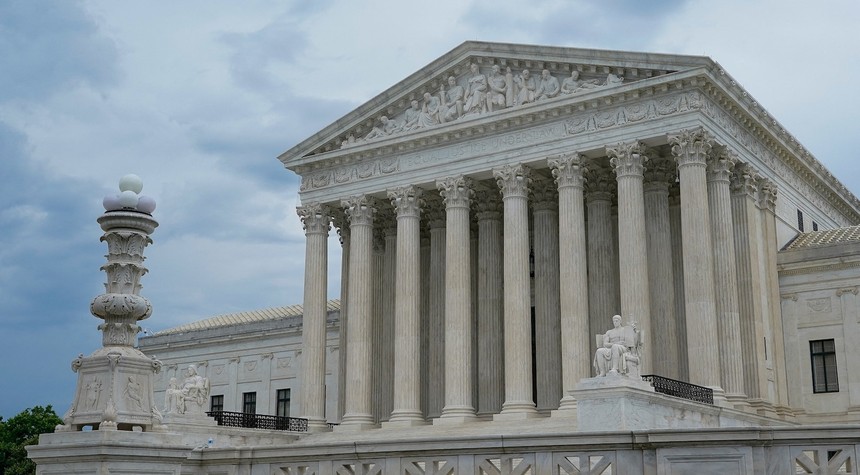
The Supreme Court reconvenes Monday with its usual fanfare and the predictable chorus of anxiety from the left. Climate lawsuits, gun rights, religious liberty in schools. The docket looks explosive, and you can already hear the narrative being crafted: conservative supermajority poised to rule for Trump on everything. Except there’s one inconvenient truth nobody wants to talk about. The data says otherwise.
Here’s what actually happened last term. The court struck down Trump’s global tariff program. They killed his birthright citizenship executive order. They blocked his deployment of National Guard troops to cities. They stopped his removal of a Federal Reserve governor and shut down his Postal Service changes for mail-in ballots. That’s not a rubber stamp. That’s a court doing its job, and doing it against a Republican president.
But the perception problem persists. A Marquette poll found that most Americans think the justices vote mainly from political motivation, not legal principle. You know what? That’s the media’s doing more than the court’s. When you spend years shouting that six conservative justices equal automatic wins for conservatives, people start believing it even when the record proves otherwise.
This term brings fresh Trump appeals to the docket. He wants that eighty-three million dollar judgment in the E. Jean Carroll case tossed. He’s trying to revive conspiracy claims against Hillary Clinton from 2016. There’s defamation cases tied to 2020 election coverage. The president also has significant policy questions pending on immigration, specifically the rapid deportation program that sends people to third countries without proper persecution hearings and the indefinite detention of immigrants without bond hearings.
Constitutional scholar Genevieve Lakier from University of Chicago asks whether this is a Republican court or one resolving disputes by broader principles. It’s a fair question with an obvious answer if you look at outcomes instead of composition. The court ruled against Trump on every major policy priority last term. Every single one. That’s not partisan hackery. That’s judicial independence.
The emergency docket tells a different story, sure. Trump wins about nine out of ten times there. But emergency applications involve different standards, different procedural postures, different questions entirely. The stays and temporary orders on that shadow docket deserve scrutiny, but conflating them with final merits decisions muddies the analysis.
Now we’ve got billion-dollar climate lawsuits against energy companies heading to oral arguments. Local governments want damages for alleged harms from fossil fuels. It’s unprecedented litigation that could reshape corporate liability for generations. The court will also decide if states can ban semi-automatic weapons like the AR-15, a case that cuts to the heart of Second Amendment protections post-Bruen. There’s a dispute about whether states can deny federal ballots to voters lacking citizenship proof on state forms. Religious schools face questions about accessing taxpayer programs while maintaining traditional beliefs about marriage and sexuality.
William Baude, another Chicago law professor and Federalist Society member, notes correctly that this term involves substantial election drama. The 2026 midterms loom large. Cases about Ten Commandments displays in public classrooms wait in the wings. So do questions about legal protections for doctors mailing abortion pills across state lines and regulations for prediction markets that proved more accurate than most pollsters.
The justices themselves insist their decision-making follows law, not politics. That claim sounds self-serving until you examine the pattern. Conservative justices appointed by Republican presidents keep ruling against Republican policy priorities when those priorities clash with constitutional text and structure. Maybe, just maybe, originalist judicial philosophy means something beyond partisan advantage.
The court’s conservative majority deserves criticism when warranted. But the blanket assumption that six Republican appointees automatically deliver Republican outcomes ignores what’s actually happening. It substitutes cynicism for analysis and partisanship for principle. The cases this term will test that majority again on everything from environmental regulation to fundamental rights. Watch what they do, not what critics assume they’ll do. The track record suggests surprise verdicts ahead, and that’s exactly how it should be when nine justices apply law instead of preference.
Related: Justice Department Targets 40 Naturalized Citizens Who Lied Their Way Into America