
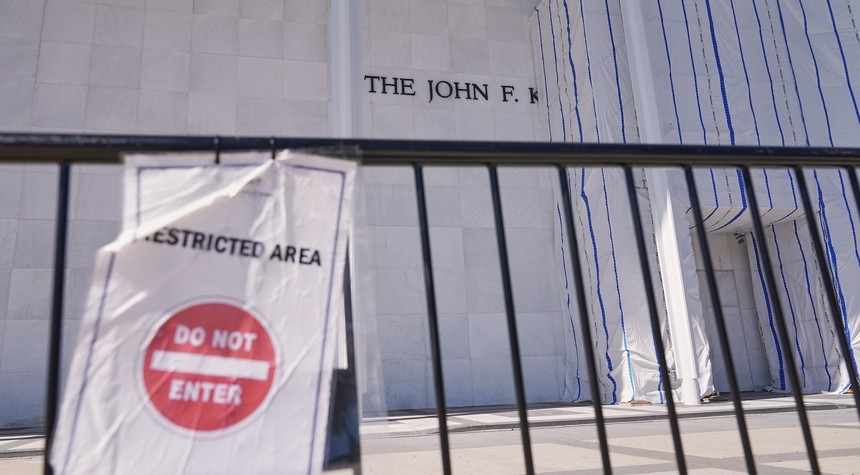
Here’s what should concern every American who cares about government transparency, regardless of where you stand politically. President Trump is claiming executive privilege over his conversations about the Kennedy Center renovation, and he’s stretching that privilege to cover talks with people who don’t even work for the government. That’s not a minor detail. That’s a fundamental expansion of presidential power that deserves scrutiny.
The backdrop here matters. Democratic Rep. Joyce Beatty is suing to get information about plans to potentially demolish or renovate the Kennedy Center. She’s an ex officio trustee, which means she has a legal role in overseeing the place. But when her lawyers started asking questions, they hit a wall of privilege claims so broad you could drive a semi through them.
Deputy White House Counsel Josh Hoyt filed a sworn declaration saying Trump’s executive privilege covers any conversations with his advisors, whether they’re government employees or not. That includes Commerce Secretary Howard Lutnick and Kennedy Center Executive Director Matt Floca, plus basically anyone on staff who might have whispered advice about the center’s operations. During a recent deposition, lawyers sitting beside Floca invoked executive privilege so many times you’d think they were reciting a mantra. They even suggested that questions about Floca’s talks with Lutnick might violate Trump’s privilege.
You know what’s fascinating about this? The Justice Department is arguing that because Trump has the power to select Kennedy Center board members, he needs unfettered ability to assess whether they’re doing their jobs properly. That sounds reasonable until you realize it means virtually any conversation about the center could be shielded from public view. It’s the kind of logic that starts sensible and ends absurd.
The timing tells its own story. The Trump-aligned Kennedy Center board voted last month to close the place for renovations. This happened right after a federal judge blocked Trump’s name from appearing on the building’s exterior, which Beatty had challenged in court. Coincidence? Maybe. But the sequence raises questions about motivation and whether this renovation push is really about improving the center or about something else entirely.
U.S. District Judge Christopher Cooper already issued an order in May blocking the planned two-year closure. His reasoning was straightforward. The board hadn’t properly considered the financial and programming impact of shutting down for that long. That’s basic due diligence, the kind of homework any competent board should complete before making major decisions. The Justice Department wants that order dissolved so renovations can proceed. Cooper hasn’t ruled on that motion yet.
Let’s talk about what executive privilege actually means, because it’s being wielded here like a Swiss Army knife with too many attachments. Traditionally, executive privilege protects confidential communications between the president and his close advisors. The idea is that presidents need candid advice without fear that every conversation will become public fodder. That makes sense. Presidents should be able to get honest counsel.
But extending that privilege to non-government advisors? That’s where conservatives who actually believe in limited government should pump the brakes. If a president can claim privilege over conversations with anyone who gives him advice, where does it end? Your plumber mentions something about government policy while fixing your sink, and suddenly that’s privileged? The principle matters more than the person claiming it.
Beatty’s lawyers argue these blanket assertions are procedurally and substantively improper. They’re right. There’s a difference between protecting sensitive national security discussions and hiding conversations about a performing arts center renovation. One involves protecting the country. The other involves protecting a narrative.
The whole situation reflects a deeper problem with how power operates in Washington. Transparency isn’t just a buzzword for good government types to toss around at think tank panels. It’s the mechanism that keeps leaders honest and citizens informed. When that transparency gets replaced by sweeping privilege claims, we all lose something important.
Republicans should care about this just as much as Democrats. Today it’s Trump claiming expansive privilege over Kennedy Center talks. Tomorrow it could be a Democrat claiming privilege over environmental policy discussions or healthcare negotiations. Precedent works both ways. The powers we grant today become the weapons used against us tomorrow.
The Kennedy Center itself sits as a monument to American culture and achievement. It’s supposed to represent something bigger than partisan squabbles and power games. Watching it become a battleground for executive overreach feels wrong, like seeing a library turned into a boxing ring.
This case will likely drag through courts for months. Judges will parse the limits of executive privilege and decide whether Trump’s claims hold water. But the real verdict should come from citizens who recognize when government starts hiding too much. We don’t need perfect transparency, but we do need enough light to see what our leaders are actually doing and why.
Related: Vance’s New Anti-Fraud Pledge Is the Accountability Test Washington Has Dodged for Years