
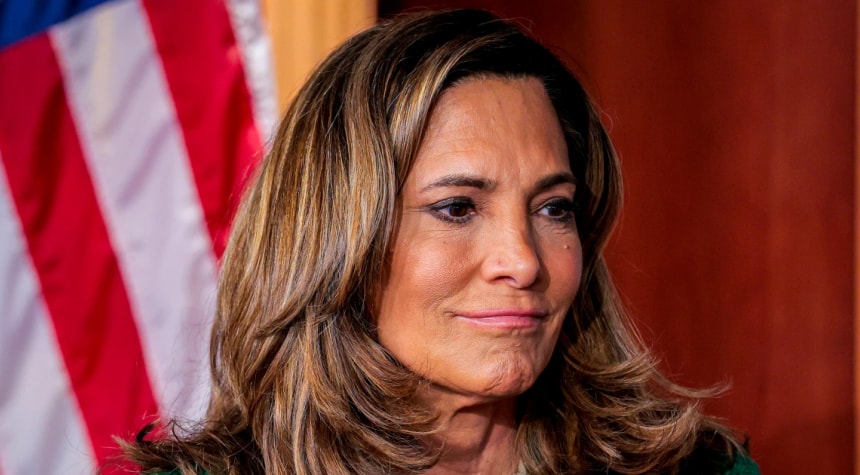
María Elvira Salazar just pulled off something most Republicans wouldn’t dare attempt. She criticized Donald Trump’s immigration crackdown, got labeled a backstabber by the president’s online army, and still managed to win her Miami congressional seat by roughly a thousand votes after a full recount. That’s not luck. That’s political skill in one of the trickiest districts in America.
Let’s be clear about what happened here. Salazar didn’t just offer mild disagreement with Trump’s deportation agenda. She cut an entire ad in September saying many Hispanics felt "betrayed" by the administration’s tactics. She said things had "gone too far" and pointed out that people without criminal records were getting swept up in the enforcement dragnet. Those aren’t throwaway lines. Those are fighting words in a party where loyalty to Trump often matters more than policy details.
Trump carried her district by 15 points in 2024. He won Miami-Dade County, the first Republican to do that in 36 years. This is his territory now, or it’s supposed to be. So when Salazar released that ad, Trump did what Trump does. He amplified social media posts calling her a backstabber and suggested she should be replaced. But here’s the thing that matters. He never officially pulled his endorsement. That little detail tells you everything about how Trump actually thinks versus how he performs online.
Her Democratic opponent, Eliott Rodriguez, thought he could ride that rift straight to Congress. He called Salazar "politically toxic" and suggested even "Daddy Trump" was distancing himself from his "problem child." That’s clever messaging, sure, but it misread the moment entirely. Miami’s Hispanic voters, especially the Cuban and Venezuelan communities that dominate this district, aren’t interested in a Democrat capitalizing on Republican family drama. They want someone who’ll stand up for their concerns about immigration enforcement without abandoning conservative principles on everything else.
The recount itself turned into its own drama. Rodriguez sued the Miami-Dade election supervisor, claiming bias because her son-in-law was representing Salazar. He also pointed to an interview where the supervisor told The Miami Herald that "Maria Elvira is the winner, with or without a recount." A federal judge dismissed the lawsuit Monday, calling those remarks "perhaps unwise" but not grounds for removal. Perhaps unwise is judicial speak for "yeah, probably shouldn’t have said that, but we’re not overturning an election because of it."
Miami has more than 130,000 pending removal cases right now. That’s the most of any county in America. When you represent a district spanning working-class Hispanic enclaves alongside some of the wealthiest ZIP codes in the country, you can’t pretend immigration enforcement is an abstract policy debate. It’s hitting your constituents’ neighborhoods, their workplaces, their churches. Salazar saw that reality and spoke to it, even knowing it would cost her politically with parts of her base.
This is where Republican politics gets interesting in 2025. The party’s shifting on immigration in ways that don’t fit the old templates. You’ve got a heavily Hispanic district that went hard for Trump but also reelected a congresswoman who called out his immigration tactics. That’s not contradiction. That’s complexity. Hispanic voters in South Florida aren’t a monolith, and they’re definitely not the demographic bloc Democrats assumed they’d be.
Salazar first won this seat in 2020 by defeating Donna Shalala, a former Cabinet secretary and university president. That upset signaled Miami’s rightward turn before most political observers caught on. She proved then that she could read her district better than the experts. She just proved it again, under much harder circumstances.
The district is now set to be home to Trump’s presidential library. Marco Rubio, the new Secretary of State, lives there. This is supposed to be the heart of the new Republican coalition Trump built. And yet Salazar nearly lost after breaking with him on the signature issue of his second term. She won by running on her own terms, not his.
You know what that suggests? Conservative voters want representatives who’ll fight for their values but also show some backbone when Washington gets things wrong. They don’t want blind loyalty. They want someone who understands that aggressive enforcement and strong borders aren’t mutually exclusive with humane treatment of people who’ve built lives here.
Salazar’s margin dropped from nearly 20 points in 2024 to barely a thousand votes now. That’s a warning shot. But she survived when plenty of political operatives thought she was finished. In a party still figuring out its identity post-Trump presidency, that survival matters more than the margin. She showed there’s room for dissent on immigration without abandoning conservatism. That’s the kind of lesson Republicans need to learn if they want to keep building in places like Miami instead of just holding on by their fingernails.
Related: John Thune Plans to Squeeze Every Last Minute Out of Republican Control