
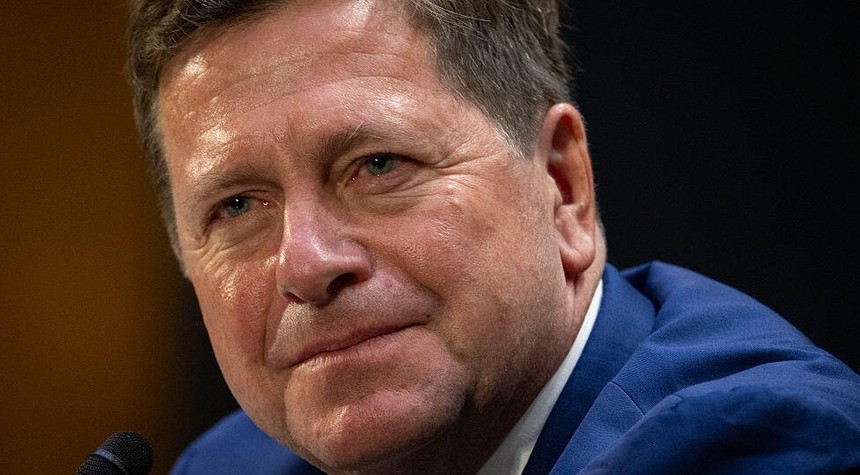
The Senate confirmed Jay Clayton as director of national intelligence on Tuesday, ending a chaotic chapter that’s left America’s intelligence apparatus in limbo for over six weeks. The 51 to 47 party-line vote wasn’t just about filling a vacancy. It was about salvaging what’s left of a critical surveillance program that expired while Washington played its usual games.
Clayton replaces Bill Pulte, and honestly, that sentence alone tells you everything wrong with how we got here. Pulte was a housing official with zero intelligence credentials whom Trump tapped to run our nation’s spy agencies on a temporary basis. That’s not serious governance. That’s a placeholder strategy that gave Democrats every excuse they needed to torpedo a bipartisan deal on Section 702 of the Foreign Intelligence Surveillance Act.
Section 702 isn’t some abstract legal nicety. It’s the warrantless surveillance authority that lets us monitor foreign threats without jumping through endless bureaucratic hoops. It’s how we track terrorists, hostile state actors, and anyone else plotting against American interests from abroad. And it’s been dark since mid-June because nobody in this town can get their act together long enough to do the basic work of keeping the country safe.
Senate Majority Leader John Thune said Monday he hopes Clayton’s confirmation will persuade Democrats to stop blocking FISA reauthorization. That’s optimistic thinking. Democrats initially praised Clayton when Trump announced the pick, which made sense given his credentials. The guy was U.S. attorney in Manhattan until recently. He knows how federal law enforcement works. He’s not some random political operative with a LinkedIn profile.
But then Trump did what Trump does. He upended the confirmation timeline right before Clayton was supposed to testify, catching his own party off guard. Republicans had been moving fast, trying to break the surveillance stalemate. They needed a credible intelligence chief in place to give Democrats cover for reauthorizing Section 702. Instead, they got another month of delay and political theater.
Clayton finally appeared before the Senate Intelligence Committee on July 15, about four weeks late. During that hearing, he dodged a straightforward question about whether Joe Biden won the 2020 election. Look, you can understand the political calculation there. Trump’s still the boss, and loyalty matters in this administration. But refusing to state obvious facts doesn’t inspire confidence when you’re about to oversee the intelligence community.
Here’s what matters now. We’ve got a Senate-confirmed DNI who actually knows something about law and national security. That’s progress, even if it took way too long and looked messier than it should have. The question is whether Democrats will come back to the table on Section 702 or keep using this as leverage for something else entirely.
The surveillance authority isn’t perfect. There are legitimate concerns about privacy and government overreach. Conservatives should care deeply about those issues because limited government means limiting what Washington can do to its own citizens. But there’s a difference between demanding proper oversight and letting critical national security tools expire because of political gamesmanship.
Republicans now control the Senate and the White House. They own this problem. Clayton’s confirmation removes one excuse for inaction, but it doesn’t solve the underlying challenge of getting 60 votes to reauthorize surveillance powers that half the country doesn’t trust anymore. That’s going to require actual negotiation, not just party-line confirmations and hopeful statements from leadership.
The intelligence community has been operating without this authority for six weeks while threats don’t take vacations. That’s unacceptable regardless of which party you support. National defense isn’t supposed to be this hard when one party controls both chambers and the executive branch. Yet here we are, celebrating a confirmation that should have happened two months ago while a critical spy program sits expired.
Clayton’s got his work cut out for him. He inherits an intelligence apparatus that’s been politicized beyond recognition, a surveillance program in limbo, and a Senate that can’t agree on basic national security priorities. Welcome to Washington in 2025, where even the wins feel incomplete and the losses keep piling up.
Related: When Your Party Chairman Goes Silent the Money Dries Up Fast