
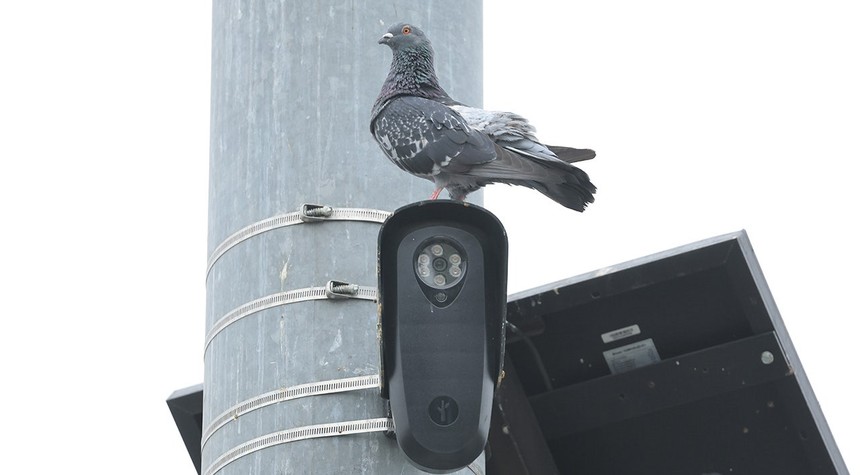
There’s something deeply unsettling happening on American streets right now, and most people don’t even know they’re part of it. Every time you drive past certain intersections, cameras are reading your license plate, logging where you are, and storing that information in massive databases. It’s not some dystopian future we’re worried about. It’s happening today, and it’s got Republicans and Democrats actually agreeing on something for once.
Automatic license plate readers have been around for years, but artificial intelligence has turned them into something far more invasive than anyone signed up for. These aren’t your grandfather’s traffic cameras anymore. We’re talking about sophisticated surveillance tools that can do a whole lot more than just snap a picture of your rear bumper as you roll through town.
Rep. Greg Steube from Florida didn’t mince words when he talked about this. “There’s cameras everywhere, people know that, but if law enforcement has the ability to monitor the comings and goings of citizens, I think that’s wrong. I mean, we’re not the CCP, we’re not 1984 and an Orwellian society, and Americans have rights.” He’s absolutely correct, and frankly it’s refreshing to hear a congressman speak this plainly about government overreach.
The company catching most of the heat is Flock Safety, whose cameras have popped up in communities across the country. Sometimes they catch bad guys. Sometimes they get misused in ways that should alarm every freedom loving American. Case in point: a former Sarasota police officer got himself fired and arrested after he used Flock technology to spy on one particular license plate over 300 times. That’s not law enforcement. That’s stalking with a badge.
You want to talk about the Fourth Amendment? This is exactly the kind of scenario the founders worried about. Unreasonable search and seizure doesn’t just mean cops kicking down your door without a warrant. It means the government tracking your every movement without probable cause, building a database of where you go, when you go there, and potentially who you’re with.
Rep. Keith Self from Texas pointed out something critical that supporters of these cameras conveniently gloss over. “These cameras are well beyond an automated license plate reader today. AI has made them so capable that they are now capable of facial recognition, of seeing what you’re doing inside your car. So it’s well beyond the license plate reader.” The technology has leapfrogged the legal framework, and nobody asked permission.
Here’s where it gets interesting. Progressive Rep. Delia Ramirez from Illinois is saying almost the exact same thing as her conservative colleagues, just with different language. She wrote that private tech companies have made “record breaking profits off our pain” and called mass surveillance “a threat to our democracy, civil liberties, and privacy.” Strip away the partisan rhetoric and she’s making the same argument Steube and Self are making. Government surveillance without proper guardrails is un American, period.
This bipartisan concern tells you something important. When you’ve got politicians from opposite ends of the spectrum united against something, it’s usually because their constituents back home are mad as hell about it. People in Troy, New York actually protested these cameras outside City Hall. Regular Americans taking time out of their day to rally against surveillance technology. That’s not nothing.
The free market argument here is worth addressing because some conservatives might think private companies should be able to sell whatever technology they want. Sure, but when that technology gets wielded by government agencies to track citizens without oversight, we’ve crossed a line. This isn’t about innovation or entrepreneurship. It’s about the state using private sector tools to do things the Constitution wouldn’t normally allow.
Flock Safety’s CEO will tell you these cameras are just public safety tools collecting minimal information. But “minimal information” about every trip you take adds up to a comprehensive portrait of your life. Where you worship, where you shop, whose house you visit, what doctor you see. That’s not minimal. That’s invasive.
Steube acknowledged the reality that these cameras probably aren’t going away entirely, but he’s right that we need legal parameters protecting Fourth Amendment rights. The technology exists, fine. That doesn’t mean law enforcement gets carte blanche to use it however they want. We don’t abandon constitutional principles just because Silicon Valley invented a new gadget.
The surveillance state creeps forward one camera at a time, one database at a time, one “it’s for your safety” argument at a time. Before you know it, the government knows more about your daily routine than your spouse does. That’s not the country the founders envisioned, and it’s not the country conservatives should accept.
What’s needed here is straightforward. Warrant requirements for accessing this data except in genuine emergencies. Strict limits on how long information can be stored. Real penalties for misuse, not just firing the occasional bad cop after he’s already violated someone’s privacy 300 times. Transparency about where these cameras are and what they’re capturing. You know, basic accountability measures that should exist in any free society.
The debate has already hit the campaign trail heading into the midterms, which means voters are paying attention. Good. They should be. This issue cuts across typical political divides because it touches something fundamental. Americans across the spectrum value their privacy and distrust unchecked government power. That’s not a bug in our political culture. That’s a feature.
Private companies partnering with government agencies to build surveillance networks should make everyone nervous, regardless of party affiliation. Today it’s tracking license plates. Tomorrow it’s facial recognition everywhere you go. The slope is slippery and we’re already sliding.
Congress needs to act before this technology gets even more sophisticated and even more entrenched. Constitutional guardrails aren’t optional. They’re the whole point of having a Constitution in the first place.
Related: Texas Governor Dismisses GOP Fears as Paxton Trails in Senate Race