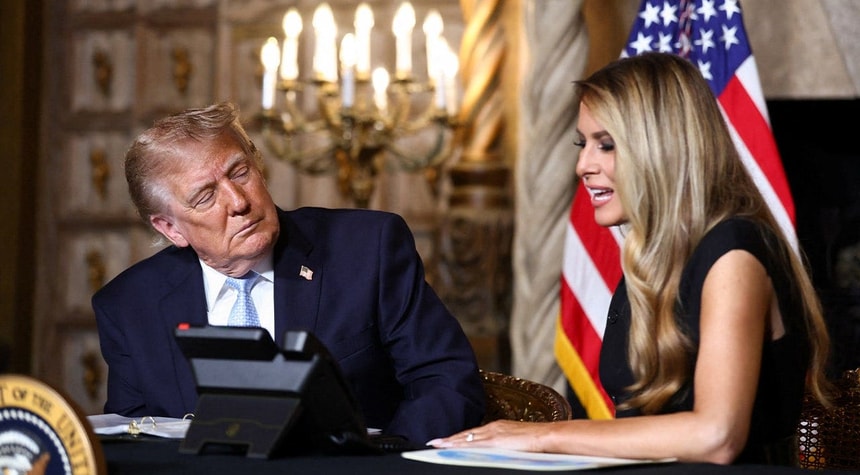
President Donald Trump conducted Thanksgiving Day calls to service members deployed across all six military branches, receiving a firsthand assessment of ongoing operations against Iran from an F-16 pilot stationed in Saudi Arabia. The conversation, which took place from Mar-a-Lago, provided insight into both the capabilities of American military hardware and the success of current Middle East operations.
During the call, Trump posed a direct question to Lieutenant Colonel Brant Smith about the F-16’s capabilities. The answer should give Pentagon brass something to consider. Smith declared the F-16 the "world’s greatest fighter jet" without hesitation, even when Trump pressed him to compare it against newer platforms like the F-22 and F-35. Smith’s response was unequivocal: "The F-16 all day." He added that no payment could convince him to switch aircraft.
This assessment carries weight. The F-16, despite being an older design, apparently maintains operational advantages that justify its continued deployment. Smith acknowledged the F-22 and F-35 have their strategic purposes, but emphasized the F-16’s versatility and effectiveness across multiple mission types. For those concerned about defense spending on increasingly expensive fifth-generation fighters, this represents a data point worth examining.
Smith leads the 510th Expeditionary Fighter Squadron, known as the Buzzards, which arrived in Saudi Arabia approximately ten days before Operation Epic Fury commenced. The unit has been flying daily combat operations over the Strait of Hormuz, conducting what Smith described as missions to defend American interests and assets. The numbers are impressive: more than 2,000 sorties totaling over 12,000 flight hours across eight different operations.
The strategic picture Smith painted should concern Iran. Trump noted the military’s success in neutralizing Iranian threats, specifically mentioning the destruction of missile launchers and projectiles. Smith confirmed this assessment, suggesting Iran may be depleting its arsenal. This aligns with the administration’s maximum pressure campaign, which has targeted both Iran’s military capabilities and its economic foundations.
Trump’s response reflected confidence in the current trajectory. He referenced the deployment of the USS Theodore Roosevelt, which arrived in the region on November 16 to relieve the USS George Washington, demonstrating continued American naval presence. The president’s assessment of Iranian decision-making was characteristically blunt, citing their struggling economy and what he termed strategic mistakes.
The conversation revealed an operational tempo that suggests American forces maintain air superiority in the region. Daily missions across the Middle East, conducted by a squadron that clearly maintains high morale, indicate the United States is not merely reacting to Iranian aggression but actively degrading their capabilities.
Smith’s comment that "this is what we trained for" encapsulates the military’s readiness posture. These are not troops uncertain about their mission or capabilities. They are executing operations they have prepared extensively to conduct, using equipment that, according to the pilots themselves, remains world-class despite not being the newest technology available.
The strategic implications are clear. Iran faces an adversary with superior technology, operational experience, and industrial capacity to sustain prolonged operations. Their economy continues deteriorating under sanctions while American forces methodically eliminate their offensive capabilities. The mathematics of this confrontation increasingly favor American interests, assuming political will remains consistent.
Related: Democrats Abandon Economic Promises to Refocus on January 6 Instead