
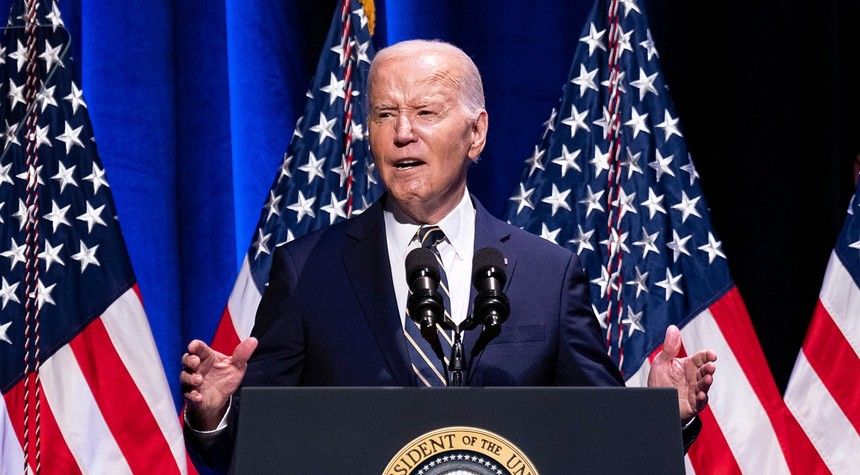
The investigation into former President Joe Biden’s alleged use of an autopen to sign official presidential documents, including pardons, has accelerated in recent weeks with federal authorities now focusing on activities in both Delaware and Washington, D.C.
Let’s be clear about what’s at stake here: the fundamental question of whether executive actions carrying the full weight of presidential authority were actually authorized by a sitting president or merely rubber-stamped by a machine while Biden’s mental faculties were allegedly in decline.
A source familiar with the investigation confirmed Wednesday that the probe has “heated up in recent weeks” with investigators examining Biden’s activities across multiple jurisdictions. Attorney General Pam Bondi announced that her team is actively reviewing the Biden administration’s reported use of autopen technology for pardons, raising serious constitutional questions about the validity of such actions.
The timing of this investigation coincides with the House Oversight Committee’s release of a comprehensive 100-page report detailing findings from a monthslong investigation into Biden’s White House operations. The report focuses on whether Biden’s inner circle deliberately concealed signs of cognitive decline and whether that alleged cover-up extended to executive actions signed via autopen without Biden’s full knowledge or consent.
Here’s the critical issue: if a president is not mentally capable of making executive decisions, and his staff is using automated signing devices to execute those decisions, do those actions carry legal weight? The House GOP report argues they do not.
The committee’s findings revealed what it characterized as a “haphazard documentation process” for Biden’s pardons, creating significant ambiguity about whether the former president personally authorized these clemency grants. The report’s conclusion is unambiguous: “In the absence of sufficient contemporaneous documentation indicating that cognitively deteriorating President Biden himself made a given executive decision, such decisions do not carry the force of law and should be considered void.”
This is not a minor administrative concern. Presidential pardons are among the most powerful tools in the executive arsenal, and the Constitution vests that authority specifically in the president himself, not in his staff or in automated signing devices.
Biden’s team, predictably, has dismissed these concerns as partisan attacks. A spokesperson claimed that Biden “made the decisions of his presidency” and accused congressional Republicans of focusing on “political retribution” rather than governance. The spokesperson insisted there was “no conspiracy, no cover-up, and no wrongdoing.”
Yet the facts tell a different story. The American people watched Biden’s cognitive decline play out in real time throughout his presidency, culminating in his disastrous debate performance that ultimately forced him from the 2024 race. The question is not whether Biden experienced cognitive decline, but when it began and how it affected his ability to execute his constitutional duties.
Biden himself told The New York Times in July that he “made every decision” on his own. But assertions are not evidence, and the House Oversight Committee’s findings suggest the documentation does not support that claim.
The constitutional implications are profound. If federal prosecutors determine that presidential actions were executed without proper authorization, it could invalidate pardons, executive orders, and other official acts. This is not about partisan politics. This is about the integrity of our constitutional system and ensuring that presidential powers are exercised by presidents who are mentally capable of wielding them.
Related: Democrats Face Crossroads as Socialist Wing Clashes with Electoral Reality