
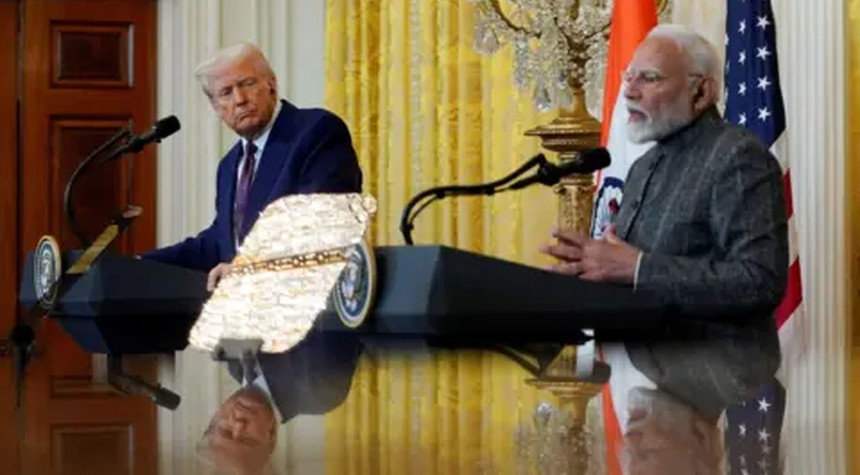
In a significant diplomatic victory for the Trump administration’s efforts to isolate Russia economically, President Donald Trump announced Wednesday that Indian Prime Minister Narendra Modi has agreed to cease purchasing Russian oil, dealing a substantial blow to Moscow’s war chest.
The agreement, reached after months of strategic pressure from the Trump administration, represents a major shift in India’s energy policy and validates Trump’s aggressive trade tactics. The administration had previously imposed substantial 50% tariffs on Indian goods, including a targeted 25% penalty specifically designed to discourage transactions with Russia.
“This is a big stop,” Trump declared from the Oval Office, acknowledging that while the transition cannot happen immediately, “the process is going to be over with soon.” The president’s tough negotiating stance has finally yielded results where previous diplomatic overtures failed.
The development marks a crucial success in the broader American strategy to defund Russia’s military operations in Ukraine by targeting its primary revenue source: energy exports. Russia’s largest oil customers currently include China, India, and Turkey, making India’s commitment to withdraw from Russian oil markets particularly significant.
Trump’s administration is now setting its sights on China, with the president stating, “Now I’ve got to get China to do the same thing.” However, Beijing has already signaled resistance, defending its “normal, legitimate economic, trade, and energy cooperation” with Russia.
The Kremlin, predictably, has pushed back against these developments, arguing that preventing countries from purchasing Russian crude violates free trade principles. Russian President Vladimir Putin, speaking at an energy forum Thursday, attempted to project confidence, claiming Russia remains “one of the leading oil producers, despite the use of unfair competition mechanisms.”
While Indian government officials have characterized the discussions as “ongoing,” their careful diplomatic language cannot obscure the reality: Trump’s combination of tariff pressure and strategic negotiation has succeeded where previous administrations failed. The agreement demonstrates the effectiveness of Trump’s America First approach to foreign policy, using economic leverage to achieve strategic objectives.
The timing of this development is particularly significant, as it coincides with recent moves by the UK and European Union to lower their price cap on Russian crude oil from $60 to $47.60 per barrel. This coordinated Western pressure on Russia’s energy sector represents a unified front against Putin’s aggressive actions in Ukraine.
Trump’s success with India also creates momentum for ongoing negotiations with Japan, where Treasury Secretary Scott Bessent has communicated clear “expectations” regarding Russian oil imports to Japanese Finance Minister Katsunobu Kato.
This diplomatic breakthrough validates the Trump administration’s tough stance on international trade and demonstrates how America’s economic might can be wielded effectively to advance both national security interests and global stability. The president’s ability to secure this commitment from India, despite Modi’s previous insistence on neutrality in the Russia-Ukraine conflict, proves that decisive leadership and strategic pressure can achieve what conventional diplomacy often cannot.
Related: Hamas Hostage Reveals Systematic Religious Persecution During Captivity