
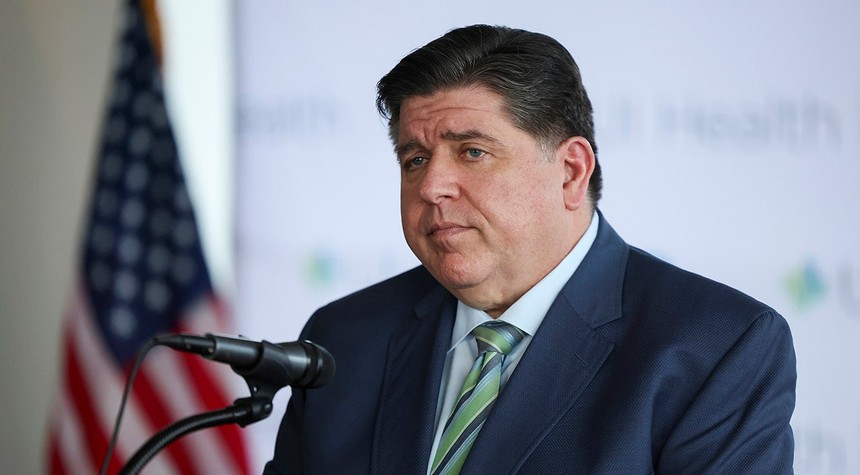
The Justice Department has filed a lawsuit against Illinois Governor JB Pritzker over recently enacted state laws designed to obstruct federal immigration enforcement operations. The legal action, filed Monday, argues that Illinois’s new sanctuary measures are unconstitutional and endanger federal officers attempting to execute lawful immigration enforcement.
Let us be clear about what is happening here. Pritzker signed legislation earlier this month that prohibits civil immigration arrests at and around courthouses statewide. The laws also mandate that hospitals, daycare centers, and public universities establish procedures specifically designed to impede federal immigration operations and shield personal information from federal authorities. These measures took effect immediately.
The legislation goes further, establishing a private right of action for individuals who claim their constitutional rights were violated during federal immigration operations in the Chicago area. The law provides for $10,000 in damages for anyone allegedly unlawfully arrested while attempting to attend court proceedings. This is not merely sanctuary policy. This is active obstruction of federal law enforcement with financial incentives.
The Trump administration’s lawsuit correctly identifies these measures as unconstitutional interference with federal immigration enforcement authority. The Supremacy Clause of the Constitution is not a suggestion. Federal immigration law supersedes state law, and states cannot simply nullify federal enforcement operations because they disagree with administration policy.
Pritzker’s office has attempted to frame this as a matter of protecting innocent people from overzealous enforcement. A spokesperson claimed the administration’s agents are “harassing and detaining law-abiding U.S. citizens and Black and brown people at daycares, hospitals and courthouses.” This is inflammatory rhetoric designed to obscure the fundamental issue.
The facts tell a different story. ICE’s “Operation Midway Blitz,” which began in September in the Chicago area, resulted in more than 4,000 arrests. Critics point out that data from early September through mid-October showed only 15 percent of those arrested had criminal records, with most offenses being traffic violations, misdemeanors, or nonviolent felonies.
But here is what that statistic actually reveals. These individuals were in the country illegally. The initial illegal entry is itself a violation of federal law. The question is not whether they have committed additional crimes beyond immigration violations. The question is whether federal authorities have the constitutional authority to enforce immigration law. The answer is unequivocally yes.
The Trump administration reversed a Biden-era policy that prohibited immigration arrests in so-called sensitive locations such as hospitals, schools, and churches. That reversal was entirely appropriate. Criminal suspects are not granted immunity from arrest simply because they enter certain buildings. The same principle applies to immigration enforcement.
Pritzker claims he supports arresting illegal immigrants who commit violent crimes. This is a distinction without meaningful difference when his state actively obstructs federal authorities from making any immigration arrests whatsoever. You cannot claim to support immigration enforcement while simultaneously erecting legal barriers to that enforcement.
Immigration advocacy groups have praised Illinois’s new laws, noting that many immigrants were avoiding courthouses, hospitals, and schools out of fear of arrest. This argument inverts the proper relationship between law and public policy. The solution to illegal immigration is not to create sanctuary zones where immigration law cannot be enforced. The solution is legal immigration and enforcement of existing law.
The lawsuit represents a necessary assertion of federal authority against state-level obstruction. The outcome will have significant implications for sanctuary jurisdictions nationwide.
Related: Supreme Court Blocks Trump’s National Guard Deployment in Chicago as Alito Issues Scathing Dissent