
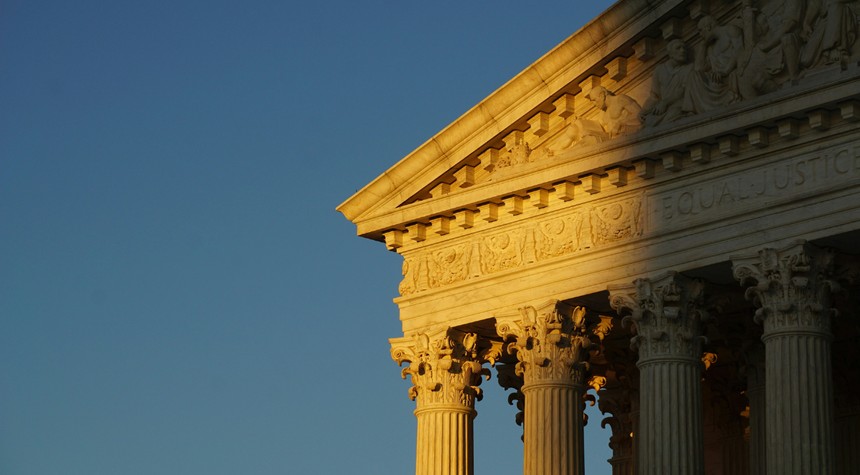
The Supreme Court delivered a constitutionally questionable decision Tuesday night, blocking President Trump’s attempt to deploy National Guard forces to Chicago where federal property and immigration officials face ongoing attacks from left-wing anarchists.
Let’s be clear about what happened here. The high court denied the Trump administration’s request to stay a temporary restraining order issued by District Judge April Perry, a Biden appointee, who blocked the Guard deployment despite clear threats to federal personnel and property. The facts are straightforward: federal officials are under siege, federal property requires protection, and the President sought to fulfill his constitutional duty to ensure federal operations continue unimpeded.
The case, Trump v. Illinois, represents a troubling example of judicial overreach interfering with executive authority during a legitimate security crisis. Judge Perry’s October 9 order effectively handcuffed the administration’s ability to protect federal assets from violent anarchist mobs. When the government appealed to the 7th Circuit Court of Appeals, that three-judge panel offered a split decision, denying the stay on deployment while maintaining the stay on federalization. This legal hairsplitting does nothing to address the actual violence occurring on Chicago streets.
The Supreme Court’s majority opinion hinges on a technical argument that fundamentally misunderstands executive authority. The Court claimed the government “failed to identify a source of authority that would allow the military to execute the laws in Illinois.” This reasoning contains a glaring logical flaw.
The administration argued it possesses inherent constitutional authority to protect federal personnel and property using military forces. Simultaneously, the government noted that such protective functions do not constitute “executing the laws” under the Posse Comitatus Act, which generally prohibits military involvement in civilian law enforcement. The Court essentially created a catch-22: if protecting federal property does not violate Posse Comitatus because it is not “executing the laws,” then how can it constitute “executing the laws” under other statutory provisions?
This circular reasoning ignores the fundamental reality that the President possesses constitutional authority as Commander in Chief to protect federal interests. The administration did not seek to enforce Illinois state laws or engage in general policing. The objective was narrow and constitutionally sound: protect federal property and personnel under active threat.
Three justices recognized this absurdity. Associate Justices Clarence Thomas, Samuel Alito, and Neil Gorsuch would have granted the administration’s stay request, understanding that executive authority must mean something when federal assets face coordinated attacks.
The practical consequences of this decision are severe. Federal immigration officials attempting to enforce duly enacted laws now operate without adequate protection. Federal property remains vulnerable to destruction by organized anarchist groups. The Court has effectively told violent left-wing mobs that judicial intervention will prevent meaningful federal response to their lawlessness.
This decision reflects a broader problem: courts increasingly willing to substitute their judgment for executive determinations on national security and federal property protection. The Constitution vests the President with authority to protect federal interests. When judges appointed by previous administrations block these efforts based on strained statutory interpretations, they undermine constitutional separation of powers.
The Trump administration now faces an impossible situation in Chicago. Federal personnel remain at risk, federal property continues under threat, and the judiciary has blocked the most effective protective measure available. This is not how constitutional government should function when federal interests face clear and present danger.
Related: ICE Arrests Over 100 Illegal Immigrant Truck Drivers in California Operation Following Fatal Crashes