The Trump administration has dramatically escalated tensions with Venezuela, ordering a complete naval blockade of the socialist nation and designating the Nicolás Maduro regime as a foreign terrorist organization. The move represents one of the most aggressive foreign policy actions in recent American history regarding Latin America.
President Donald Trump announced Tuesday that Venezuela is now “completely surrounded by the largest Armada ever assembled in the History of South America,” demanding the immediate return of oil fields, land, and other assets allegedly stolen from the United States. The blockade specifically targets all sanctioned oil tankers entering or leaving Venezuelan waters.
Here are the facts: The Maduro regime has been operating on stolen American assets for years, using revenue from these confiscated oil fields to finance drug terrorism, human trafficking, murder, and kidnapping operations. This is not speculation. This is documented criminal activity being funded with what rightfully belongs to American companies and, by extension, the American people.
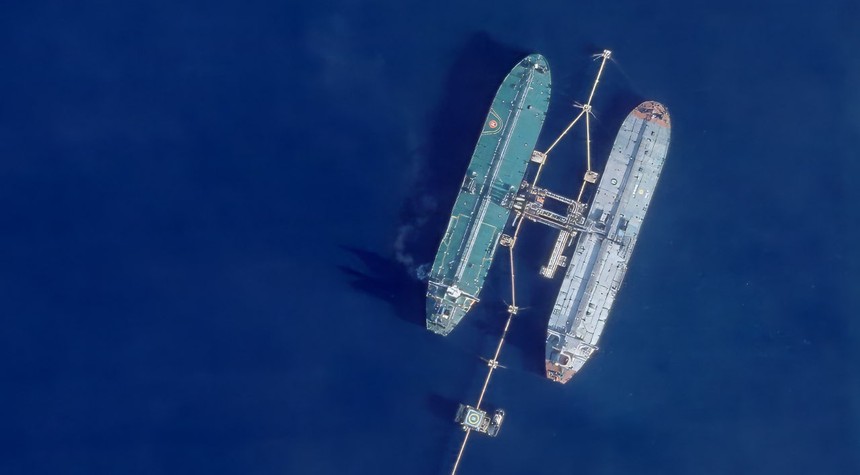
The administration has already taken concrete action. On Wednesday, the United States seized an oil tanker called the “Skipper” off the Venezuelan coast. Attorney General Pam Bondi confirmed the vessel was being used to transport sanctioned oil from both Venezuela and Iran, making it a direct violation of international sanctions regimes.
The “Skipper” represents just one ship in a massive “ghost fleet” of approximately 1,000 tankers that operate in defiance of international sanctions. These vessels employ sophisticated evasion tactics, sailing under foreign flags, repeatedly changing names, and shifting routes to obscure their origins and destinations. They exist for one purpose: to help rogue regimes like Venezuela, Iran, and Russia circumvent economic sanctions and continue funding their malign activities.
Energy Secretary Chris Wright has been working to address the potential impact on American energy costs, though the administration maintains that national security concerns outweigh short-term economic considerations. The logic here is straightforward: allowing a hostile regime to profit from stolen American assets while simultaneously flooding our southern border with criminals and illegal aliens during the previous administration cannot be tolerated.
The designation of Venezuela as a foreign terrorist organization carries significant legal and diplomatic weight. It places the Maduro regime in the same category as organizations like ISIS and al-Qaeda, reflecting the administration’s assessment that Venezuela’s actions constitute state-sponsored terrorism.
White House press secretary Karoline Leavitt defended the administration’s aggressive posture, noting that the illegal aliens and criminals sent to the United States during what Trump characterized as “the weak and inept Biden Administration” are now being returned to Venezuela at an accelerated pace.
The president’s statement was unequivocal: “America will not allow Criminals, Terrorists, or other Countries, to rob, threaten, or harm our Nation and, likewise, will not allow a Hostile Regime to take our Oil, Land, or any other Assets, all of which must be returned to the United States, IMMEDIATELY.”
This represents a fundamental shift in American foreign policy toward Venezuela. Previous administrations imposed sanctions but ultimately allowed the Maduro regime to continue operating with relative impunity. The Trump administration has now drawn a hard line: return what you have stolen, or face the full weight of American military and economic power.
The question now is whether Maduro will capitulate or continue his defiance. Given the scale of the naval deployment and the severity of the terrorist designation, the pressure on the Venezuelan regime is unprecedented. The world is watching to see if economic warfare backed by military force will succeed where diplomacy has repeatedly failed.
Related: Pentagon Escalates Investigation Into Senator Mark Kelly Over Military Conduct Allegations