
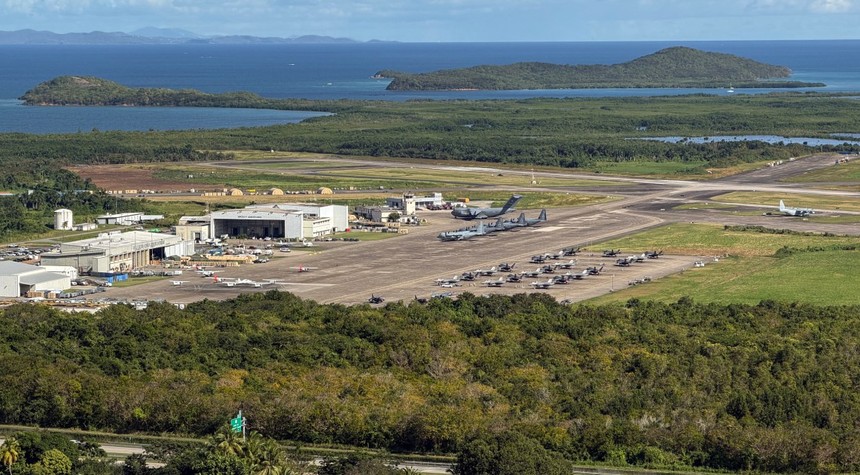
The facts are straightforward: one day after American forces captured Venezuelan dictator Nicolás Maduro, military aircraft roared over Puerto Rican beaches, signaling a dramatic shift in American military posture that has been absent for decades.
Here is what happened. Beachgoers in Aguadilla, a city on Puerto Rico’s northwestern coast known primarily for surfing, witnessed fighter jets and Reaper drones overhead. This was not a routine flyover. These aircraft were operating from facilities at a previously shuttered military base that has suddenly gained strategic importance under President Trump’s stated objective to establish “American dominance in the Western Hemisphere.”
The logic here is simple. Puerto Rico’s geographic position has always made it valuable for American military operations. During the Cold War, the island served as a crucial forward operating location with robust infrastructure and training facilities. But following the Soviet Union’s collapse, military spending cuts and local environmental concerns led to the closure of many of these installations. The artillery and hardware used in decades of target practice had created legitimate health and environmental issues that prompted opposition from residents.
Now, those forgotten facilities are being reactivated. This is not occurring in a vacuum. Trump has made clear his intention to reassert American military power throughout the Western Hemisphere, and the Venezuela operation demonstrates he is willing to back rhetoric with action.
The strategic calculus is obvious. Venezuela’s collapse under socialist mismanagement created a power vacuum and humanitarian crisis that threatened regional stability. With Maduro now in American custody, the United States requires forward operating bases to maintain presence and project power. Puerto Rico, as American territory with existing infrastructure, provides the logical solution.
The environmental and health concerns that shuttered these bases decades ago remain valid questions that deserve answers. However, the national security imperatives have shifted dramatically. When American forces conduct operations to remove dictators who have destroyed their nations and threatened American interests, those forces require support infrastructure. Puerto Rico provides that infrastructure without requiring negotiations with foreign governments or new base agreements.
The residents of Aguadilla hearing military aircraft overhead are witnessing the return of American military seriousness to a region that has suffered under the influence of socialist regimes, drug cartels, and Chinese economic colonization for far too long. The question is not whether America should project power in its own hemisphere. The question is why previous administrations allowed American military infrastructure to decay while adversaries expanded their influence in our backyard.
Trump’s approach represents a return to the Monroe Doctrine’s fundamental principle: the Western Hemisphere is America’s sphere of influence, and foreign powers should not expect to operate here unchallenged. Reactivating Puerto Rican military facilities is not provocative. It is prudent. It is what serious nations do when they recognize threats in their strategic environment and take action to address them.
The sounds of military aircraft over Puerto Rican beaches may be unfamiliar to a generation that has not experienced robust American military presence on the island. They should become accustomed to it. American dominance in the Western Hemisphere is not a slogan. It is now operational policy backed by reactivated bases and demonstrated willingness to act.
Related: Federal Funds Frozen for Minnesota as Trump Officials Expose Systemic Benefit Program Fraud