
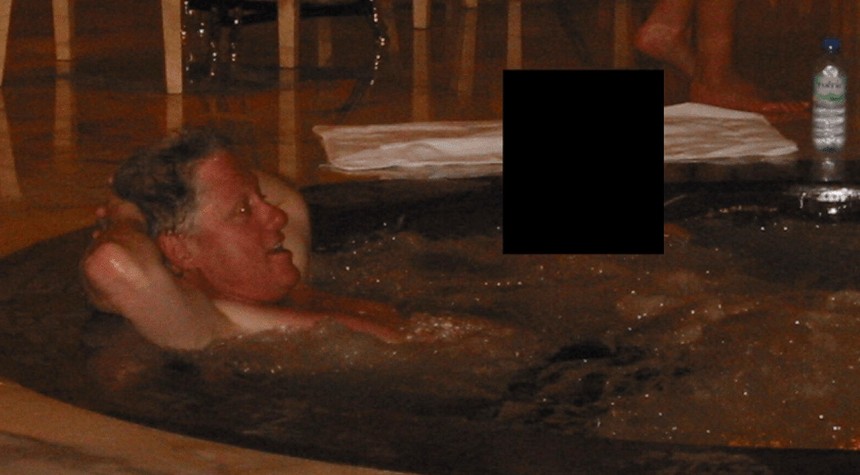
Bill Clinton sat before the House Oversight Committee on Friday and delivered what might be the most predictable performance of selective amnesia in recent congressional history. The former president, facing questions about his relationship with Jeffrey Epstein, looked at that now-infamous hot tub photo and essentially shrugged. Didn’t know her. Didn’t sleep with her. Can’t remember much of anything, really.
You know what’s remarkable? The sheer audacity of it all. Here’s a man who flew on Epstein’s private jet dozens of times, who maintained a friendship with a convicted sex offender, now telling lawmakers he had “no idea” about the crimes. Clinton’s opening statement reads like a masterclass in political deflection. He warned the committee upfront that they’d hear “I don’t recall” more times than they’d probably like. At least he was honest about the dishonesty to come.
The photo itself shows Clinton in what appears to be a hot tub or jacuzzi with a woman whose identity the DOJ redacted. When pressed about it, Clinton claimed it was actually a public hotel pool. Nobody challenged him on that assertion, which tells you something about the tenor of these proceedings. Either the questioners weren’t prepared or they simply didn’t care enough to dig deeper. Neither option inspires much confidence.
This matters beyond the salacious details, though those certainly grab headlines. We’re talking about accountability at the highest levels of American power. Jeffrey Epstein didn’t operate in a vacuum. He cultivated relationships with presidents, princes, and billionaires. The man built an entire network predicated on access and influence, and powerful people either turned a blind eye or participated in ways we’re still uncovering.
Clinton’s defense hinges on a simple premise: he saw nothing, he did nothing, and two decades later, he remembers even less. It’s convenient how memory works when subpoenas arrive. The prepared remarks stress what he didn’t see and what he didn’t do, as if absence of recollection equals proof of innocence. But here’s the thing about patterns of behavior. When someone repeatedly associates with bad actors, when they accept hospitality on private islands and jets, the “I didn’t know” defense starts wearing thin.
Chairman James Comer suggested before the deposition that he had plenty of questions lined up. Whether those questions actually extracted any useful information remains to be seen. Closed-door depositions have a way of protecting the powerful while creating the appearance of oversight. The American people get a few leaked details, some carefully worded statements, and ultimately very few answers.
The broader investigation into Epstein’s crimes and his network of enablers deserves better than this. We deserve leaders who take responsibility, who speak clearly about what they knew and when they knew it. Instead we get carefully parsed language, strategic memory loss, and the kind of lawyered-up testimony that technically avoids perjury while revealing nothing of substance.
Clinton told lawmakers he wouldn’t speculate or guess because it wouldn’t help them. How thoughtful. But maybe what would actually help is some candor about why a former president maintained such close ties with a man who was already a registered sex offender. Maybe what would help is acknowledging that powerful men often get away with things precisely because other powerful men look the other way.
This deposition will likely fade from headlines within days. Clinton will return to his post-presidency speaking circuit, collecting six-figure fees and basking in whatever remains of his legacy. The Epstein files will continue gathering digital dust while victims wait for something resembling justice. And the next time a photograph surfaces showing the powerful cozying up to the corrupt, we’ll all act surprised again.
Related: Nancy Mace Says Hillary Clinton Lost It When Asked About Epstein Photos With Bill