
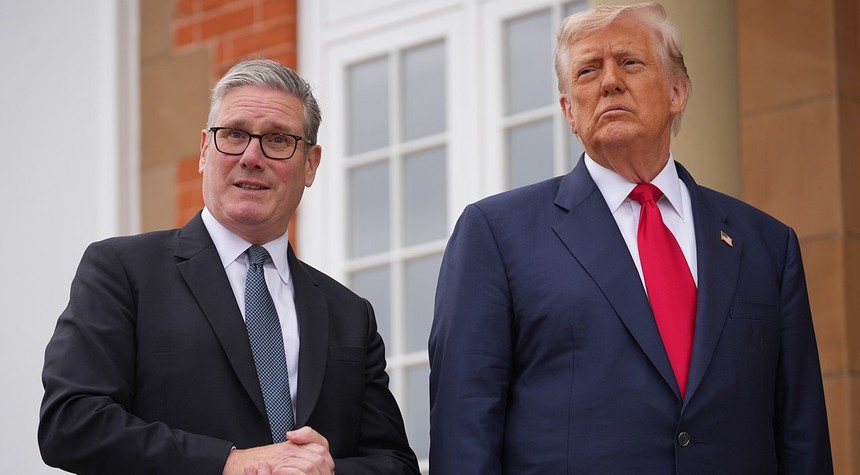
Donald Trump just told Britain to keep its aircraft carriers docked, and honestly, the timing says everything you need to know about alliances in 2025. The president fired off a message Saturday that cut straight to the bone. Britain wants to send two carriers to the Middle East now that America has handled the Iran problem. His response? Thanks but no thanks, and we’ll remember who showed up after the final whistle.
This isn’t just diplomatic theater. This is about nations that talk endlessly about shared values but freeze when it’s time to act. Keir Starmer, the Labour prime minister who couldn’t be further from Churchill if he tried, spent critical days deliberating while American forces moved decisively against Iranian threats. Now he wants credit for offering hardware nobody needs anymore.
The British Ministry of Defense placed one carrier on advanced readiness in Portsmouth. A destroyer called HMS Dragon sits waiting for orders to Cyprus. Fighter jets are patrolling over Jordan and Qatar. It’s an impressive list of military assets deployed after the moment has passed. You know what that reminds me of? Showing up to help move furniture after the truck’s already unloaded.
Trump told the Telegraph he was “very disappointed” in Starmer, and that phrase carries weight coming from a president who doesn’t traffic in diplomatic niceties. He said it took far too long for Britain to allow American use of British bases in the region. Even that limited cooperation came with hesitation, the kind that makes you wonder what happened to the nation that once ruled the seas and never blinked at danger.
Starmer addressed his country Sunday with the usual careful language politicians use when they’re trying to sound resolute without actually being resolute. He condemned Iran’s “indiscriminate” attacks and said the only way to stop the threat is destroying missiles at source. That’s true, which makes his initial reluctance even harder to understand. Britain wasn’t involved in the strikes themselves but agreed to let America use bases for “limited” purposes. Limited. That word choice tells you everything about modern European defense policy.
The prime minister talked about providing “calm, levelheaded leadership” while the region descended into chaos. But leadership isn’t just about staying calm. It’s about making hard calls when your ally needs you, not after they’ve already solved the problem. Traditional British values used to include standing shoulder to shoulder with America when threats emerged, not calculating political costs while American servicemembers handled business.
This whole episode exposes something deeper than one delayed deployment. It reveals how Western alliances have become transactional rather than foundational. Countries want the security umbrella America provides without the uncomfortable reality of actually using force when necessary. They want to negotiate with regimes that fire missiles at civilians and pursue nuclear weapons. Starmer even mentioned Britain’s “longstanding position” favoring negotiated settlements where Iran gives up nuclear ambitions. How’s that worked out over the past two decades?
Trump’s frustration makes perfect sense from a conservative perspective that values action over endless deliberation. America maintains the world’s most powerful military not to wait for committee approval but to protect our interests and defend our allies when they can’t or won’t defend themselves. When Britain finally offers help after the shooting stops, it’s not partnership. It’s performance.
The special relationship between America and Britain still matters, but relationships require reciprocity. They require showing up when it counts, not when it’s convenient. Trump’s blunt response might sting in London, but maybe that’s exactly what’s needed. Maybe Western allies have grown too comfortable assuming America will always carry the load while they debate and delay.
We’ll remember, the president said. That’s not a threat. It’s a promise that actions have consequences, even between old friends.
Related: Rep Issa Calls It Quits After Democrats Redraw His District Into Oblivion