
There’s a reason courtrooms operate on decorum. It’s not stuffy tradition or some relic of powdered wigs and gavels. It’s because the alternative is chaos, and chaos got its moment in the spotlight last month in Ada, Oklahoma.
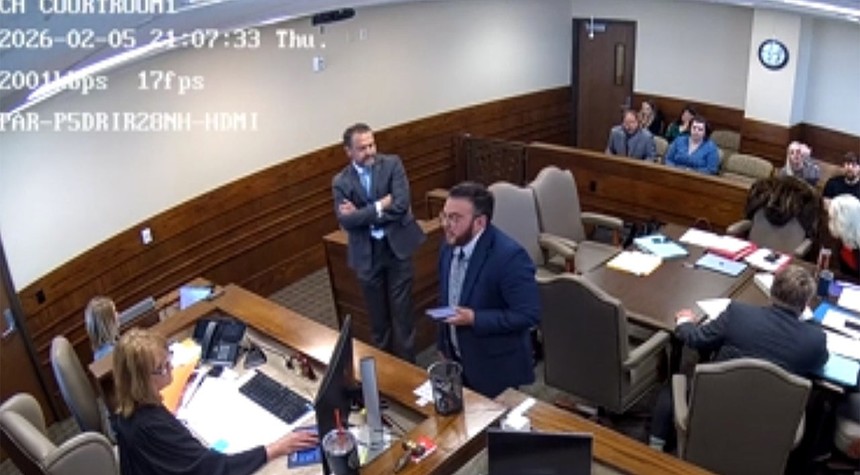
Rob Hopkins, a transgender attorney representing a client in what should have been a routine custody hearing, turned a Pontotoc County courtroom into something resembling a reality TV audition. The surveillance footage tells a story that’s hard to believe even while watching it. Hopkins didn’t just object to the judge’s rulings. He staged a full theatrical production complete with accusations, bellowing, and physical resistance that required multiple officers to contain.
Judge Lori Jackson had warned Hopkins repeatedly about his conduct during the hearing. She’s not some hardline authoritarian looking to flex power. She’s doing what every judge does when an attorney crosses the line from zealous advocacy into disruption. But Hopkins had a different interpretation. He accused Jackson of discriminating against him because he’s transgender, a charge she flatly denied. “I don’t know what you are,” she responded. “I don’t know you from Adam.”
That’s when things went sideways.
Bailiffs entered to remove Hopkins from the courtroom after Jackson held him in contempt. What followed wasn’t the dignified exit of a legal professional who disagreed with a ruling. It was a spectacle. Hopkins threw himself across the judge’s bench, scattering documents everywhere. He twisted and contorted his body to avoid handcuffs while screaming “You’re HURTING ME!” and “I can’t BREATHE!” loud enough to draw crowds in the hallways outside.
Let’s be clear about something. Police use of force is a serious issue that deserves scrutiny when it’s excessive or unjustified. But surveillance footage reviewed shows officers attempting to restrain someone actively resisting arrest in a courtroom. Hopkins wasn’t being thrown down. He threw himself down. The footage contradicts his claim that officers threw his glasses on the floor. Yet there he was, demanding they pick them up and “PUT THEM ON MY FACE!” while officers tried to get him upright and out of the courtroom.
This matters beyond the spectacle. Hopkins brought a client into that courtroom expecting representation. That client deserved an attorney focused on their case, not on staging a confrontation with the judge. Every parent involved in custody disputes knows how stressful those hearings are. The last thing anyone needs is their lawyer turning the proceeding into performance art about his own grievances.
The broader context here involves a troubling pattern we’re seeing across institutions. Accusations of discrimination have real weight when they’re real. But crying discrimination every time someone faces consequences for their own behavior cheapens legitimate claims and creates a culture where accountability becomes nearly impossible. Hopkins wasn’t held in contempt because of his gender identity. He was held in contempt because he repeatedly interrupted proceedings and refused to follow courtroom protocol.
One person in the courtroom told the judge afterward they felt “very threatened” by Hopkins. That’s the part that gets lost in all the shouting about discrimination. Other people were in that room. They came for their own hearings, their own legal matters. They shouldn’t have to witness or feel threatened by an attorney’s meltdown.
The legal profession demands a certain standard of conduct, especially in courtrooms where emotions already run high. You can advocate fiercely for your client without turning the bench into a wrestling mat. You can object to rulings without accusing judges of bigotry when they enforce basic courtroom rules. Hopkins had every right to disagree with Jackson’s decisions. He could have filed an appeal, requested recusal, or pursued any number of proper legal channels. Instead, he chose chaos.
This isn’t about being unsympathetic to transgender individuals facing real discrimination. It’s about recognizing that being part of a protected class doesn’t grant immunity from professional standards or legal consequences. The officers who restrained Hopkins weren’t enforcing anti-transgender policies. They were doing their jobs after a judge issued a lawful order.
Ada, Oklahoma isn’t some flashpoint in the culture wars. It’s a small city where people expect their courts to function properly. What happened in that courtroom wasn’t justice or advocacy. It was one person’s decision to prioritize his own narrative over everyone else’s needs, including his client’s. The footage speaks for itself.
Related: Ayanna Pressley Calls Evictions Violence While Her Husband Collects Rent Checks