
Here’s what nobody wants to say out loud but everyone’s thinking. When a federal judge’s wife makes her living representing your political enemies, maybe you shouldn’t be presiding over cases involving those same political battles. It’s not rocket science. It’s basic ethics.
U.S. District Judge Christopher Cooper now finds himself on the receiving end of a judicial misconduct complaint, and honestly, it’s hard to see how this didn’t happen sooner. The Center to Advance Security in America filed the complaint Wednesday with the D.C. Circuit Court of Appeals, and their argument cuts straight to the bone. Cooper’s wife, Amy Jeffress, has built what you might call a thriving practice representing anti-Trump clients. We’re talking Lisa Page, the FBI lawyer who became infamous during the Russia investigation. We’re talking former President Joe Biden himself, currently suing Trump’s Justice Department.
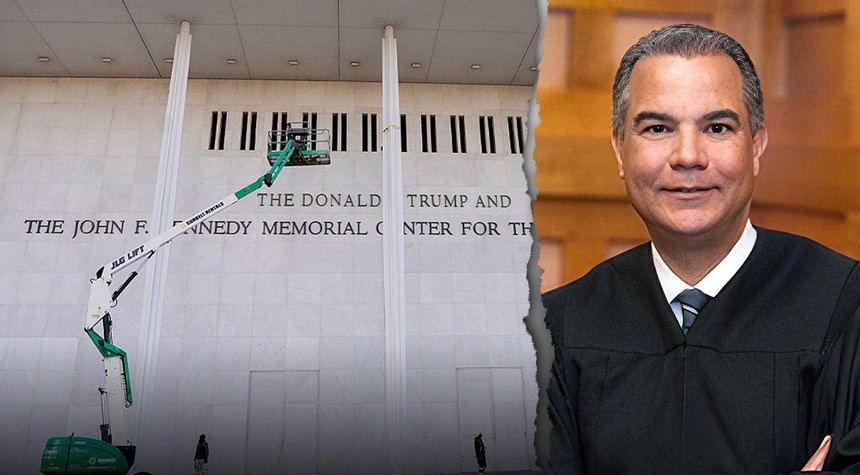
And Cooper thought he could just sit on a case involving Trump’s effort to rename the Kennedy Center? The audacity is almost impressive.
In May, Cooper permanently blocked Trump from renaming the Kennedy Center after Rep. Joyce Beatty filed what many conservatives viewed as a frivolous lawsuit. The ruling itself raised eyebrows. But the real scandal isn’t necessarily the decision. It’s the judge’s apparent belief that his wife’s professional connections and financial interests didn’t warrant even a disclosure, let alone a recusal.
Curtis Schube, CASA’s Director of Research and Policy, didn’t mince words. He called out Cooper’s “potentially unethical behavior” and pointed to what seems obvious to anyone paying attention. When your spouse’s business model depends on anti-Trump litigation, you’ve got a problem presiding over Trump cases. Period.
The complaint doesn’t challenge Cooper’s ruling directly because that’s not how judicial misconduct complaints work. Instead, it raises the more fundamental question about impartiality and the appearance of impropriety. Under the federal judiciary’s Code of Conduct, judges are supposed to avoid even the appearance of bias. You know what creates an appearance of bias? Your wife representing the former president in ongoing litigation against the current president while you’re deciding cases involving that current president.
Jeffress isn’t just some random attorney who happened to take on a Trump opponent once or twice. She served as counsel to the January 6th committee. She’s currently Biden’s personal lawyer in active litigation against Trump. The connections run deep, and the financial incentives run deeper. A significant chunk of her practice appears built around opposing Trump’s agenda through the courts.
President Trump himself called out the conflict more than a week ago, and he was right to do it. The system depends on public confidence in judicial impartiality. When judges with obvious conflicts refuse to step aside, that confidence erodes. It’s not about whether Cooper could theoretically be fair despite his wife’s practice. It’s about whether reasonable people looking at this situation would question his ability to be impartial.
The answer seems pretty clear.
CASA argues Cooper may have violated Canon 1 of the judicial code, which requires judges to maintain the integrity and independence of the judiciary. There’s also the small matter of financial disclosure and the reality that Cooper and his wife presumably share financial interests. When those interests are tied to litigation opposing the president whose case you’re hearing, that’s not a gray area. That’s a flashing red light.
This isn’t the first time Obama-appointed judges have found themselves in hot water over Trump-related cases. The pattern has become familiar to anyone watching the legal warfare of the past several years. File a lawsuit in a friendly jurisdiction, get it assigned to a friendly judge, watch as recusal questions get ignored, and celebrate when the ruling goes your way.
The complaint demands a full investigation, and that’s exactly what should happen. Federal judges wield enormous power. They’re appointed for life precisely because they’re supposed to be above the political fray. But when a judge’s household income depends on one side of the political divide, that judge has an obligation to recognize reality and step aside.
Cooper didn’t do that. Now he’ll have to explain why. The judiciary’s credibility depends on judges policing themselves and each other. If Cooper skated on this without consequences, it would send a message that conflicts of interest only matter when they’re politically inconvenient to acknowledge.
Americans deserve better than that. They deserve judges who understand that justice must not only be done but must be seen to be done. Cooper had a chance to do the right thing. He chose not to. Now the system gets to decide whether that choice matters.
Related: The Adults Who Failed Karmelo Anthony by Teaching Him to Be a Victim