
The Department of Homeland Security just dropped $1.5 billion on two massive detention centers in California, and before anyone starts wringing their hands about the price tag, let’s talk about why this matters. This isn’t some bureaucratic real estate transaction. This is the federal government buying its way around a state that’s doing everything possible to handcuff immigration enforcement.
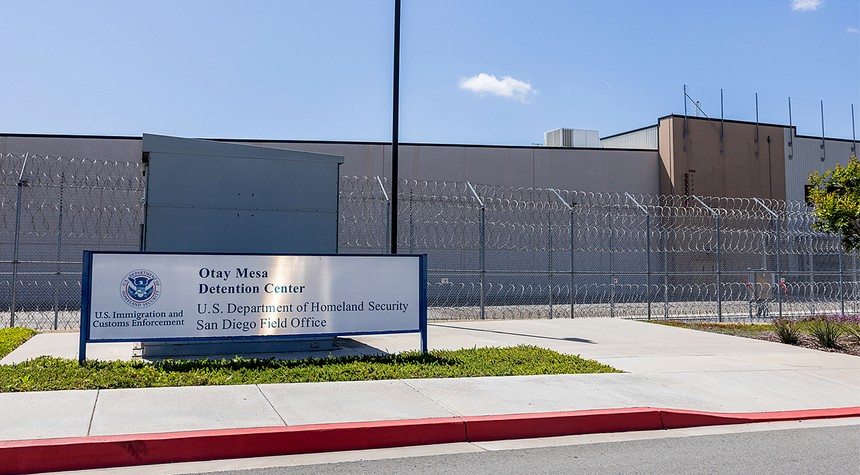
The facilities in question are the California City Detention Facility, which holds 2,560 beds, and the Otay Mesa Detention Center with 1,994 beds. CoreCivic, the Tennessee-based private prison company that owned them, closed the sale earlier this month. They’re walking away with about $1.1 billion after taxes and expenses. Not a bad day at the office.
Here’s what makes this whole thing necessary, and honestly, a bit infuriating. California’s sanctuary policies have essentially created a parallel universe where federal immigration law becomes optional. The state’s politicians have spent years passing legislation designed to make it financially impossible or outright illegal for ICE to work with private detention facilities. They’ve boxed out local cooperation too. Unlike states such as Florida or Oklahoma where ICE can partner with state and county facilities, California has erected every roadblock imaginable.
So what’s the federal government supposed to do? Just pack up and go home because Sacramento doesn’t like enforcing immigration law? That’s not how this works. That’s not how any of this is supposed to work.
The purchase was funded through President Trump’s spending bill signed last summer. You know, the one critics called everything under the sun except what it actually was, which is a commitment to following through on campaign promises. DHS made it clear in their statement that this move gives ICE the detention capacity needed to arrest, detain, and remove people living in the country illegally. No apologies, no hedging.
What’s particularly smart about this approach is that it removes California’s leverage. When the state owns the ball, they get to decide who plays. By purchasing these facilities outright, the federal government just bought its own ball. California’s sanctuary politicians can pass all the legislation they want. They can virtue signal until they’re blue in the face. But they can’t shut down federally owned property.
CoreCivic will continue managing both facilities under existing contracts with ICE, though those terms might get tweaked now that ownership has changed hands. The company’s CEO, Patrick Swindle, called the facilities “mission-critical” for their government partner. That’s corporate speak for saying these places are absolutely essential to making deportations happen on the West Coast.
Think about the geography here for a second. California has the largest illegal immigrant population in the country. It’s also got one of the longest international borders. Without detention capacity in the Golden State, the entire deportation operation gets kneecapped before it even starts. You can’t enforce immigration law if you’ve got nowhere to hold people while their cases process.
The timing matters too. While Democrats in the House, led by Congressman Bennie Thompson, are holding unsanctioned “shadow hearings” about ICE detention facilities in places like Newark, the administration is actually solving problems. They’re putting resources where they need to be. They’re working around obstruction instead of complaining about it.
This $1.5 billion investment represents something bigger than just building capacity. It’s a statement that the federal government isn’t going to let individual states nullify national immigration policy. California doesn’t get to decide which federal laws apply within its borders. That’s not federalism. That’s chaos dressed up as compassion.
The facilities give ICE roughly 4,500 beds in a state that desperately needs them. That’s 4,500 people who can be held securely while their cases move through the system instead of being released into communities with a promise to show up for court later. Anyone who’s paid attention knows how that catch and release game ends.
At the end of the day, this is about whether we’re serious about having borders or not. California made its choice. Now the federal government has made theirs. And unlike Sacramento’s approach, this one actually respects the rule of law.
Related: Former Warren Campaign Volunteer Praises Iranian Dictator on State Television