
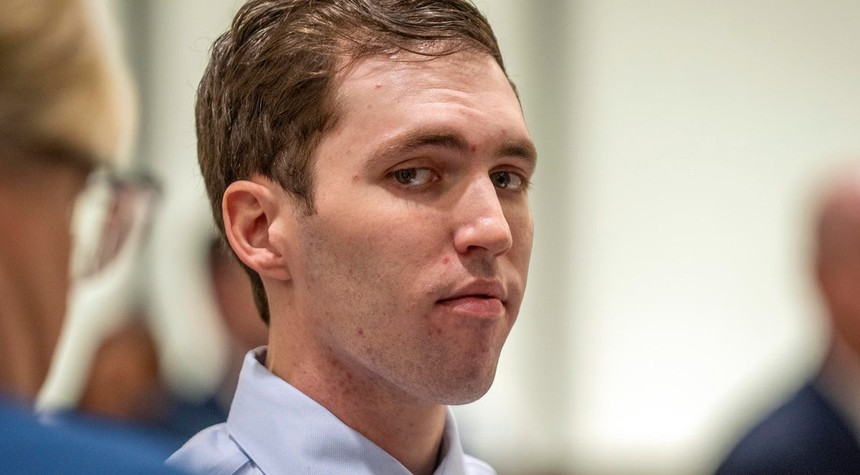
Charlie Kirk’s family sat in a Utah courtroom this week for the first time across from the man accused of ending his life. His widow Erika, his parents Robert and Kathryn, his sister Mary. They’re there because prosecutors believe Tyler Robinson deserves the death penalty for what happened last September at Utah Valley University. The preliminary hearing started Monday and it’s going to take five days to get through what the state knows about this case.
Former campus police officer Chris Bagley took the stand and walked through what he saw that day. He heard the gunshot while Kirk was answering a question during his campus event. Bagley knew immediately it was a rifle shot, not a pistol. You spend enough time around firearms and you just know the difference. The sound alone tells you what you’re dealing with.
Bagley ran up a public staircase to reach the roof of the Losee Center building because he understood the layout of that campus. He knew that roof had a clear line of sight to where Kirk was sitting. What he found up there was a red and black screwdriver, something that looked out of place. Meanwhile, chaos had erupted below. People scattered. Within moments, officers radioed that someone was in custody. Bagley shifted to preserving the crime scene and found a pistol holster on the ground, which made no sense given what his ears had told him about the weapon used.
The Kirk family released a statement Monday morning that cut through all the procedural language and legal maneuvering. “Charlie was a beloved husband, son, brother, friend, and father,” they wrote. “Every court proceeding serves as a painful reminder of his death and the loss that has irrevocably impacted our lives and the lives of his children.” They asked for privacy. They thanked people for prayers and support. And they made clear they won’t be commenting further out of respect for the judicial process.
That’s the kind of dignity that deserves recognition in a culture that often mistakes grief for a spectacle to consume. These people lost someone they loved, and now they have to sit through hearing after hearing while attorneys argue over evidence and procedure. The legal system demands this slow march toward justice, but it doesn’t make the experience any less brutal for families.
Robinson turned himself in after the shooting. Prosecutors say he sent a text message confession to his partner. They say he left a note explaining he had an opportunity to kill one of the nation’s leading conservative voices and he was going to take it. He hasn’t entered a plea yet. His attorneys haven’t commented on guilt or innocence. But the state is seeking the death penalty, which tells you everything about how they view the evidence they’ve gathered.
Kirk was addressing thousands of people when he was shot. Witnesses said he’d just begun debating someone about gun violence, which carries its own grim irony. A man advocating for conservative principles, likely defending the Second Amendment, cut down by someone who decided political disagreement justified murder. That’s not activism. That’s not resistance. That’s assassination, plain and simple.
Robinson was a third-year student at Utah’s Dixie Technical College in the electrical apprenticeship program. He’d spent one semester at Utah State University. By all accounts, he was just another student until he decided to become something else entirely. We live in an era where political violence has been normalized by people who should know better, where disagreement has been reframed as existential threat, where the other side isn’t just wrong but dangerous and deserving of elimination.
The preliminary hearing will determine whether this case moves to trial. Given what prosecutors have laid out so far, that seems inevitable. The real question is what comes after. Will a jury in Utah hand down the death penalty for the political assassination of a conservative activist? Will this case force a broader reckoning with the violent rhetoric that’s infected our political discourse? Or will it become just another tragedy we process and forget?
Charlie Kirk’s children will grow up without their father. His wife will navigate life without her husband. His parents will bury their son. And Tyler Robinson, if convicted, will face the consequences of a choice that destroyed multiple families in service of nothing but hatred dressed up as conviction. That’s what political violence always delivers. Not change, not justice, not progress. Just grief that ripples outward and never really stops.
Related: Bill Clinton’s Cheap Shot at Trump Shows Democrats Still Haven’t Learned Anything