
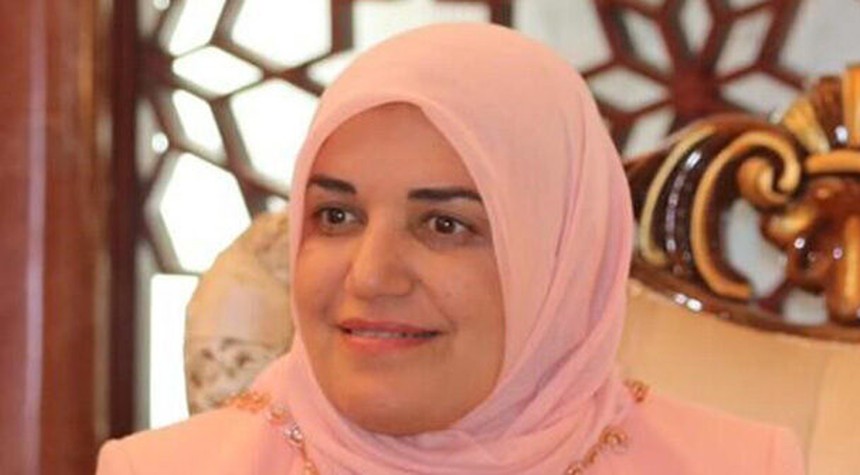
You know what’s worse than making a mistake? Making it at a black-tie ceremony while cameras roll and then pretending it never happened.
The Biden State Department handed out its International Women of Courage Award in March 2022 to Taif Sami Mohammed Al Shakarchi, an Iraqi finance official they championed as a corruption fighter. Secretary of State Antony Blinken stood there and praised her for stopping bribes and uncovering schemes to inflate government payrolls. First Lady Jill Biden smiled for the photos. The whole thing had that polished diplomatic shine we’ve come to expect from administrations that confuse pageantry with policy.
Fast forward to this week, and that same woman is on America’s Terror Watchlist with her visa revoked. The Trump State Department pulled the trigger on the revocation, and they’re not being subtle about the contrast. Assistant Secretary Dylan Johnson put it bluntly when he said the Biden folks “shamefully celebrated and awarded foreigners who threaten our nation” while the current administration is cleaning up the mess.
This isn’t some minor bureaucratic hiccup. We’re talking about someone who allegedly fought corruption in Iraq’s budget department, someone presented as a model of integrity and gender equity advocacy, now deemed enough of a threat to warrant placement on a list reserved for people we absolutely do not want entering our country. That’s not a slight recalibration of diplomatic relations. That’s a full reversal that demands explanation.
The details matter here. Back in August 2024, IraqiNews reported that an Iraqi court summoned Mohammed and placed her on a judicial wanted list as part of a corruption investigation. So the very person we honored for fighting corruption apparently became the subject of corruption probes herself. The irony is so thick you could cut it with a dull knife.
This raises uncomfortable questions about our vetting processes during the previous administration. How does someone land on a terror watchlist after receiving one of our highest diplomatic honors? What intelligence did we miss? Or worse, what intelligence did we ignore because it didn’t fit the narrative we wanted to tell about progress and reform in Iraq?
The State Department’s vetting for these awards should be exhaustive. These ceremonies aren’t just feel-good moments for diplomats to pat themselves on the back. They send signals about American values and who we consider worthy of recognition on the world stage. When we get it this catastrophically wrong, it undermines every legitimate recipient and makes our entire foreign policy apparatus look naive at best, reckless at worst.
Limited government conservatives have long argued that sprawling bureaucracies create these exact blind spots. Too many layers, too many people trying to justify their existence, too much focus on optics instead of outcomes. This debacle proves the point. Someone should have caught this. Multiple someones, actually, across multiple agencies.
The Trump administration deserves credit for correcting course here, even if it means publicizing an embarrassing mistake made by their predecessors. That takes a certain amount of political courage in itself, honestly. They could have quietly revoked the visa and moved on. Instead, they’re making it a teaching moment about the difference between diplomatic theater and actual national security.
What bothers me most is the pattern. This administration inherited a foreign policy mess defined by surface-level achievements that crumbled under scrutiny. Afghanistan withdrawal. Border chaos. Now this. At some point, we need to acknowledge that prioritizing symbolic victories over substantive vetting creates dangerous vulnerabilities.
The American people deserve better than awards ceremonies that age like milk.
Related: RFK Jr. Says the Quiet Part Out Loud About Why America Butchered Its Kids