
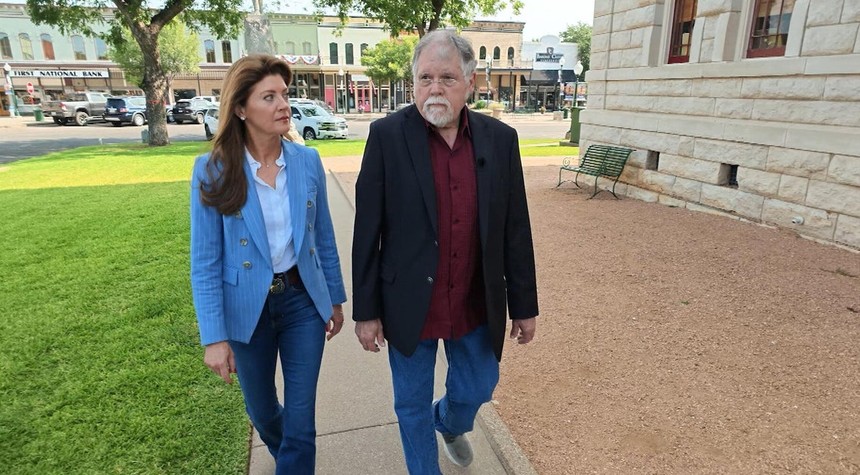
They waltzed into Hood County, Texas with big promises and zero details, which tells you everything you need to know about how Silicon Valley views middle America. Dave Eagle, a county commissioner and attorney, saw right through it. The pitch was pure smoke and mirrors. Jobs, prosperity, community partnership. All the usual suspects trotted out whenever a massive corporation wants something from people they assume won’t ask hard questions.
The company wouldn’t even identify itself at first. That’s how these operations work now. They figured they were dealing with country bumpkins, Eagle said, and honestly, can you blame them for thinking that? It worked in the next county over.
Turns out it was Amazon Web Services looking for a sweetheart deal. Not just any deal either. They wanted up to 90 percent in property tax rebates for three decades. Think about that for a second. Thirty years of barely paying into the community they claimed they’d uplift. The math doesn’t work unless you’re the one getting paid upfront and leaving everyone else to deal with the infrastructure costs later.
Eagle voted no. Good for him. But Amazon just moved one county over and got exactly what they wanted. That’s the game. Shop around until you find elected officials willing to give away the store in exchange for a ribbon cutting ceremony and some temporary construction jobs.
Here’s what nobody’s saying loud enough. We’re in the middle of an AI arms race that’s reshaping America’s power grid and nobody bothered to ask regular Americans if they’re okay with it. There are already 3,000 data centers scattered across the country. Another 1,500 are in the pipeline. Most of the new ones are headed for rural areas, which makes sense if you’re a tech company. Land is cheaper. Local governments are more desperate for economic development. Resistance is lighter.
The scale of what’s coming should terrify anyone paying attention. Michael Webber, who holds chairs in engineering and public policy at the University of Texas, puts it plainly. A large data center two years ago might have used five megawatts of power. The new AI facilities? Try 1,000 megawatts. That’s 200 times larger. These aren’t incremental changes. This is a complete transformation of energy demand happening faster than our infrastructure can adapt.
The big players, your Metas and Googles and Microsofts, are expected to dump $1.5 trillion into data center construction through next year. That’s real money chasing a speculative future where artificial general intelligence matches or exceeds human capability. Maybe it happens. Maybe we get medical breakthroughs and solutions to problems we can’t even imagine yet. Or maybe we just get better chatbots and a power grid that can’t keep up.
Some experts think we’ll hit a saturation point where the building spree levels off. Others believe the appetite for computing power will never stop growing. The race is on to train AI models fast enough to win what everyone’s calling the AI arms race, though nobody seems entirely sure what winning looks like or what we’re supposed to do with all this artificial intelligence once we have it.
What we do know is this. Rural communities are being asked to shoulder enormous infrastructure burdens with minimal transparency and maximum risk. These data centers suck up electricity like nothing else. They need massive amounts of water for cooling. They stress local power grids built for populations a fraction of what these facilities demand.
And the companies building them approach local officials like they’re doing everyone a favor by showing up. Jobs are promised but the reality is most positions go to specialized workers brought in from elsewhere. Tax revenue is promised but then negotiated down to almost nothing through rebates and incentives. Good neighbor pledges are made but there’s no enforcement mechanism when things go sideways.
This is economic development in the 21st century. Corporations hold all the cards because they can always go to the next county, the next state, wherever someone’s desperate enough to say yes without reading the fine print. It’s a race to the bottom dressed up as progress.
The principle at stake here matters more than any individual data center. Do we want a country where massive corporations can essentially extort local governments by threatening to take their business elsewhere? Because that’s the model we’re building. Free market capitalism works when both sides negotiate from positions of reasonable strength. This isn’t that. This is asymmetric warfare where one side has unlimited resources and the other side has property tax revenue they can’t afford to lose.
Eagle’s story should be a warning. The razzle dazzle approach works often enough that companies keep using it. They’ll keep coming to rural America with vague promises and specific demands until someone forces actual transparency and real accountability. Until then, expect more counties to cave, more infrastructure to buckle under unexpected demand, and more elected officials to realize too late they gave away leverage their communities desperately needed to keep.
Related: Trump’s AI Force Is Exactly What America Needs Right Now