
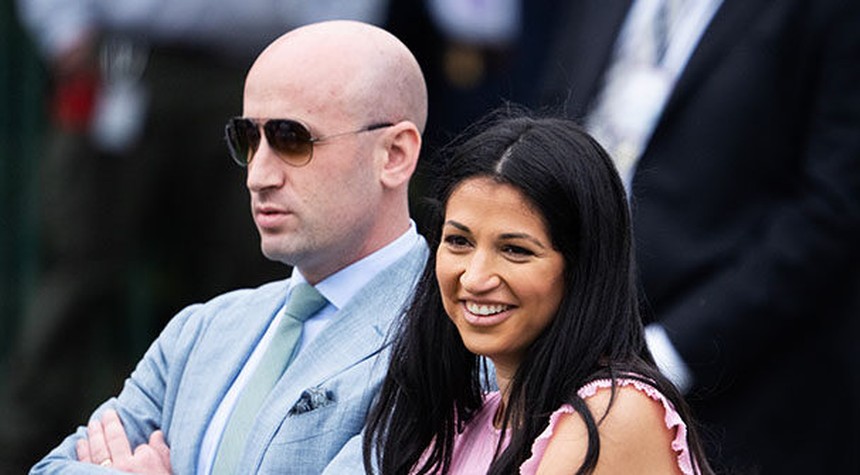
Two veteran FBI agents just learned an expensive lesson about taking threats seriously when they involve the families of senior White House officials. Michael Burgwald and Courtland Rae, who oversaw counterterrorism operations at the FBI’s Washington field office, found themselves reassigned after they decided threatening phone calls to Katie Miller didn’t warrant investigation. Katie Miller happens to be married to Stephen Miller, one of President Trump’s most prominent advisers, and she’s also a conservative podcaster in her own right.
Here’s what actually happened. The field office team reviewed harassing phone calls Miller received and concluded they didn’t meet the threshold for FBI investigation. No nexus to terrorism, they said. Move along, nothing to see here. Bureau leadership took one look at that decision and decided these two senior agents needed a different assignment. Immediately.
The media’s running with their favorite narrative, naturally. They’re suggesting this came down from FBI Director Kash Patel, who they love to describe as a “fierce loyalist” of Trump. The implication is clear enough. They want you to think this is political retaliation, not legitimate concern about investigative standards. But the FBI’s rapid response team pushed back hard on that characterization, calling out Bloomberg Law’s Ben Penn specifically for what they termed fake news.
Darren Cox, senior executive for the D.C. Field Office, didn’t mince words. Director Patel didn’t order this decision, he said. This was a personnel move made at the field office level based on mission needs. Any suggestion otherwise is false. That’s pretty unambiguous language.
You know what’s fascinating here? The disconnect between what field agents considered serious and what leadership deemed worthy of investigation. Department of Homeland Security spokesperson Lauren Bis put it bluntly. Senior leadership at the FBI determined these agents were stifling investigations into very serious threats. That’s not language you use lightly in official statements.
Some outlets tried spinning this as an investigation that started over flyers critical of the Millers in their neighborhood. Career agents supposedly pushed back, calling it a waste of resources. But that version conveniently omits crucial context. The Millers and their young children relocated from their Arlington home into military housing last fall. That’s not a decision families make casually.
Law enforcement was investigating protest activity targeting the family, which the Millers viewed as criminal threats. Bis clarified that the Millers didn’t relocate because of protests. There was an elaborate, well-documented stalking, doxing and threat campaign. That’s substantially different from someone hanging flyers on telephone poles.
The question that matters is whether these threats were genuine enough to warrant federal investigation. Field agents said no. Bureau leadership disagreed strongly enough to reassign two veteran counterterrorism officials. That tells you something about the severity gap in perception here.
This situation illuminates a broader problem within federal law enforcement. When does political disagreement cross into credible threat territory? Who makes that determination? Field agents closer to the daily grind might develop different thresholds than leadership carrying institutional responsibility. Both perspectives have merit, but only one can prevail when families with young children are involved.
The timing’s worth noting too. These reassignments happened amid broader personnel changes at the FBI under new leadership. Critics will point to that context and cry foul. Supporters will argue it’s exactly what draining the swamp looks like, removing officials who fail to protect Americans regardless of political affiliation.
Stephen and Katie Miller had no interaction with the two agents, according to DHS. That detail matters because it undercuts any suggestion this was personal grievance driving the reassignments. The decision came from FBI leadership evaluating how their own people handled a sensitive investigation.
What we’re witnessing is accountability, plain and simple. Two senior officials made a judgment call that their superiors found inadequate. In any organization worth its salt, that has consequences. The fact that it involves a prominent conservative family shouldn’t immunize that decision from scrutiny or reversal.
Related: Over 300 Cartel Drones in Five Weeks Proves the Border Crisis Never Actually Ended