
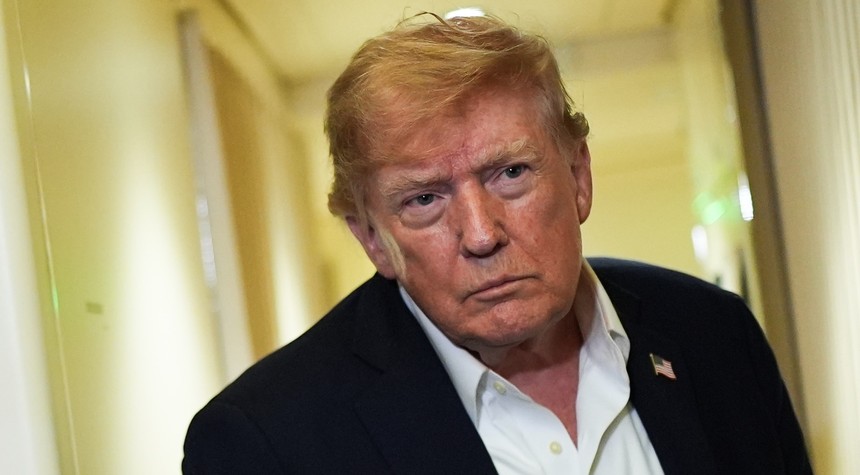
Donald Trump just did something that’ll surprise absolutely nobody who’s been watching how this administration actually operates when it wants to get things done. He compromised. Not on principles, mind you, but on the tactical stuff that lets conservatives win the bigger battle.
The president agreed to roughly 80 percent of what Democrats and one key Republican senator demanded in exchange for their votes on sweeping cryptocurrency legislation. The bill’s headed for a critical vote Tuesday, and Trump clearly decided that getting America’s digital asset framework right matters more than digging in over enforcement mechanisms. Smart move, actually.
Here’s what happened. The original bill had a basic provision barring federally elected officials, their spouses, and federal judges from issuing digital assets themselves. Seems reasonable enough. But a group of Democrats led by Arizona Senator Ruben Gallego, along with North Carolina Republican Thom Tillis, said that wasn’t nearly sufficient to address potential conflicts of interest. They wanted state attorneys general to have enforcement power alongside the Justice Department.
You know what’s interesting about this whole negotiation? The White House initially balked at giving state AGs that kind of authority, and for good reason. Democratic state lawyers could weaponize it against Republican officials. Republican AGs could do the same to Democrats. It’s the kind of reciprocal political warfare that makes governing harder than it already is.
But Trump recognized something crucial. Sometimes you’ve got to accept imperfect terms to move the country forward on issues that actually matter. And cryptocurrency regulation matters enormously right now. We’re watching digital assets reshape global finance while Washington dithers over turf battles and political gamesmanship.
The updated bill now requires officials to either divest or place in a blind trust any significant financial interest in entities that issue cryptocurrencies. That’s substantive. That’s the kind of transparency standard conservatives should embrace anyway because it protects the integrity of free markets. When government officials have skin in the game they’re supposed to be regulating, you don’t get real capitalism. You get cronyism dressed up in expensive suits.
Trump also agreed to let state attorneys general sue crypto exchanges if they list digital assets that the bill prohibits. It’s a narrower enforcement role than Democrats initially wanted, but it’s enough to give states meaningful oversight without turning this into a free-for-all where every AG with presidential ambitions starts filing splashy lawsuits.
Republican Senators Cynthia Lummis, Tim Scott, and John Boozman announced the agreement, emphasizing that it gives state AGs a meaningful role in enforcement. White House crypto adviser Patrick Witt noted on social media that the administration and Senate Republicans had been responsive to Democratic policy objectives throughout negotiations. After more than a year of back and forth, he’s right. It’s time to actually pass this thing.
Limited government doesn’t mean no government. It means government that does essential functions well and then gets out of the way. Establishing clear rules for cryptocurrency markets is exactly the kind of thing Washington should be doing. Not micromanaging the sector, not picking winners and losers, but creating a framework where innovation can flourish without fraud running rampant.
The crypto industry needs clarity. Investors need protection. And America needs to lead on digital finance before China or the European Union writes rules that put our companies at a disadvantage. These aren’t abstract concerns. They’re practical realities that affect whether American businesses can compete globally and whether ordinary people can participate in emerging markets without getting scammed.
Trump’s willingness to compromise here shows he understands what too many politicians miss. Governing requires knowing when to hold firm and when to bend. The core conservative goals in this legislation remain intact. We’re getting market clarity, reasonable ethics standards, and a regulatory structure that doesn’t strangle innovation. The enforcement mechanism debate was always secondary to those objectives.
Democrats who’ve spent years demanding Trump accommodate their concerns now have to deliver their votes. The president gave them most of what they asked for. If they still find reasons to oppose this bill Tuesday, everyone will know they were never serious about crypto regulation or ethics reform. They just wanted another excuse to obstruct.
This is how legislation is supposed to work in a constitutional republic. Different factions negotiate, compromise where possible, and ultimately serve the broader national interest. It’s messy and frustrating and nobody gets everything they want. But it beats the alternative of perpetual gridlock while the rest of the world moves forward without us.
Related: Bo French’s Bigoted UT Post Reveals a Cancer Growing Inside the GOP