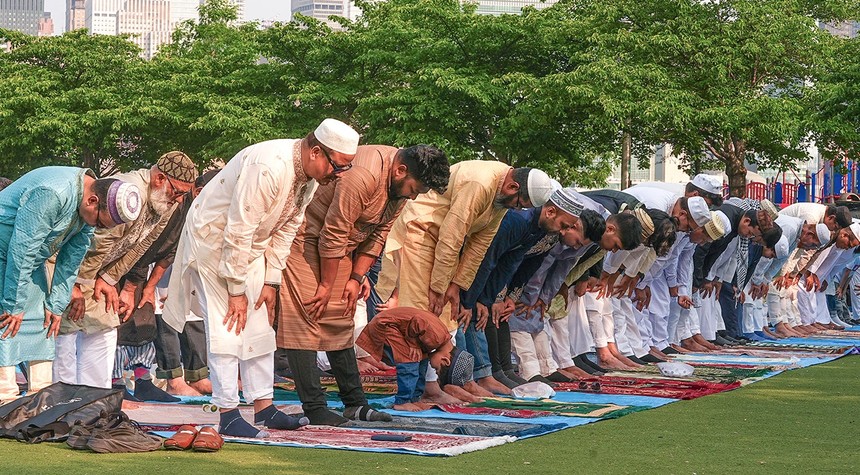
Gavin Newsom signed a bill Sunday making California the second state to recognize two Muslim holidays officially. That’s the headline you’re supposed to read and feel good about. Diversity, inclusion, all that jazz. But let’s talk about what actually happened here, because the details matter more than the press release.
Assembly Bill 2017 adds Eid al-Fitr and Eid al-Adha to California’s list of state holidays. Public schools and colleges can close. State employees get the option to observe. Courts stay open, businesses aren’t required to shut down. It’s not a hard closure like Christmas, but it’s formal recognition nonetheless. Washington state did this first. California followed. Fine.
Here’s where it gets interesting. Sitting on Newsom’s desk at the same time were multiple bills protecting and recognizing other religious observances. AB 395 would codify Jewish holidays like Rosh Hashanah and Yom Kippur into state law, requiring state agencies and schools to make every reasonable effort to avoid scheduling major functions on those days. Another bill, AB 1763, would guarantee K-12 students excused absences for religious holidays across the board.
These bills arrived on Newsom’s desk before AB 2017. He signed the Muslim holiday bill first. The others languished until Wednesday, right before the midnight deadline. You think that’s an accident? You think a governor eyeing a 2028 presidential run doesn’t calculate every single move?
Elizabeth Barcohana, chair of Jewish engagement for the California Republican Party, didn’t mince words. The fact that Newsom chose to sign the Eid law before the law protecting other religious observances speaks volumes about the direction he’s moving. She’s right. This isn’t about religious freedom broadly applied. This is about selecting which communities get priority treatment and which ones get the bare minimum right before the clock runs out.
The policy differences matter here too. AB 2017 allows schools to actually close for Muslim holidays. The Jewish holiday bill asks agencies to make reasonable efforts to avoid scheduling conflicts. One grants closure authority. The other requests consideration. These aren’t equivalent protections, no matter how much anyone wants to pretend they are.
Barcohana went further, suggesting this represents American laws adopting a Sharia law framework. That’s provocative language, sure. But her point isn’t entirely off base. Special protections that no other religious observance receives, the option to shut down public institutions for holidays that until now only Christian holidays received, curriculum in public schools that’s religious in nature about a religion that emphasizes conversion. Those are legitimate concerns worth discussing without immediately dismissing them as bigotry.
Of course, David Bocarsly, CEO of Jewish California, defended Newsom. He wasn’t concerned about the order because all three bills eventually became law. That’s the institutional response you’d expect from someone who doesn’t want to rock the boat. All’s well that ends well, right? Except timing and priority send messages louder than the final tally.
This isn’t really about religious holidays at all. It’s about political calculation dressed up as inclusive governance. Newsom knows exactly what he’s doing. He’s building a coalition for a national run, and he’s signaling to specific communities where they rank in his priorities. Muslims first, with full fanfare. Jews later, when legally obligated, with minimal attention.
The conservative argument has always been that true religious freedom means equal treatment under the law, not special carve-outs based on political expedience. If you’re going to recognize religious holidays beyond the traditional Christian ones already baked into our calendar, fine. Do it across the board. Do it simultaneously. Don’t create a hierarchy where one faith gets the spotlight and the others get squeezed in before deadline.
This matters because it reveals the progressive approach to religious liberty. It’s not principled. It’s strategic. It’s not about protecting conscience and practice equally. It’s about favoring groups that advance particular political goals while giving just enough to others to avoid outright discrimination claims.
Individual liberty means protecting everyone’s right to observe their faith without government favoritism. Limited government means staying out of the business of ranking religions by political value. What Newsom did here violates both principles while pretending to champion tolerance.
Watch what politicians do, not what they say. Newsom signed these bills in a specific order for a specific reason. He’s telling you who matters most in his political universe. Believe him.
Related: Homeland Security Chief Reveals Biden Cut Loose Arrested Terrorists on U.S. Soil