
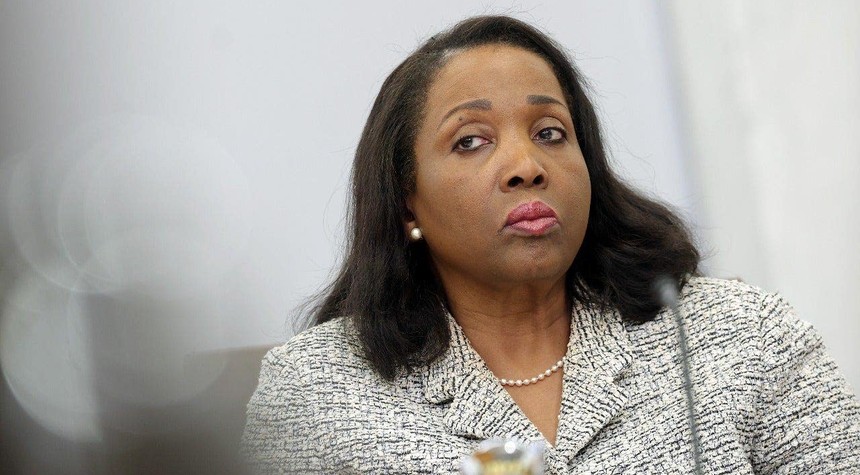
Here’s what happens when an unstoppable force meets an immovable object in American government. President Trump has been trying to remove Federal Reserve Governor Lisa Cook for over a year now, citing allegations about false statements on mortgage documents. The Supreme Court blocked him in June 2026 with a 5-4 decision that essentially told the administration: you didn’t give her a fair shot to defend herself. So now we’ve got a committee, a hearing date, and what looks like round two of a fight that nobody really wanted but everybody’s stuck watching.
The newly formed committee represents the White House’s attempt to check all the constitutional boxes this time around. Cook gets to submit a written statement at least three days before her November 5th hearing. She’ll have up to four hours to present her case, offer evidence, and provide witness statements. Department of Justice lawyers will question her. It’s all very formal, very procedural, and very much the kind of thing that happens when the executive branch discovers it can’t just fire someone because it wants to.
National Economic Council director Kevin Hassett will serve on this three-person committee alongside two other White House staffers. That’s an interesting choice considering Hassett was reportedly in the running to replace Jerome Powell as Fed Chair before Trump went with Kevin Warsh instead. The optics matter here, whether anyone wants to admit it or not.
You know what’s fascinating about this whole saga? It reveals the tension at the heart of our system between presidential authority and institutional independence. The Federal Reserve was designed to operate at arm’s length from political pressure. That’s not some abstract civics lesson. That independence matters when you’re making decisions about interest rates and monetary policy that affect every American’s wallet. But it also creates this bizarre situation where a president can’t remove someone he believes acted improperly, at least not without jumping through hoops that would exhaust a gymnast.
The allegations themselves center on mortgage documents and supposedly false statements Cook made. Trump’s team has been hammering this point since August 2025, when they first attempted her removal. Whether those allegations hold water is precisely what this committee process is supposed to determine. The hearing will be closed to the public but transcribed, which means we’ll eventually get to see what was said even if we can’t watch it unfold in real time.
After the hearing concludes, Cook will submit another written statement. Then the committee makes its recommendation to Trump about whether there’s adequate cause for removal. Notice that word: adequate. The Supreme Court didn’t say Trump couldn’t fire her ever. They said he hadn’t followed proper procedure. This is the procedure.
The broader context matters too. Earlier Supreme Court rulings this term affirmed Trump’s power to dismiss a Federal Trade Commission commissioner while simultaneously blocking his attempt to unilaterally fire Cook. The court is drawing lines about where presidential authority ends and where institutional protections begin. Those lines aren’t always clear, and they’re definitely not always popular with whoever’s sitting in the Oval Office at any given moment.
This November hearing represents either the beginning of the end for Cook’s tenure or vindication that clears her name. Either way, it’s a reminder that our system moves slowly on purpose, even when speed feels more satisfying.
Related: Trump Honors America’s Tech Giants While the Left Panics About Merit