
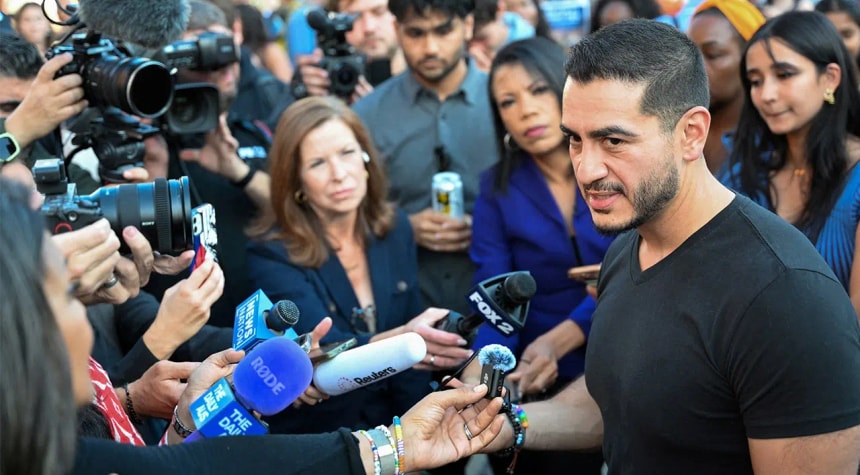
There’s a video making rounds that should trouble anyone who still believes in basic democratic norms, regardless of where you stand politically. Abdul El-Sayed, Michigan’s newly elected Democrat senator, physically put his hands on a journalist. Twice. And he did it with the kind of casual arrogance that suggests he thought the cameras would make him look tough rather than thuggish.
The exchange happened just hours before his Senate victory Tuesday, and it wasn’t some heated moment where tempers flared beyond control. This was calculated dismissiveness wrapped in physical intimidation. Sky News reporter James Matthews approached El-Sayed for an interview, a completely normal part of campaign coverage that every politician since the invention of the printing press has understood comes with the territory. El-Sayed’s response? Put both hands on the reporter’s shoulders while sneering about how many votes he wants from the United Kingdom. Zero, apparently.
Let’s be clear about what happened here. A man running for one of the most powerful legislative positions in American government decided that a foreign journalist wasn’t worth his time because that journalist couldn’t vote for him. Never mind that U.S. elections have global implications. Never mind that Sky News reaches 138 countries and millions of viewers. Never mind that part of being a senator involves representing American interests on the world stage, which occasionally requires explaining yourself to international press. El-Sayed’s calculus was simple and telling. If you can’t vote for me, you don’t matter.
This is the same Abdul El-Sayed who had another tense exchange with Matthews the day before, warning him "If you keep being in my way, I’m not going to be very happy." That’s not the language of someone confident in their positions or comfortable with scrutiny. That’s the language of someone who views questions as obstacles and journalists as nuisances to be physically moved aside.
The physical contact is what elevates this from standard politician evasiveness to something more concerning. You don’t put your hands on people, especially not twice, especially not when you’re angling for a seat in the United States Senate. There’s no interpretation where that gesture reads as anything other than a power play. El-Sayed is taller, he’s the one with security around him, he’s the one surrounded by supporters, and he chose to use that advantage to physically emphasize his dominance over a reporter just trying to do his job.
Sky News stood by their correspondent, as they should have. Their statement pointed out the obvious truth that Matthews was simply covering an election campaign and asking straightforward questions. But here’s what really grates about this whole episode. El-Sayed went on to win his race, defeating Republican Mike Rogers in what was supposed to be a competitive contest that the GOP thought they could flip. So now Michigan gets a senator who’s already demonstrated he thinks physical intimidation is an acceptable response to inconvenient questions.
The defense you’ll hear from El-Sayed’s supporters is that he was focused on Michigan voters, that he was being authentic, that he was standing up to gotcha journalism or whatever other excuse gets trotted out when Democrats behave badly. But Matthews wasn’t asking gotcha questions. He was trying to interview a Senate candidate about a Democratic congresswoman, Haley Stevens, who had crossed party lines to endorse El-Sayed’s Republican opponent. That’s newsworthy no matter what country you’re reporting from.
What does it say about our political moment that a candidate can have multiple hostile confrontations with reporters in the final days of a campaign and still win? El-Sayed wasn’t hiding these exchanges. They went viral. Voters saw them. And apparently enough Michigan voters decided that this behavior was either acceptable or not disqualifying. That should worry anyone who thinks elected officials ought to show basic respect for the free press, even when that press asks uncomfortable questions or represents audiences outside their immediate constituency.
There’s a broader pattern here worth noting. El-Sayed mocked Trump, Vance, and Rogers in his victory speech Tuesday night, signaling what one outlet called a "combative tone" heading into the Senate. Combative is one thing. Every effective legislator needs to be willing to fight for their principles and their constituents. But there’s a difference between being combative in defense of your ideas and being combative toward people asking you to explain those ideas. One is leadership. The other is just bullying with better press coverage.
The El-Sayed campaign didn’t respond to requests for comment about the incident, which tells you everything you need to know about whether they think this was appropriate behavior. When you’ve got nothing to say in your defense, silence becomes the strategy. No apology, no explanation, no acknowledgment that maybe, just maybe, putting your hands on a journalist isn’t the best look for someone about to take an oath to support and defend the Constitution.
Republicans lost this race, and that stings. But the bigger loss here is for anyone who still believes that elected officials should be accessible, accountable, and willing to answer questions from journalists regardless of where those journalists come from. Abdul El-Sayed just taught aspiring politicians everywhere that you can physically intimidate reporters, dismiss international press as irrelevant, and still win a Senate seat. That’s not the lesson American democracy needs right now, but it’s apparently the one Michigan voters just endorsed.
Related: Alito Stays Put While Republicans Face a Supreme Court Nightmare They Created