
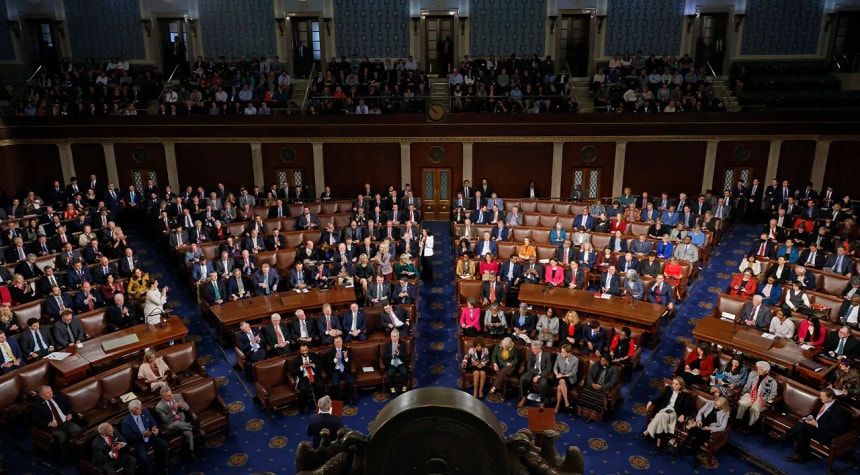
The facts are stark and undeniable. Democrats have secured their largest House majority since 1992, capturing at least 258 seats in a midterm election that represents a wholesale rejection of Republican leadership and a fundamental reshaping of the legislative landscape in Washington. This is not spin. This is mathematical reality.
The victory was sealed when Democrat Chuck Hubbard defeated longtime Republican incumbent Virginia Foxx in North Carolina, a loss that carries particular symbolic weight given Foxx’s chairmanship of the House Rules Committee, the powerful body that controls which legislation reaches the floor. When you lose a Rules Committee chair, you are not just losing a seat. You are losing institutional power at its most fundamental level.
Democrats have flipped 44 seats, leaving Republicans with a diminished 173 seats and virtually no capacity to shape legislative outcomes. Four races remain undecided in Minnesota, Tennessee, and Louisiana, but the outcome is already determined. The Democrats have won, and they have won decisively.
Let us examine the historical context. The last time Democrats held this many House seats was 1992, when Bill Clinton first captured the presidency. Their 2008 showing under Barack Obama reached 257 seats. This current majority exceeds both. In the 435-member chamber, Democrats now possess the numerical advantage to advance virtually any agenda item they choose, assuming they can maintain party discipline.
The ramifications extend beyond the House. Democrats have also secured a 56-seat Senate majority, their largest advantage in over a decade. This gives them control of both chambers of Congress, eliminating the divided government that has characterized much of the past several election cycles.
The geographic spread of Democratic victories tells an uncomfortable story for Republicans. Democrats won not merely in competitive swing states, but in traditional Republican strongholds. Texas, Georgia, Kansas, Iowa, Ohio, Maine, North Carolina, and South Carolina all flipped to Democratic control. When you are losing in Kansas and South Carolina, you are not experiencing a temporary setback. You are experiencing a fundamental collapse in your coalition.
President Trump now faces a legislative reality that will severely constrain his administration’s ability to advance its agenda. Democrats have already indicated they intend to launch comprehensive investigations into the administration and its Republican allies in Congress. This is not speculation. Democratic leadership has been explicit about their intentions.
The question Republicans must now confront is straightforward: How did this happen? The American people voted, and they voted decisively for Democratic governance. Whether this represents a temporary reaction to specific policies or a longer-term realignment remains to be seen. But the data points to serious structural problems within the Republican coalition that cannot be dismissed or explained away.
The 2026 midterms were not close. They were a rout. Republicans must reckon with this reality if they hope to rebuild their majority in future election cycles. Denial will not change the mathematics. Only a fundamental reassessment of messaging, policy, and coalition-building will reverse these losses.
Related: Republicans Abandon Posts During Final Weeks of Congressional Session