
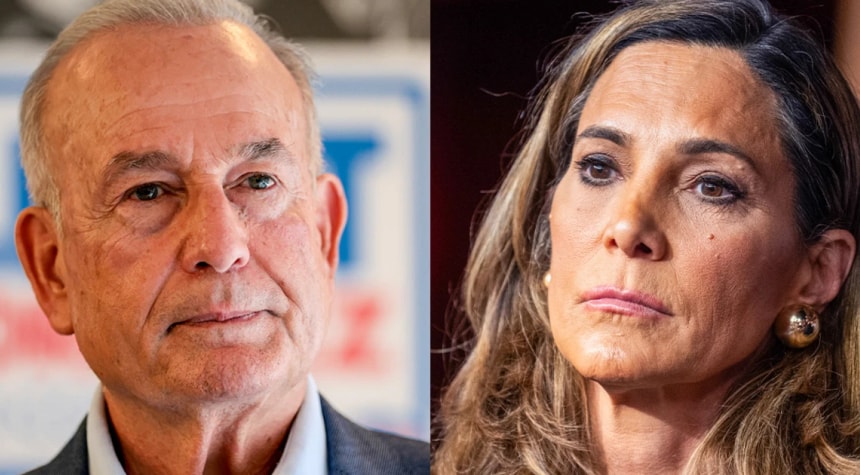
A losing Democratic congressional candidate in South Florida has filed a federal lawsuit against the Miami-Dade supervisor of elections, alleging bias in the recount process. The facts are straightforward, but the implications raise serious questions about electoral integrity that transcend party lines.
Eliott Rodriguez, who trails incumbent Republican Rep. Maria Elvira Salazar by 1,103 votes in Florida’s 27th Congressional District, filed suit Friday seeking to remove supervisor Alina García from the county canvassing board. The margin stands at 0.44 percentage points, triggering Florida’s mandatory recount threshold of 0.5 points. So far, standard procedure.
Here is where matters become problematic. Rodriguez’s lawsuit alleges that Robert Fernández, the attorney representing Salazar in the recount, is García’s son-in-law. If true, this presents an obvious conflict of interest that any reasonable person would recognize. The canvassing board functions as a quasi-judicial body with authority to determine which ballots count and which do not. Having a direct family relationship with one side’s legal representation creates an appearance of impropriety at minimum, actual bias at worst.
But wait, there is more. García gave an interview on election night declaring that "Maria Elvira is the winner, with or without a recount" and that it was "possible but not probable" enough ballots remained to change the outcome. She added that recounts rarely overturn results, stating "usually the trend we see is what continues."
Now, García is factually correct that recounts seldom reverse election results. Historical data supports this assertion. However, an elections supervisor tasked with overseeing a recount process should not be publicly pronouncing the outcome before conducting that recount. The optics are terrible, and optics matter when public confidence in electoral integrity hangs in the balance.
García, a Republican who served in the Florida state House before winning election as supervisor in 2024, has refused to recuse herself. She issued a statement asserting that voters elected her to perform these duties and "nothing disqualifies me from performing those duties including serving on the Canvassing Board." This response misses the point entirely. The question is not whether she is legally entitled to serve, but whether she should serve given the circumstances.
Juan-Carlos Planas, general counsel for the Miami-Dade Democratic Executive Committee, correctly noted that if a judge’s relative represented one party in litigation, that judge would be removed. The principle applies here. Judicial ethics exist precisely to prevent even the appearance of bias, protecting both the integrity of the process and public confidence in outcomes.
The race itself presents an interesting case study. Few expected the contest to be competitive, yet the district shifted more than 14 points toward Democrats compared to the 2024 presidential election. Salazar broke with President Trump on immigration enforcement in September, running an ad criticizing deportation policies affecting her heavily Hispanic district. Trump initially criticized her but eventually endorsed her campaign.
Salazar responded to the lawsuit by accusing Rodriguez of behaving like an "election denier" and turning the process into a "political circus." This rhetoric is unhelpful. Raising legitimate concerns about conflicts of interest is not election denialism. Election denialism involves rejecting clear outcomes without evidence. Questioning whether an elections supervisor with family ties to one candidate’s attorney should oversee a recount is asking reasonable questions about process integrity.
The facts support a simple conclusion. García should recuse herself. Whether her presence would actually affect the recount outcome is beside the point. The appearance of bias undermines public trust in electoral processes, which should matter to Republicans and Democrats alike. Fair elections require not only honest counting but also processes free from conflicts of interest that raise doubt about that counting.
Related: Stephen Miller’s promotion means Trump is done asking permission