
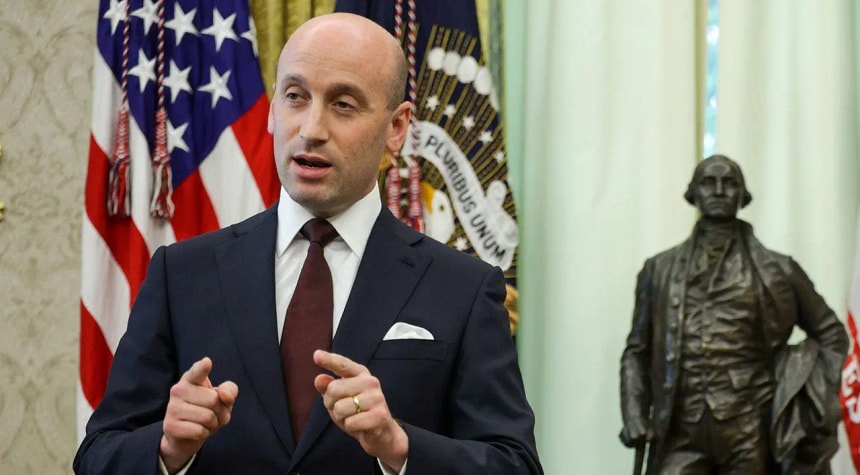
President Trump just made his intentions crystal clear. By elevating Stephen Miller to White House chief of staff, replacing Susie Wiles, he’s signaling that the next two years won’t involve much negotiation with a Democratic Congress. This isn’t a personnel shuffle. It’s a declaration of war against business as usual.
Miller, alongside Office of Management and Budget Director Russell Vought and White House lawyers, has spent months since April crafting a blueprint for executive governance. They’ve been identifying every action Trump can take without new legislation, focusing on immigration, tariffs, housing costs, and federal spending. Three sources familiar with the planning confirm this isn’t some contingency plan. It’s the plan.
Democrats taking control of Congress in January changes the game entirely. Suddenly Trump faces actual opposition to his legislative agenda, while Democrats gain subpoena power and the ability to launch investigations. You know what the White House thinks about that? A senior official put it bluntly: "If crazed Democrats want to abuse their power and politicize their process of investigations, subpoenas, and destroying lives, they should be reminded that we still control the federal government and all of its powers."
That’s not diplomatic language. That’s someone ready for a fight.
Trump himself has been remarkably candid about his strategy. When CBS asked how he’d advance his agenda with Democrats controlling Congress, he immediately pointed to the Supreme Court’s Trump v. Slaughter ruling from June. "We won the Slaughter case and the Slaughter case gives the president tremendous powers that it never had before," he said. The decision expanded his authority to remove certain federal officials, overturning restrictions that once limited presidential power over agencies like the FTC.
The President views that ruling as foundational to governing by executive action. He’s also embraced another weapon in his arsenal, one he’s wielded before and relishes using again: the veto. Trump has called himself "Mr. Veto" on multiple occasions, making clear he’ll reject Democratic legislation until they’re willing to negotiate on his terms.
White House spokeswoman Lauren Bis framed the choice facing Democrats perfectly. "As the President has said, he’s willing to work with anyone to continue delivering victories for hardworking Americans. If Democrats choose to pursue sham investigations and radical left policies, they are choosing to work against the American people." Translation: cooperate or watch nothing happen for two years.
But not everyone on the Republican side is celebrating Miller’s promotion. Some GOP lawmakers on Capitol Hill are expressing genuine concern about what this shift means for the final stretch of Trump’s presidency. One House Republican admitted they’ve been worried about heavy reliance on executive action for two years now. "I’m also concerned [Trump] will embrace his populist roots that are not conservative to pass things with the Dems," the lawmaker said.
Another Republican put it even more tersely, saying the Trump administration will continue governing "without Congress, as they’ve been doing." There’s frustration bubbling beneath the surface among traditional conservatives who believe in legislative process and constitutional balance. They worry about precedent, about what happens when the next Democratic president claims similar authority.
Those concerns aren’t without merit. Executive action cuts both ways. Every power Trump claims for himself becomes available to his successors. But from Trump’s perspective, why should he tie his hands when Democrats have made clear they plan to investigate rather than legislate? When your opponents treat governance as warfare, playing nice becomes strategic suicide.
A Trump administration official praised Miller’s appointment specifically for his immigration credentials. "A great pick. He has the trust of millions of Americans who understand that reversing mass migration is the crisis of our time." That’s the real heart of this decision. Miller has been the architect of Trump’s immigration policy from day one, and that issue remains central to Trump’s political identity and governing philosophy.
Miller recently stated the administration is pursuing policy to debank illegal immigrants, cutting off their access to financial services. It’s exactly the kind of aggressive, uncompromising approach that defines his tenure. Whether you agree with the policy or not, you can’t question his commitment to executing Trump’s vision without apology or hesitation.
Trump has already demonstrated his willingness to bypass Congress when necessary. He revived a rare budget maneuver to rescind $810 million in congressionally approved funds, a move that sparked immediate controversy but showed he’s serious about controlling federal spending with or without legislative cooperation.
The coming two years will test the boundaries of executive authority in ways we haven’t seen in modern American politics. Democrats will push back hard, filing lawsuits and launching investigations. Republicans in Congress will face an uncomfortable choice between supporting their president and defending institutional prerogatives. The courts will ultimately decide how much power Trump actually has.
But make no mistake about what’s happening here. Trump looked at a Democratic Congress and decided he doesn’t need them. Miller’s appointment confirms that strategy. The question isn’t whether Trump will govern by executive action. He will. The question is how far he’ll push that authority and whether anyone can effectively stop him.
For conservatives who value limited government, this presents a paradox. We champion executive restraint and legislative process, yet we also recognize that Trump faces unprecedented opposition willing to use every institutional lever against him. Sometimes the choice isn’t between good options and bad ones. It’s between bad options and worse ones.
Trump chose Stephen Miller because Miller won’t hesitate. He won’t seek consensus where none exists. He’ll execute the agenda voters elected Trump to deliver, using every legal tool available. Whether that’s constitutional genius or dangerous overreach depends entirely on where you stand. But it’s definitely happening, and the next two years just got a whole lot more interesting.
Related: Justice Department Moves to Vacate Steve Bannon Contempt Conviction