
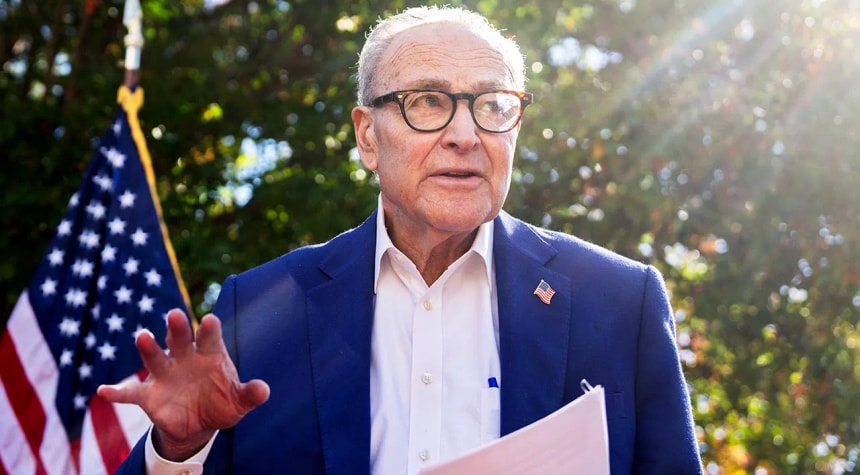
The facts are these: Senate Democrats have secured control of the upper chamber, yet their longtime leader faces an uncomfortable reality. Multiple newly elected Democratic senators have either openly refused to support Chuck Schumer for majority leader or expressed tepid enthusiasm at best for his continued leadership. This presents a fascinating contradiction that speaks volumes about the current state of the Democratic Party.
Schumer has led Senate Democrats since 2017, navigating both majority and minority status. Now, with Democrats holding at least 54 seats and possibly more depending on final results in Mississippi and Alaska, one would expect unity and celebration. Instead, several incoming senators are publicly declaring their opposition to the man who would presumably lead them.
Consider Senator-elect Adam Hamilton, the moderate megachurch pastor who accomplished the nearly impossible by flipping Kansas, a state that had not elected a Democrat to the Senate in nearly a century. Hamilton stated unequivocally in September that Democrats need new, younger leadership. His reasoning merits attention: he argued that Schumer represents a liability for Democrats in Kansas and that the party requires leaders capable of uniting not just Democrats, but Republicans as well.
This is not an isolated sentiment. Senators-elect Troy Jackson of Maine, Julianna Stratton of Illinois, Abdul El-Sayed of Michigan, and Peggy Flanagan of Minnesota have all expressed reservations about backing Schumer. Jackson confirmed just before Election Day that he had already informed Schumer directly of his intention to support someone else, and that position remained unchanged.
The progressive wing appears to be coalescing around Senator Chris Van Hollen of Maryland as a potential alternative, though Van Hollen himself has indicated interest in a 2028 presidential run, which complicates that scenario considerably.
Schumer, for his part, maintains that he will be reelected as majority leader and requires only a simple majority of Democratic senators to retain his position. He deflected criticism by insisting the issue is not about him personally but about focusing on what the American people want. This response demonstrates either remarkable confidence or a troubling inability to read the room.
The broader implications here are significant. Democrats just won control of the Senate, yet multiple incoming members openly rejected their leader during their campaigns. These were not private discussions leaked to the press. These were public statements made to voters and reporters. Hamilton explicitly called Schumer a liability in his state. That is not merely tepid support. That is outright rejection.
What does this reveal about the Democratic Party? It suggests a fundamental disconnect between the national Democratic brand, embodied by figures like Schumer, and what Democrats need to say and believe to win in competitive states. Hamilton won in Kansas by distancing himself from national Democratic leadership. That formula worked, which means other Democrats in competitive states will likely replicate it.
The arithmetic favors Schumer’s retention. With 54 seats secured, he needs only 28 votes to remain majority leader. Even if every skeptical freshman votes against him, the math works in his favor. But winning a leadership vote and commanding genuine loyalty are two entirely different matters. A weakened majority leader, one who secured his position despite open opposition from multiple caucus members, faces an uphill battle in maintaining party discipline and advancing legislation.
The Democratic Party now controls the Senate but faces an internal credibility crisis regarding its leadership. That paradox will define the coming term.